FOOTHILL FIRE HARDENING - A DIVISION OF FOOTHILL PAINTING
Fire Rated Exterior Wall Coating for Los Angeles
Class A fire rated wall coatings that lower surface temperatures, resist ember ignition, and hold up far longer than standard exterior paint - from a Burbank company that has been applying exterior finishes since 1929.
We respond within 24 hours - usually the same day.
What a Fire Rated Exterior Coating Is - and Why It Is Not Paint
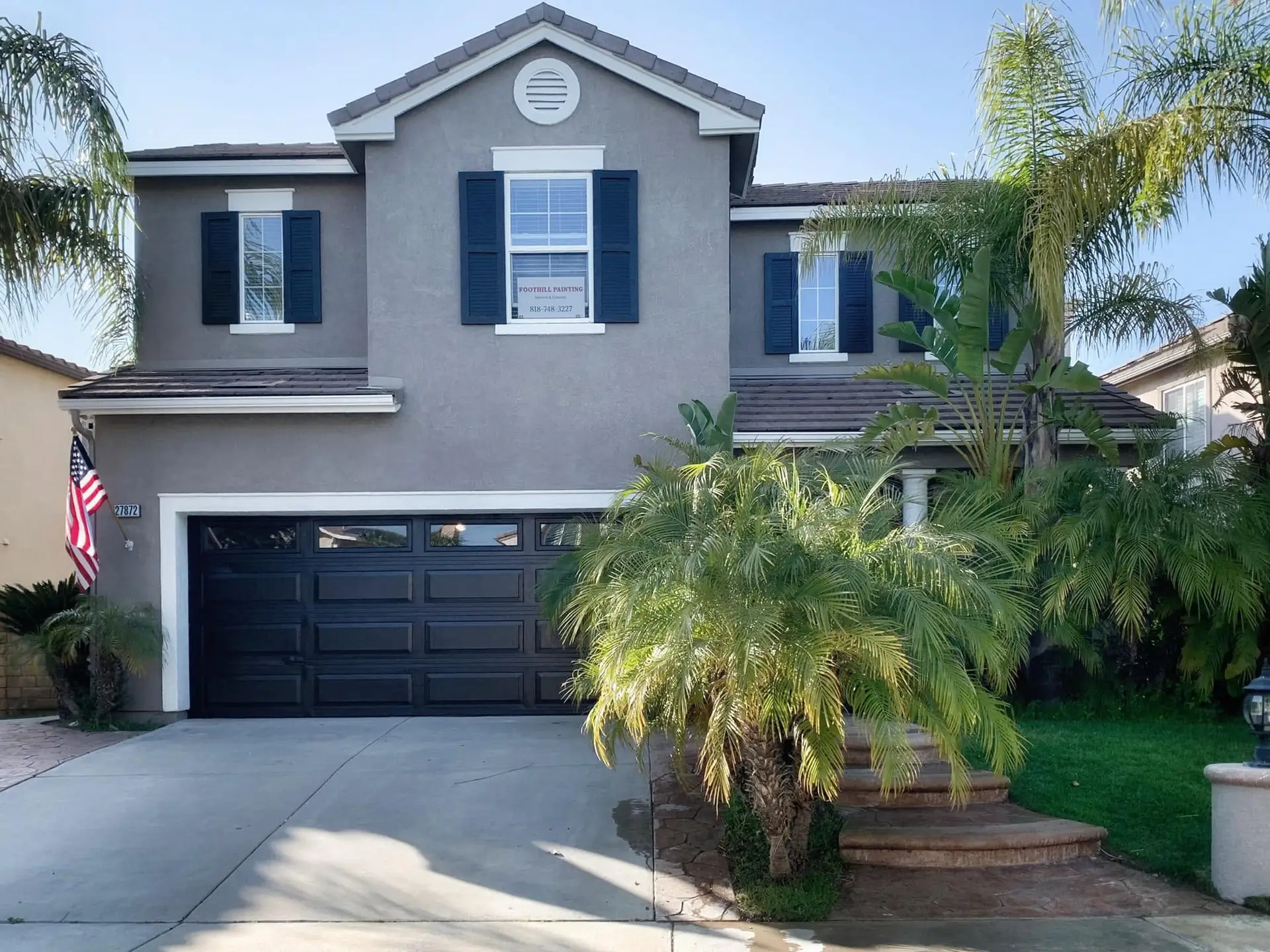
Standard exterior paint goes on at 1.5 to 3 mils thick. It protects against weather. It carries no fire rating. In a fire severity zone, that is all it does.
A fire rated exterior coating like Tex-Cote CoolWall is a different category of product. Applied at 8 to 12 mils - roughly four to six times the thickness of paint - it forms a continuous, flexible shell over stucco, masonry, and other cementitious substrates. CoolWall carries a Class A fire rating tested to ASTM E84, the standard test for surface burning characteristics, which measures flame spread and smoke development on the coated surface.
CoolWall also reflects near-infrared solar radiation. Independent testing shows surface temperature reductions of up to 40 degrees Fahrenheit compared to conventional paint in the same color. That means lower cooling costs and less thermal stress on the wall assembly underneath.
For homeowners in Very High Fire Hazard Severity Zones across the Los Angeles foothills, a cool wall coating sits at the intersection of two things we know well: professional exterior finishing and fire hardening. It is a coating job that delivers documented fire protection - and coating application is what Foothill Painting has done for 97 years.
Why Standard Exterior Paint Falls Short in a Fire Zone
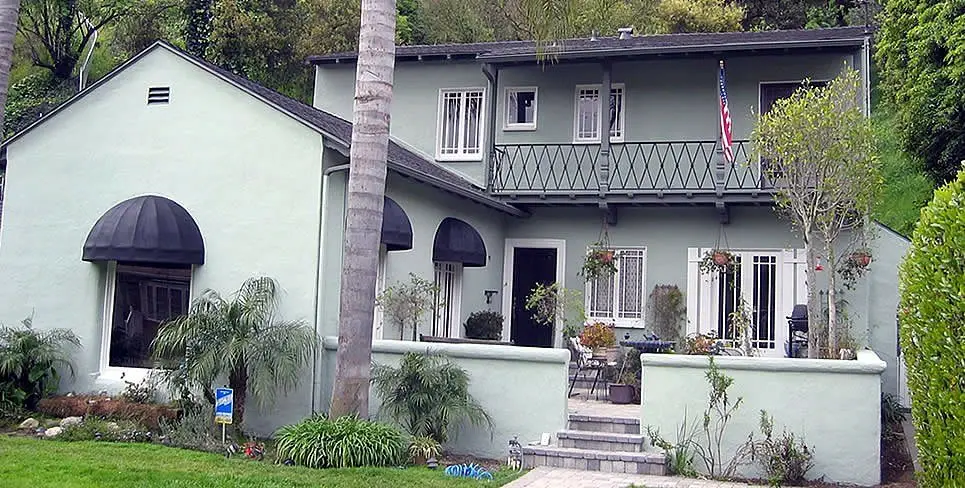
Stucco and masonry are the wall surfaces a rated coating covers.
Your home's exterior walls are its largest exposed surface. During a wind-driven fire, they face radiant heat from burning vegetation and structures, direct flame contact from anything within the first five feet, and ember bombardment that can last for hours.
Standard acrylic latex paint was never engineered for any of that. Its thin film offers no meaningful resistance to flame spread, and dark colors on south- and west-facing walls absorb enough solar energy to push surface temperatures well above 150 degrees on a normal summer afternoon - heat that accelerates weathering and drives up cooling costs year after year.
Most LA-area homeowners repaint every 5 to 7 years. Each cycle costs thousands of dollars and delivers no fire benefit. The stucco underneath does provide some inherent fire resistance, but the surface finish on top of it is either helping or it is neutral. Standard paint is neutral. A Class A rated coating is helping.
If This Sounds Like Your Situation
What a Class A Wall Coating Does and Does Not Do
What neither product does is make a house fireproof.
A Class A flame spread rating is the highest classification under ASTM E84. It is a real laboratory test result that measures how quickly flame spreads across a coated surface. CoolWall earns that rating. So does RhinoShield. Both products genuinely reduce the ignition risk on the walls they cover.
Embers find other paths. They enter through attic and crawlspace vents, land in gutters and roof valleys, collect in the gap between a fence and a wall, and ignite dry material in the first five feet around the foundation. A Class A coating on the walls is one layer of protection. It stacks with ember-resistant vents, protected eaves, a clean Zone 0, and noncombustible fencing into a home that resists ignition from multiple directions at once. Anyone who tells you a wall coating alone fireproofs a house is overselling.
The heat reduction is real but variable. CoolWall's infrared-reflective technology can lower surface temperatures by up to 40 degrees Fahrenheit, but the actual number depends on color choice, wall orientation, and local conditions. Lighter colors reflect more. South- and west-facing walls benefit most.
Here is what a Class A wall coating does deliver:
First, documented fire resistance on your home's largest exterior surface, tested to a recognized standard.
Second, measurable heat reduction that lowers cooling loads and reduces thermal cycling on the wall assembly.
Third, a service life measured in decades rather than the 5- to 7-year repaint cycle of standard paint. Over 15 to 25 years, the math often favors the coating.
Fourth, insurance documentation. California's Safer from Wildfires regulation requires admitted insurers that price for wildfire risk to offer discounts for documented mitigation. A Class A coated exterior, with product data and completion records, is the kind of documented improvement that supports a hardening discount application.
CoolWall and RhinoShield Coating Services
Tex-Cote CoolWall
CoolWall is a 100% acrylic, elastomeric exterior wall coating manufactured by Tex-Cote. It goes on at 8 to 12 mils dry film thickness - four to six times thicker than house paint - forming a flexible, breathable shell that bridges hairline cracks in stucco and masonry.
Key specs:
- Class A fire rated (ASTM E84)
- Infrared-reflective: up to 40-degree surface temperature reduction
- Fade resistant with a lifetime limited warranty on color retention
- Available in a full range of colors, including the darker tones most paints cannot offer without extreme heat absorption
RhinoShield Coating
RhinoShield is an alternative Class A rated exterior coating worth considering alongside CoolWall, and we want you to have the comparison.
Key specs:
- Class A fire rated
- 10 to 12 mils dry film thickness
- Ceramic microsphere technology for insulation and durability
- 25-year transferable warranty - transfers to the next owner if you sell
Project costs are comparable to CoolWall for similar-sized homes.
Both products are professional-grade coatings that require trained application crews and proper surface preparation. Both deliver fire protection, heat management, and long service life. The differences are in formulation details, warranty terms, and color systems. We walk through the comparison during your assessment so you can pick the right product for your walls and your budget.
Full Exterior Fire Hardening - One Contractor
Here is where Foothill's general contractor license matters. Most CoolWall or RhinoShield dealers can coat your walls. They cannot install steel trim cladding over combustible eaves, replace ember-vulnerable attic vents, or coordinate roof work - because they do not hold a GC license.
Foothill's owner holds a general contractor license alongside our C-33 painting classification. That means we can pair a CoolWall or RhinoShield wall coating with:
- Steel trim cladding to protect exposed wood eaves and fascia
- Ember-resistant vent installation
- Roof coating or coordination with roofing trades
- Zone 0 clearance and noncombustible material upgrades in the first five feet
One contractor, one project, one set of documentation for your insurer. The walls, the trim, the vents, and the roof edges handled together instead of pieced out to three or four vendors.
How a CoolWall or RhinoShield Project Works
Free Assessment
We inspect your exterior walls, stucco condition, eaves, trim, and the five-foot zone around the foundation. You get a clear picture of what a coating project involves and what else your home needs as part of a full hardening plan.
Specification and Quote
You receive a written scope: product recommendation (CoolWall or RhinoShield, with the reasons for the recommendation), color system, surface prep requirements, and a line-item price. If your home also needs steel trim, vent upgrades, or other hardening work, that goes in the same document so you can see the full picture.
Surface Prep and Application
Our W-2 crews prep the substrate, repair stucco damage, and apply the coating system to manufacturer specification. At 8 to 12 mils, these coatings demand more skill and equipment than rolling paint. This is spray-applied, multi-coat work, and getting the film build right is the difference between a rated coating and an expensive paint job.
Documentation
You receive product data sheets, warranty registration, batch information, and project photos organized for your insurance file. If your project includes other hardening work, all of it goes into a single documentation package for your insurer and any future AB 38 disclosure.
A Painting Company That Brings Coating Expertise to Fire Hardening
CoolWall and RhinoShield are coatings, and coating application is what Foothill Painting has done since 1929. Surface preparation, film build, substrate compatibility, product specification - these are the skills that determine whether a rated product performs as rated on your house. We have been building those skills on Los Angeles exteriors for 97 years.
Our crews are W-2 employees, trained in our shop at 2134 Floyd St in Burbank. We have never used subcontractors. Our owner holds both a C-33 painting license (CA #864996) and a general contractor license, which means we can handle the full exterior - walls, trim, vents, and coordination - without farming pieces out.
Fire hardening is a new division for us, and we say so plainly. What we bring to it is the application expertise these products require and nearly a century of accountability to the same foothill neighborhoods this fire risk threatens.
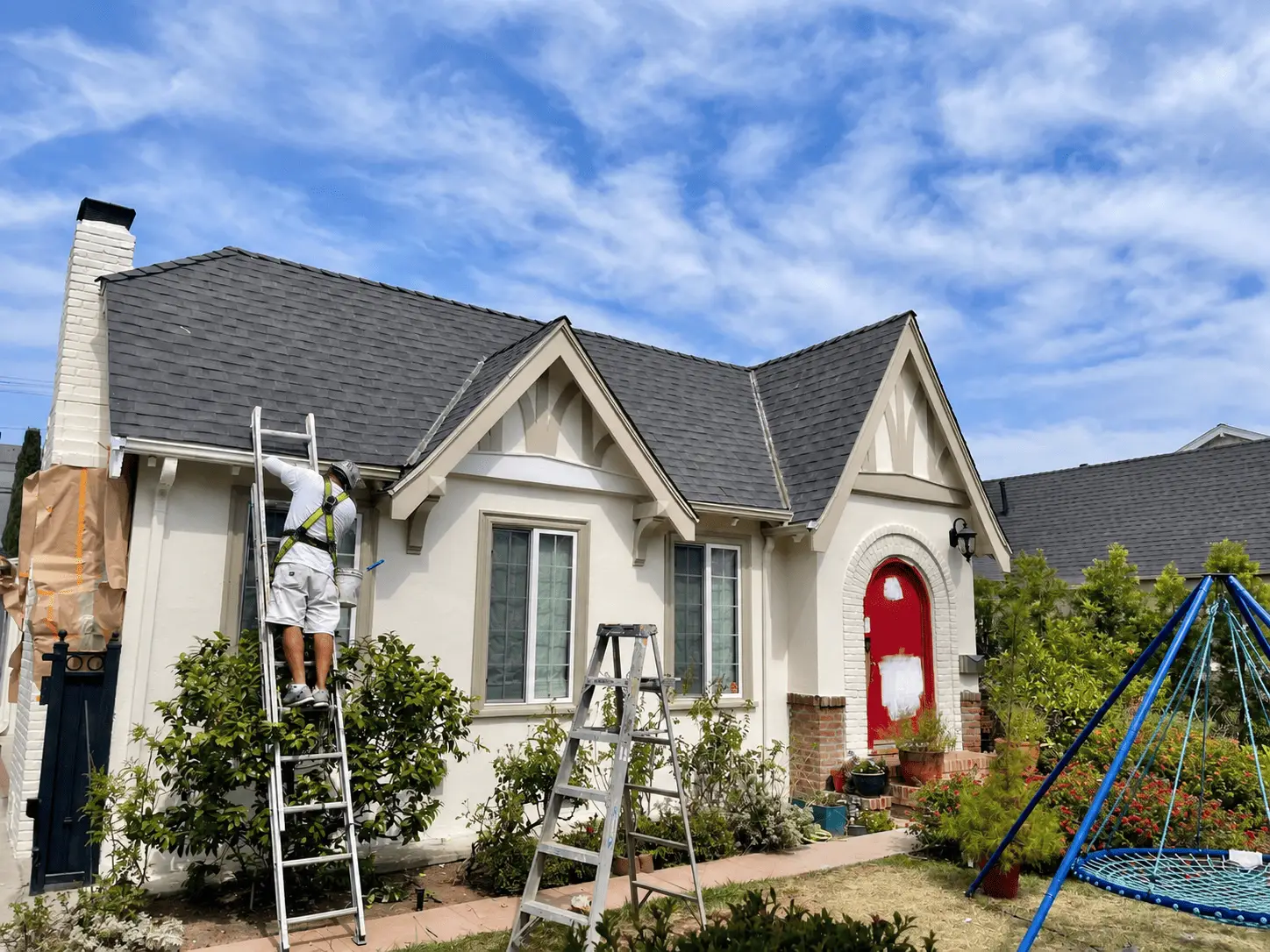
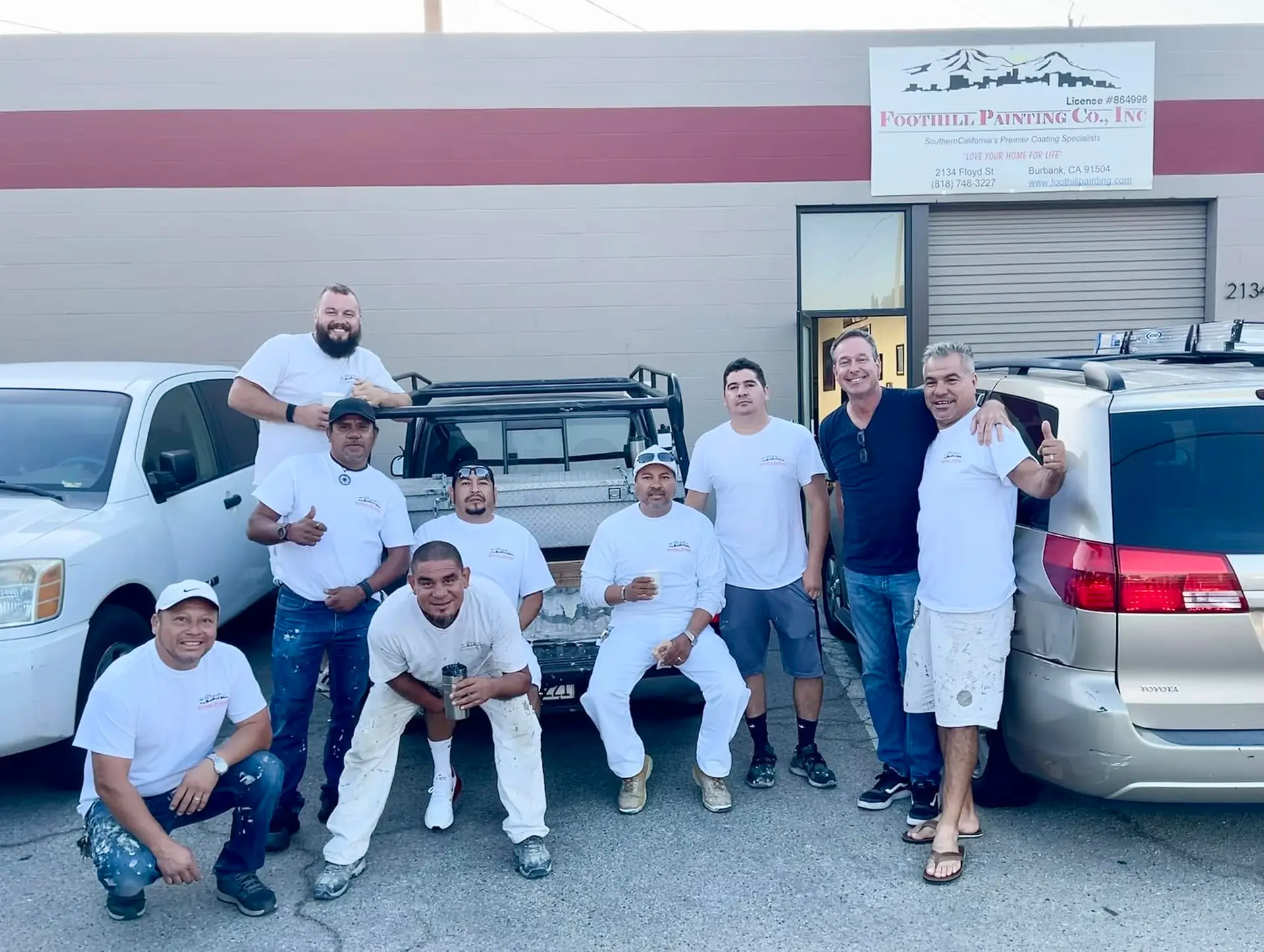
Our own W-2 crews on a Los Angeles exterior - never subcontractors.
Frequently Asked Questions About CoolWall and Fire Rated Exterior Coatings
Find Out What a Fire Rated Coating Would Cost on Your Home
Every home is different. Wall area, stucco condition, access, and how much other hardening work makes sense to bundle all affect the number. A Foothill Fire Hardening assessment gives you a written scope and price for your specific house.
Repainting soon? Ask what it costs to make that project a fire hardening project instead.