FOOTHILL FIRE HARDENING - A DIVISION OF FOOTHILL PAINTING
Fire Retardant Coatings for Wood Trim, Eaves & Exteriors
Keep the wood details that give your home its character - and give them a fighting chance against embers with fire retardant coatings applied by the crews that have painted Los Angeles exteriors since 1929.
We respond within 24 hours - usually the same day.
What Fire Retardant Paint and Intumescent Paint Do
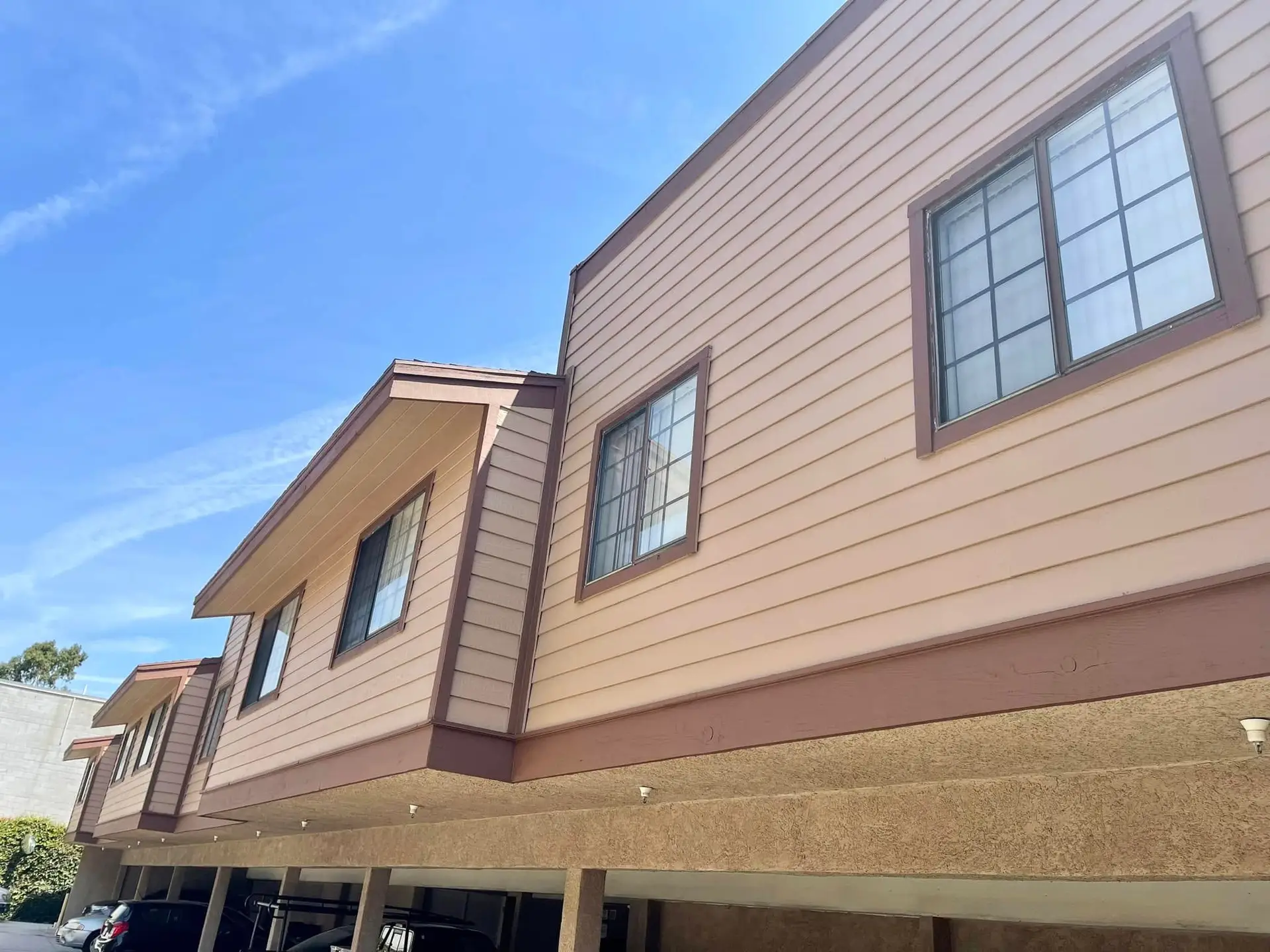
A fire retardant coating is a specialized paint or clear finish engineered to slow ignition and flame spread on the surface it covers.
The best-known type, intumescent coating, reacts to heat by swelling into a thick insulating char that shields the wood underneath. Under laboratory fire testing, these products can move a combustible surface into a better flame-spread class - the difference between wood that catches quickly and wood that buys time. Time is what lets an ember burn out instead of taking the eave with it.
For a homeowner in a fire severity zone, fire resistant paint for wood surfaces like eaves, corbels, siding, and trim answers a hard question: how do you harden those details without ripping off the character that makes the house yours? It is one layer of a complete wildfire home hardening plan.
There are two distinct approaches to fire-rated exterior coatings, and understanding the difference matters. Traditional fire retardant paint uses intumescent chemistry - when exposed to heat, the coating expands into an insulating char layer that slows flame spread. Class A barrier coatings like CoolWall and RhinoShield work differently. They resist ignition through sheer thickness and material composition rather than a heat-triggered reaction. Both carry fire ratings. The right choice depends on what you are protecting, the finish you want, and how long you want the coating to last. Homeowners weighing these options can compare CoolWall and RhinoShield barrier coatings.
Why Exposed Wood Is the Soft Target
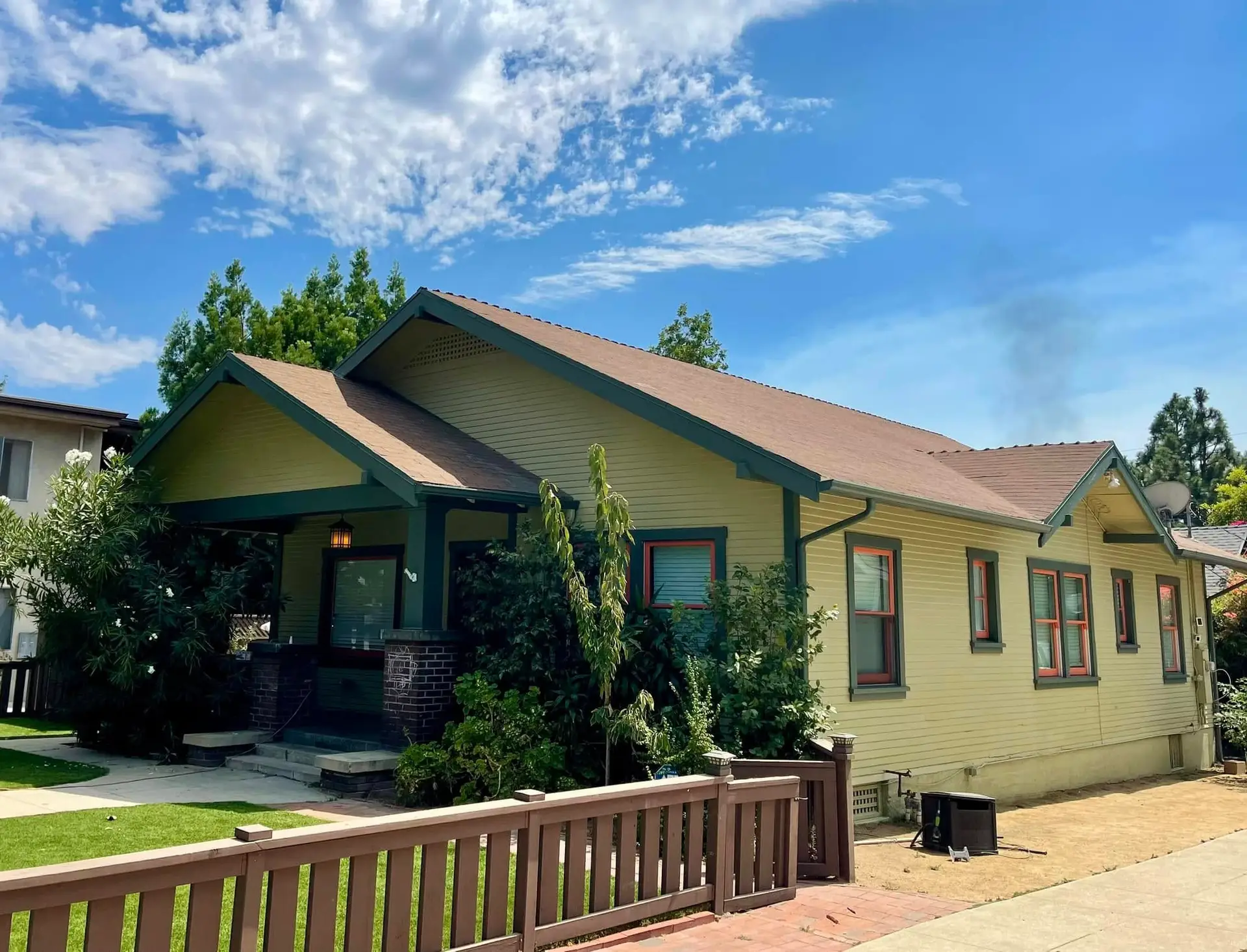
Deck boards, trim edges, and open eaves - the fine, dry wood surfaces that catch first in an ember storm.
Embers ignite fine, dry fuels first. On a house, that means the thin edges of wood trim, the underside of open eaves where heat collects, fence tops, and weathered deck boards - surfaces that have baked through decades of Southern California summers.
California's Office of the State Fire Marshal reports that 60 to 90 percent of wildfire home ignitions begin with embers, and eaves and projections are on its list of vulnerable building features for exactly this reason.
Foothill and canyon homes carry more of this risk than most. The craftsman and mid-century houses of Altadena, Pasadena, and La Canada Flintridge were built with generous wood detail - in the same decades our company was painting them the first time.
Or call (818) 748-3227 and ask about coating your exposed wood - no pressure, no obligation.
The Situations That Bring People to Us
Honest Talk: What Coatings Can and Cannot Do
Coatings supplement hardening; they do not replace it. Anyone who tells you a coating alone fire-proofs a house is selling something.
No paint makes wood fireproof, and a coated eave above a burning shrub in Zone 0 is still in trouble. What a properly specified, properly applied coating does is real: it slows ignition and flame spread on surfaces you cannot practically replace, and it stacks with ember-resistant vent upgrades and a clean five-foot zone into a home that resists ember attack from several directions at once.
Ratings matter here. Products carry specific fire-test listings for specific uses and film thicknesses, and a rating earned in a lab is only delivered on your house through correct surface prep and application - which is the part that has been our trade for nearly a century.
A consultation costs you nothing, and it starts with which surfaces are worth coating - not with a sales pitch.
Our Fire Retardant Coating Services
Intumescent Paint for Wood Trim and Eaves
Heat-reactive coatings for rafter tails, corbels, fascia, open eaves, and architectural wood detail - protection that preserves the profile and takes a finish coat in your color.
We apply intumescent and fire retardant coatings across several product categories matched to the material and finish you need:
- Intumescent clear coats for natural wood preservation - these let the grain and character of the wood show through while adding tested fire protection
- Pigmented intumescent systems for trim, eaves, fascia, and other painted surfaces
- Fire retardant additives that can be mixed into standard exterior paint during application
Each product category includes options rated to different fire performance standards depending on the substrate and the level of protection required.
Fire Retardant Coatings for Wood Siding & Fences
Clear and pigmented retardant systems for wood siding, gates, and the house-adjacent fence runs that Zone 0 rules put under scrutiny.
Deck Coating Options
Film-forming retardant systems for existing wood decks - an interim layer of protection where deck replacement is not yet on the table. We are direct about the limits: a coating improves a deck's odds and does not turn it into a noncombustible deck.
Class A Roof Coating Options
Rated coating systems that help a qualifying roof assembly perform at Class A, the highest fire classification for roofing. See our roof coatings page for the full service, or ask us whether your roof qualifies.
High-Value Fire-Rated Coatings
For homeowners looking beyond traditional fire retardant paint, Class A fire-rated barrier coatings like CoolWall and RhinoShield offer permanent fire protection combined with heat reflection and 25-year warranties. These coatings are 8 to 10 times thicker than standard paint and serve as both a hardening upgrade and a long-term exterior finish.
Because they resist ignition through material composition and thickness rather than a chemical heat reaction, they perform differently than intumescent products - and they never need recoating on a typical paint cycle. See CoolWall and RhinoShield options.
How a Coating Project Works
CONSULTATION
We look at your exposed wood and roof surfaces, confirm what is coatable and what genuinely needs another solution, and say so plainly.
SPECIFICATION
You get a written spec: product, listing, surface prep, film thickness, and finish system - the details that decide whether a rated product performs as rated.
APPLICATION
Our own W-2 crews prep and apply to the manufacturer's specification. Surface prep is where 97 years of painting matters most.
DOCUMENTATION
Product data sheets, batch records, and photos delivered for your insurance file and any future AB 38 disclosure.
This Is the Part of Fire Hardening We Were Built For
Application is the whole game with fire retardant coatings, and application is what Foothill Painting has done since 1929. Same family, same Burbank shop at 2134 Floyd St., same standard: W-2 crews we trained ourselves, never subcontractors.
We are EPA certified, we work in premium lines from Dunn-Edwards and Sherwin-Williams alongside specialized fire retardant systems, and we carry CA License #864996. If your eaves and trim need paint anyway, the exterior painting crew and the coating crew are the same people.
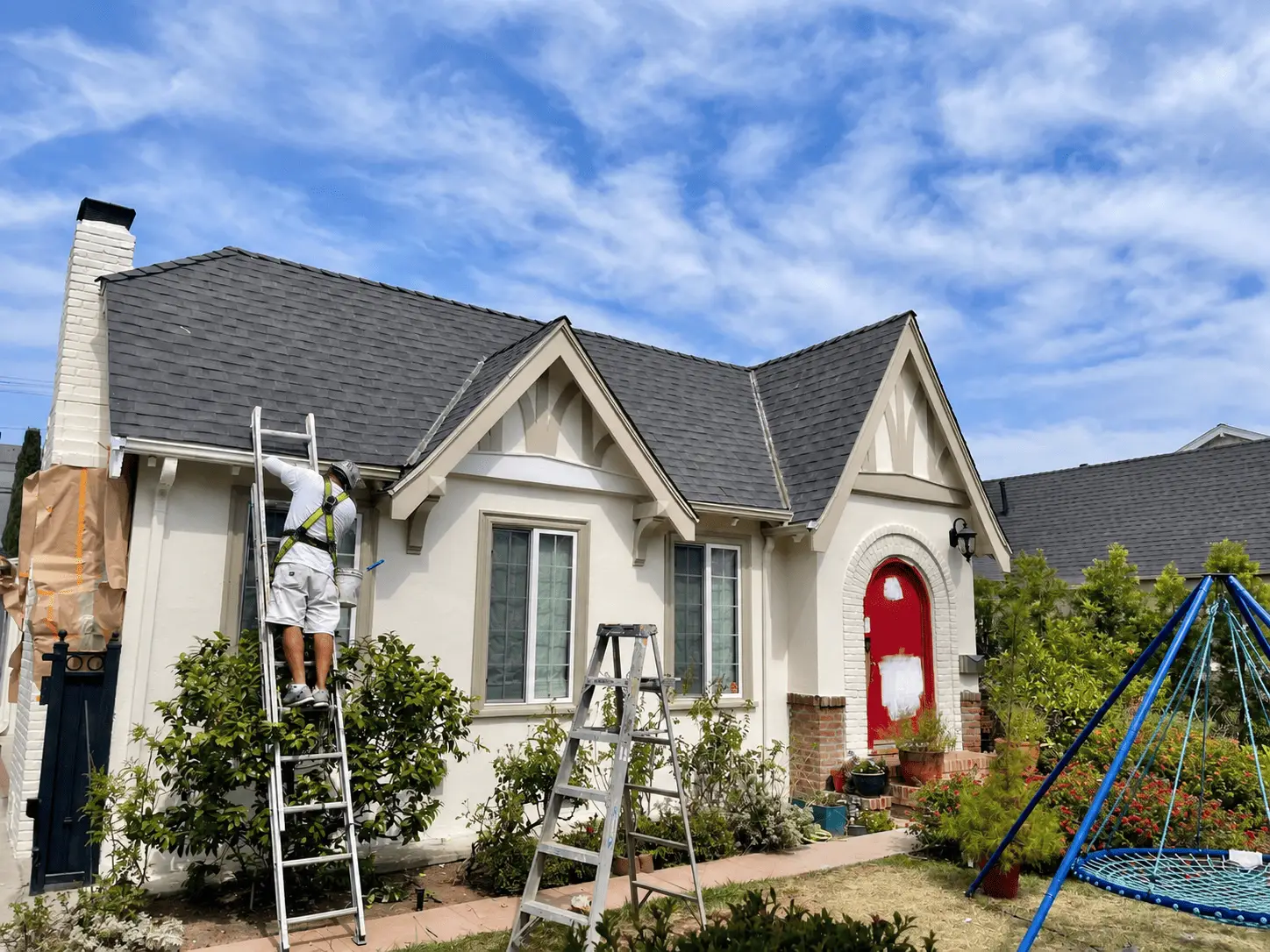
Exterior painting work at the eave line - the same surfaces, prep discipline, and crews behind every coating project.
Frequently Asked Questions About Fire Retardant Paint
Find Out Which Surfaces Need Coating
Not every surface on your home needs the same treatment. A Foothill Fire Hardening assessment identifies the exposed wood that matters most and recommends the right coating for each.
Repainting soon? Ask what it costs to make that project a hardening project. Coatings are one layer of wildfire home hardening - see the whole picture on our fire hardening hub.