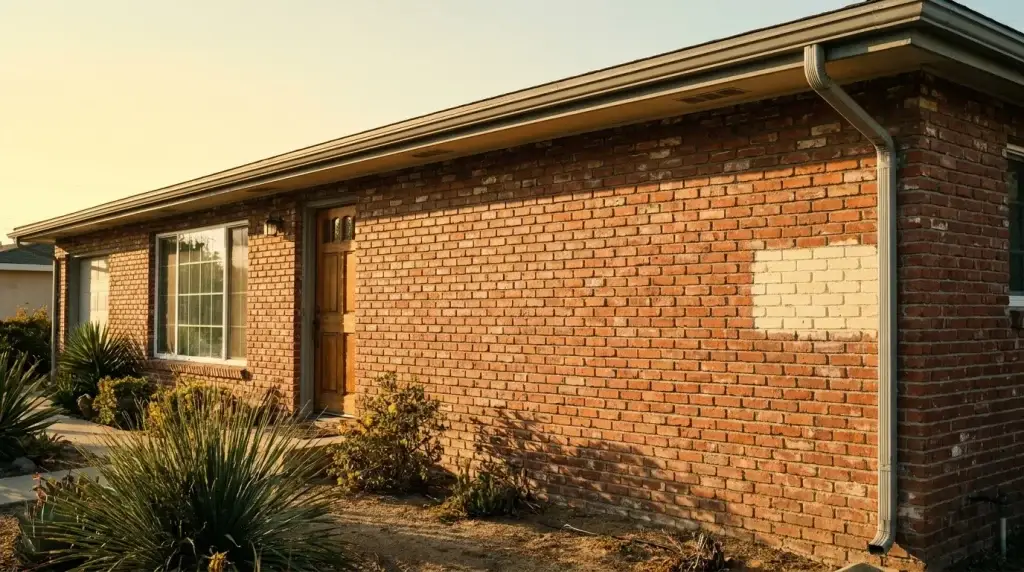
Exterior brick painting means cleaning the masonry, repairing cracked brick and open mortar joints, letting the wall dry fully, priming where the product calls for it, and applying a coating built for masonry. It covers four situations: a dated ranch refresh, a previously painted house that is peeling, older or soft brick, and a multifamily or small commercial facade.
Contents – What Painting a Brick House Involves and Who It Suits – How to Decide Which Path You Are On – Will Painting Trap Moisture or Damage the Brick? – Choosing a Coating: Paint, Stain, Silicate or Limewash – Painting Outside House Trim Next to Brick – Gutters and Brick: Why Water Management Comes First – Siding, Stucco and Mixed-Material Exteriors – What Painting Brick Costs – When to Hire a Pro for Brick
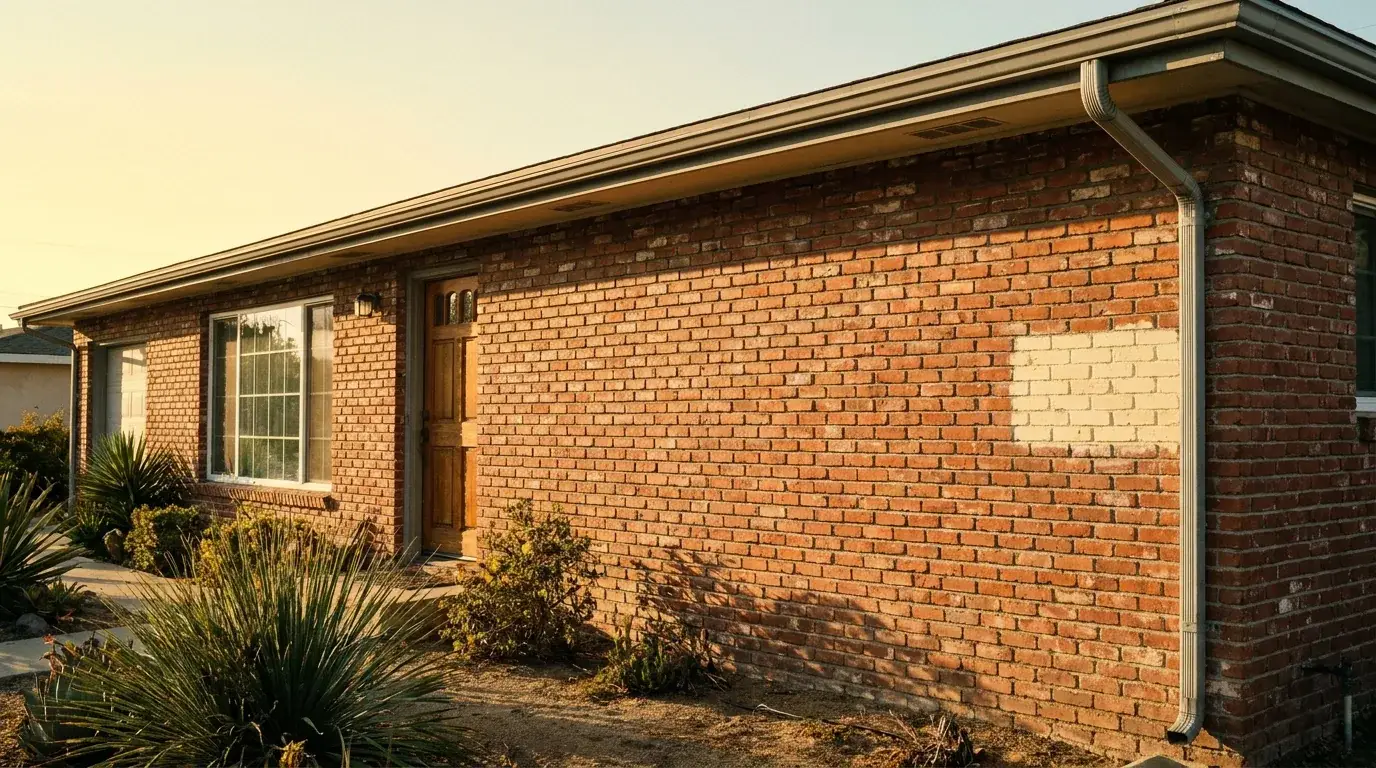
What Painting a Brick House Involves and Who It Suits
Each situation brings its own concerns:
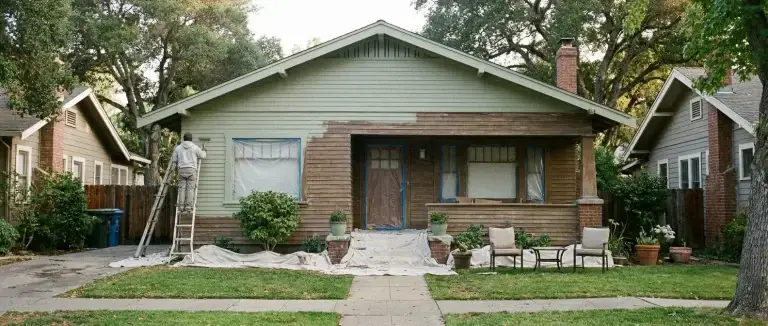
- A dated ranch or mid-century home where orange or mottled brick fights every other design choice.
- A house that was painted before and is now peeling, chalking or patchy.
- Older or soft brick that needs a gentler, more breathable finish.
- A multifamily building or small commercial facade that needs a uniform look.
The biggest downsides are permanence and upkeep. Once a film of paint is on, it’s very hard to get off. A wall that needed almost nothing now needs washing, touch-ups and recoating on a schedule. Think of it as adopting a pet. Lovely, but it needs you every year. If none of the four situations fit and the brick looks fine, leaving it alone is a perfectly good answer.
How to Decide Which Path You Are On
Three questions, in order: what’s the wall made of, where’s the moisture going, and what shape are the brick and mortar in?
Question 1: What is the wall made of? – Modern brick veneer over a framed wall with weep holes and flashing: most coatings are on the table. Verdict: go to the coating section. – Older solid brick, often laid with soft lime mortar: stick to highly breathable systems. Verdict: read the moisture section first.
Question 2: Where is the moisture going? – Dry wall, dry interior, working gutters: move on. – Damp spots or musty rooms behind brick walls: find the water first. Verdict: see the gutters section, then the hiring section.
Question 3: What shape are the brick and mortar in? – Sound and dry: paint, stain or limewash, depending on the look you want. Verdict: see the coating section. – Previously painted: chalk on your palm means wash and prime, sandy mortar takes a masonry conditioner before priming, mildew gets a bleach solution and a wash, and peeling across large sections means budgeting for stripping. Verdict: see the cost section. – Spalling, powdery or crumbling: stop. Verdict: see the hiring section.
Your goal matters too. A full color change points to paint, keeping the brick look points to stain or limewash, and paint as a cover-up for damage never works.
Do not paint yet if you see:
- Active leaks at windows, chimneys or roof lines
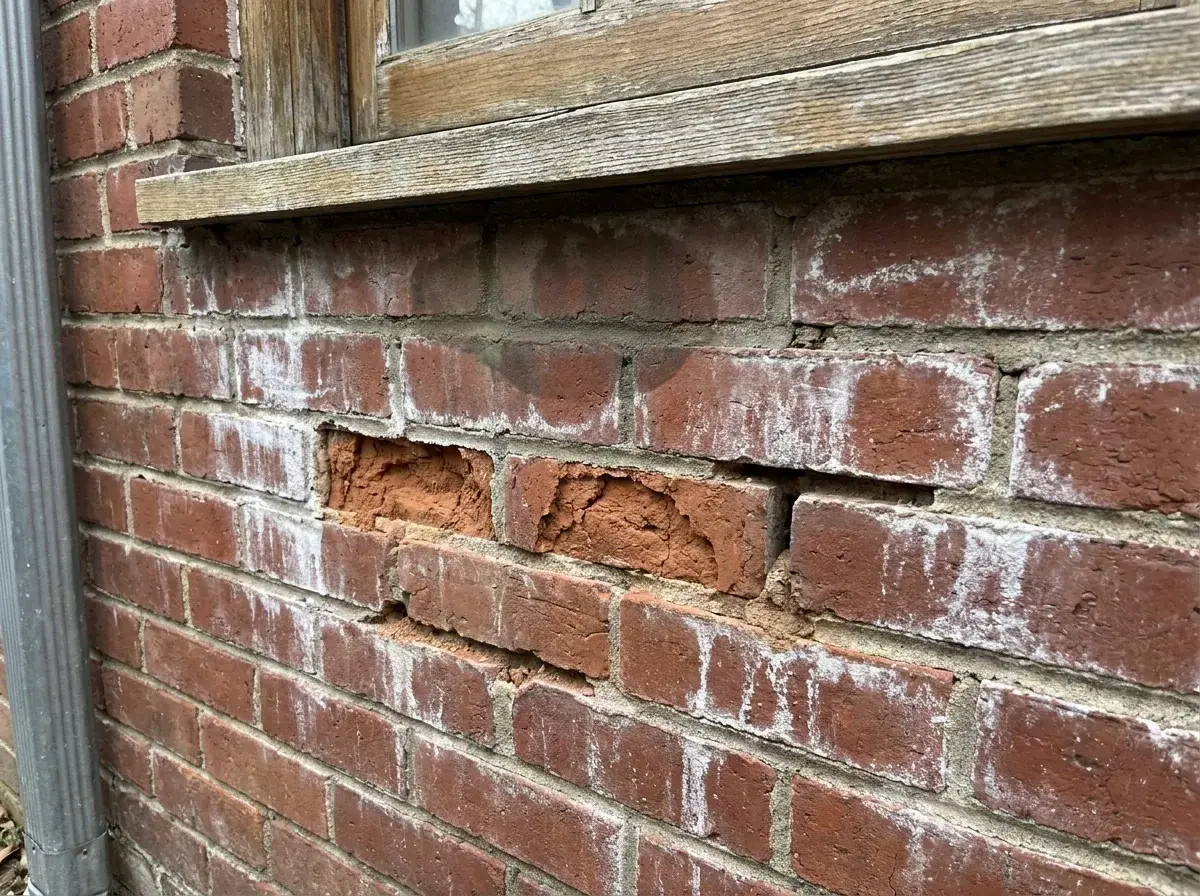
- Efflorescence, the white powder left by water moving through the brick
- Damp interior walls behind the brick
- Crumbling or flaking brick faces
- Failing, recessed or sandy mortar joints
If you’d like a second set of eyes on which path your wall is on, you can request a free estimate and wall assessment.
Will Painting Trap Moisture or Damage the Brick?
It can. Most of the risk sits in the wall itself, more than in paint color or brand. Brick soaks up water and dries by letting vapor escape through its face. A film-forming coating slows that drying for as long as it stays on, and if water keeps getting in from a bad gutter or a cracked sill, it stays in. That’s when paint blisters and brick faces pop off, the failure called spalling.
Before any coating, check the flashing, gutters and downspouts, window sills, the chimney cap and crown, and every mortar joint. Painting won’t fix a leak. It can hide one for a year or two while the damage spreads underneath.
Freeze-thaw cycles do the most harm in cold regions. The mild winters across much of Southern California lower that risk without removing it. Older soft brick is the riskier case anywhere, because the coating can outlast the masonry beneath it. If any check turns up a problem, the pro triggers in the hiring section apply.
Choosing a Coating: Paint, Stain, Silicate or Limewash
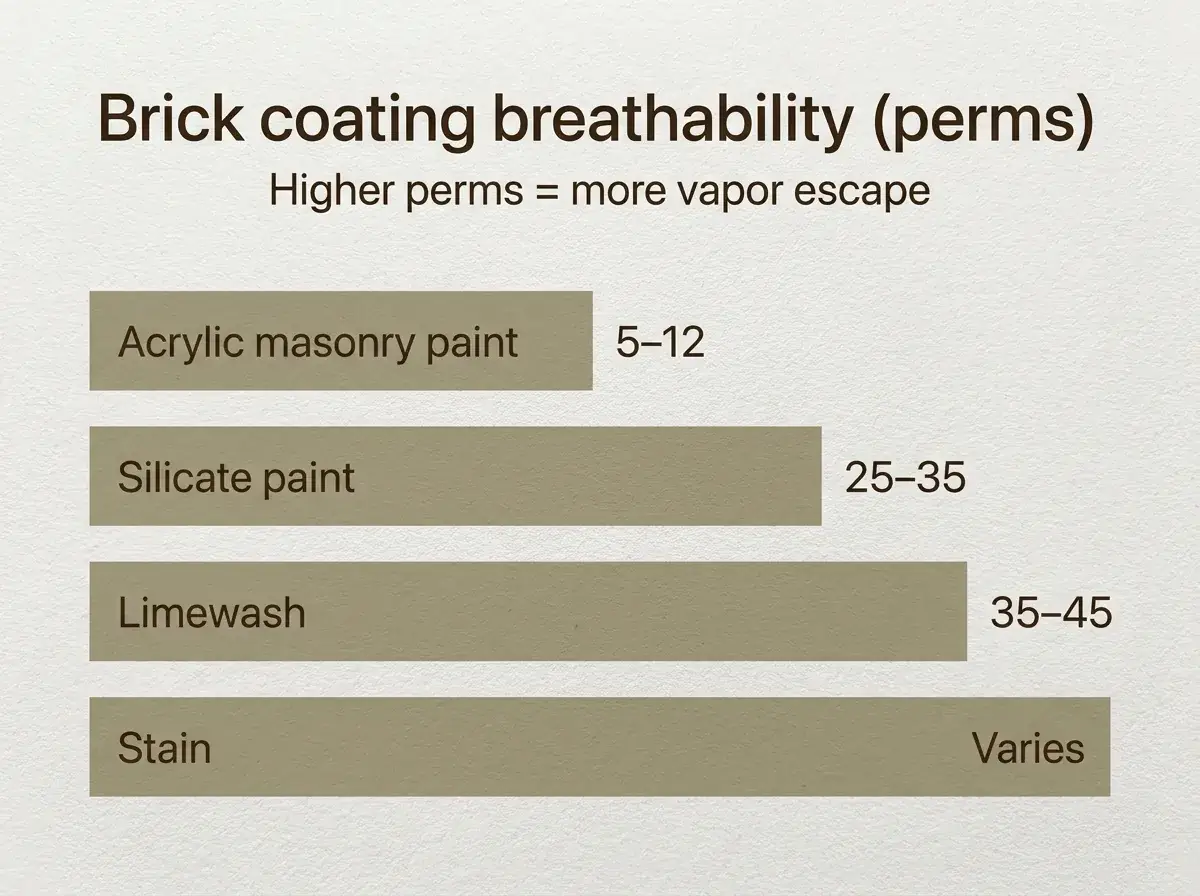
There are four types of brick coatings: acrylic masonry paint, silicate paint, limewash and stain. They differ by how they hold on. Acrylic forms a surface film. Silicate reacts with the brick and mineralizes into it. Limewash bonds without a conventional film. Stain soaks in and keeps more of the brick’s texture.
Reported figures put acrylic at about 5 to 12 perms, silicate at 25 to 35 and limewash at 35 to 45. Higher numbers let more vapor out. A mineral coating usually suits older brick, while acrylic can be fine on sound modern veneer. Elastomeric coatings call for caution, since their thick film slows drying even more. Interior paint never belongs outdoors.
For color, warm whites, soft grays and deep greens suit most ranch and Craftsman homes. Very dark colors soak up more heat in full sun, which stresses the finish. A flat or low-sheen finish keeps the masonry from looking plastic.
Painting Outside House Trim Next to Brick
The exterior parts of a house are its walls, whether brick, siding or stucco, plus the trim, fascia, soffits and gutters. On a brick house, the trim, fascia, doors and shutters are the parts most often painted. A contrasting trim color can make tired brick look intentional without coating a single brick. It’s lower commitment, easy to change later, and leaves the masonry’s low-maintenance nature alone.
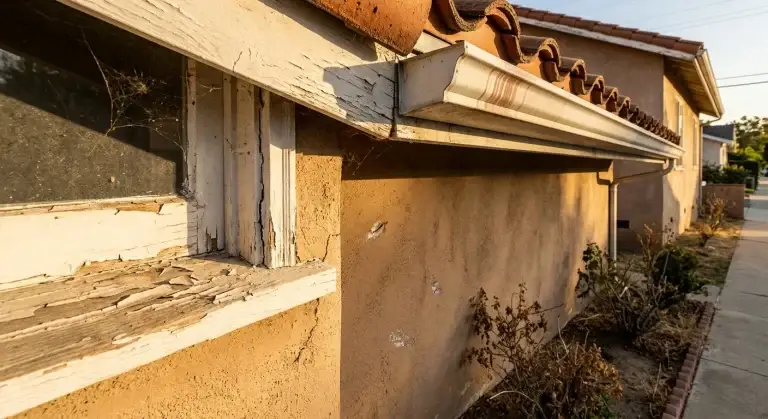
Black or dark bronze trim sharpens red brick. Creamy white softens it. A deep door color gives the entry a focal point. Prep still matters, especially where wood trim meets mortar and caulk joints have opened up. For the full method, from scraping and priming to cutting clean lines against masonry, see “painting outside house trim.”
Gutters and Brick: Why Water Management Comes First
Overflowing gutters, short downspouts and failed flashing are among the most common reasons brick paint peels within a few seasons. Water comes first, then the coating.
Walk the house during or right after a rain. Look for streaks under gutter seams, splash marks near the foundation, and dark patches below windows and around the chimney. Fix those, let the wall dry, and only then coat it.
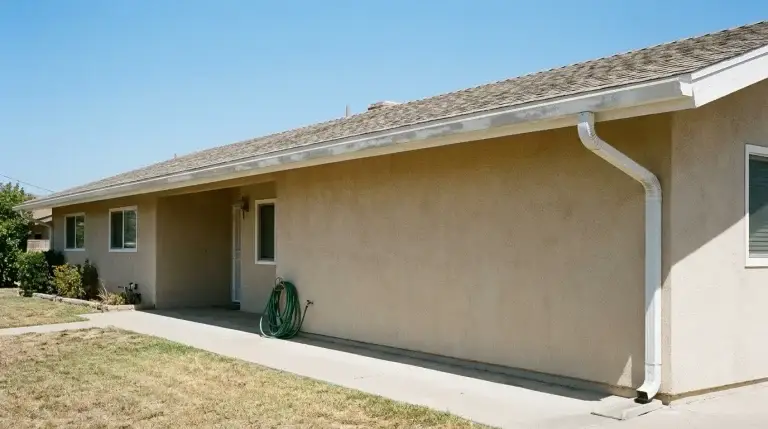
Painting aluminum or galvanized gutters can be worthwhile when they’re sound and you want them to match new trim colors. It makes little sense on gutters that leak, sag or pull away from the fascia. For the full paint-or-replace decision, see “painting house gutters.”
Siding, Stucco and Mixed-Material Exteriors
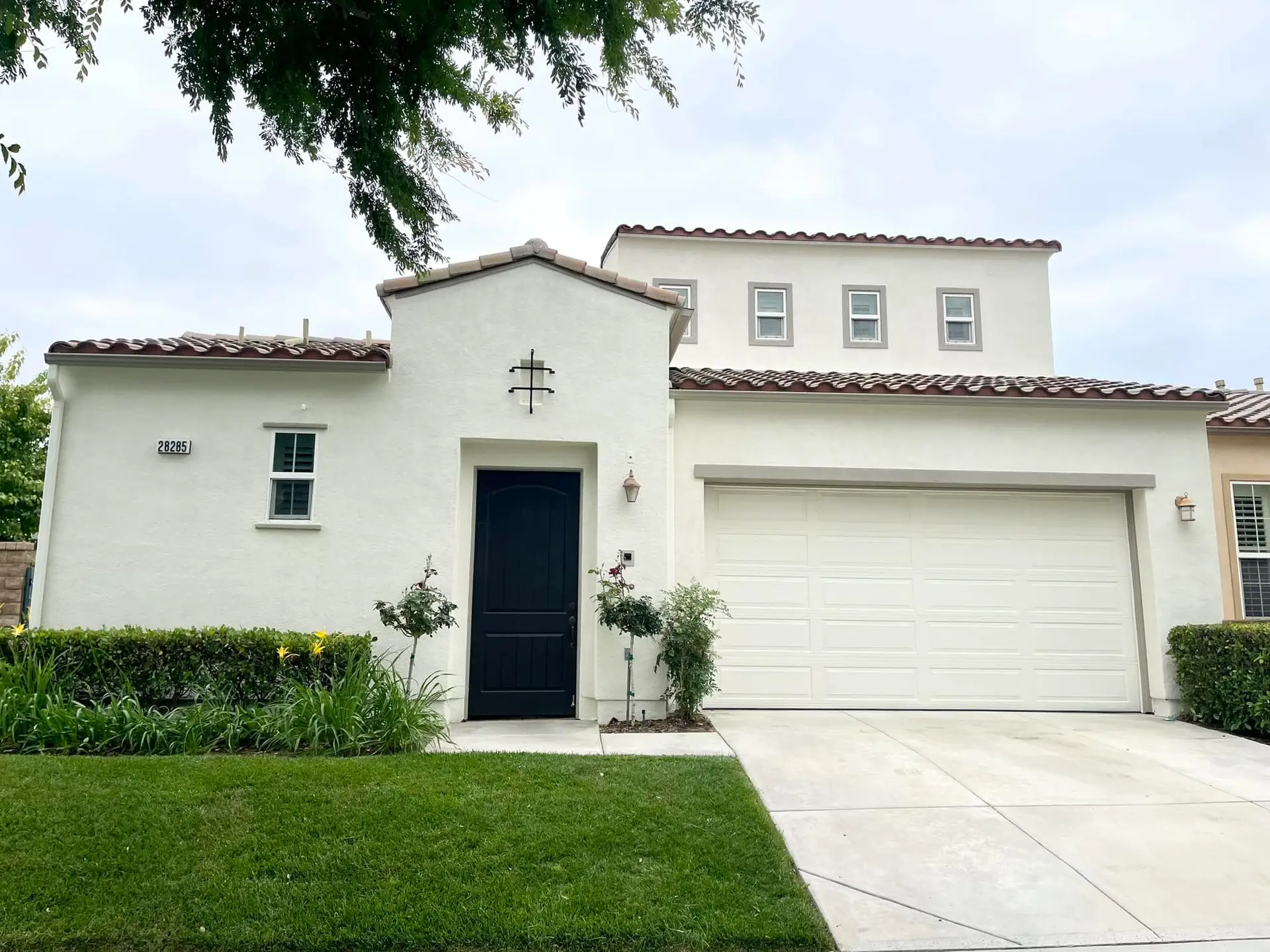
Brick veneer shows mortar lines and a rough, porous face. Stucco is a continuous cement plaster, common on Spanish Colonial Revival and stucco ranch homes. Wood and fiber cement siding come as overlapping boards or panels. Press a finger to a hidden spot and the texture usually tells you.
A house with brick plus siding or stucco needs separate prep, primers and dry times for each surface, so the job runs longer than a single-material repaint.
Are exterior wall coatings a good idea? On sound stucco in hot sun, often yes. On brick, rarely. CoolWall from Tex-Cote, an infrared-reflective 100% acrylic elastomeric applied at 8 to 12 mils dry film thickness, can lower surface temperature by up to 40 degrees F against conventional paint in the same color, varying with color, wall orientation and sun exposure. For what a siding repaint looks like day by day, see “house siding painting.”
What Painting Brick Costs
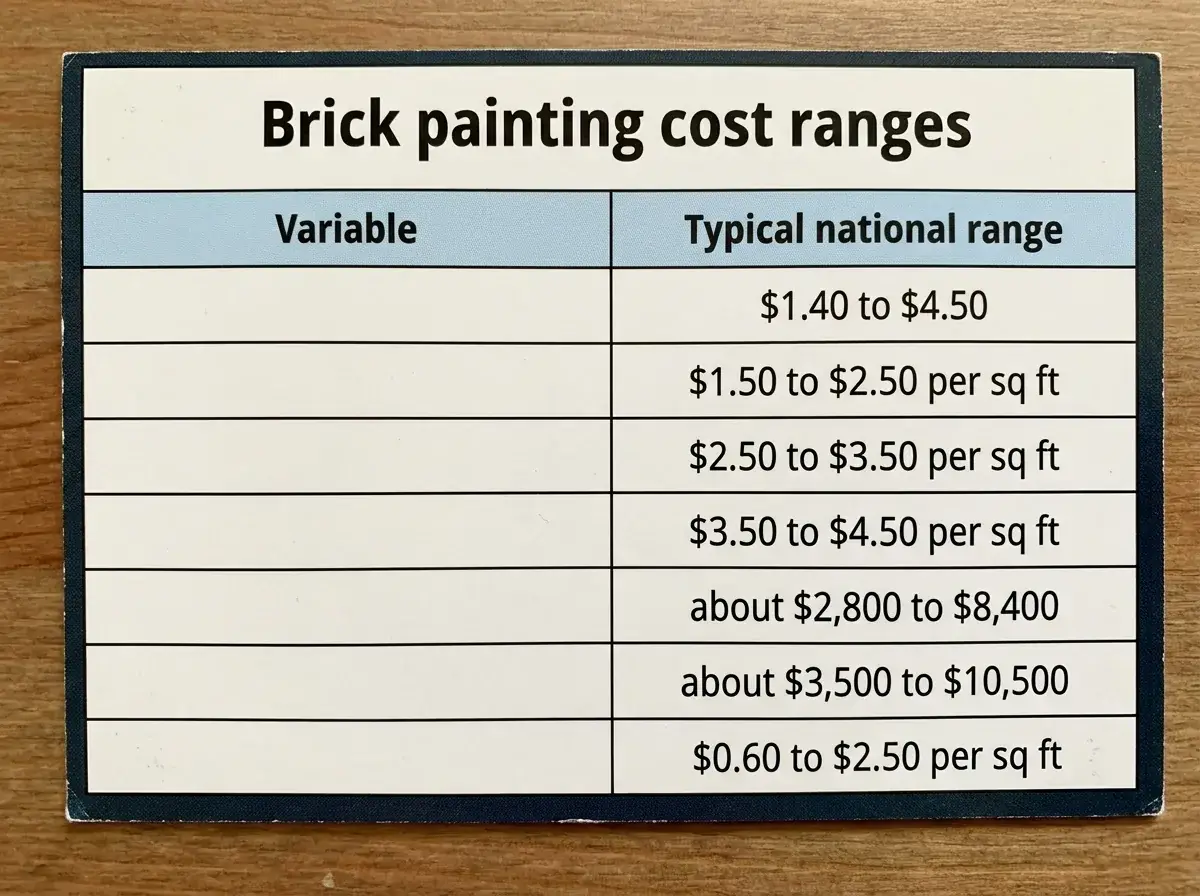
Painting a brick house typically costs about $1.40 to $4.50 per paintable square foot nationally. Height, detail and prep move a project up or down that range.
| Variable | Typical national range |
|---|---|
| Benchmark, per paintable sq ft | $1.40 to $4.50 |
| One-story or ranch | $1.50 to $2.50 per sq ft |
| Two-story | $2.50 to $3.50 per sq ft |
| Tall or detailed brickwork | $3.50 to $4.50 per sq ft |
| 2,000 sq ft of paintable wall | about $2,800 to $8,400 |
| 2,500 sq ft of paintable wall | about $3,500 to $10,500 |
| Stripping failed old paint, add-on | $0.60 to $2.50 per sq ft |
The rate applies to paintable wall area, not floor area. Porous brick covers roughly 150 to 250 square feet per gallon per coat and often needs two to three coats, which explains a lot of quotes that seem high. Scaffolding or a lift, mortar repair, stripping and dark color changes push a bid up. A bid well below the benchmark often leaves out primer, a second coat or repairs. These are national figures and local prices vary, so every bid should state the measured area, prep steps, repair allowances, primer, number of coats, product and access equipment.
- Compare bids line by line, since what’s excluded matters as much as the price.
When to Hire a Pro for Brick
Hire a professional when the wall shows damage, the access is high, or the old coating may contain lead. Brick painting is a reasonable DIY project only on a sound, dry, single-story wall with no peeling or moisture history.
Call a pro for:
- Spalling brick or failing mortar, which needs a mason before a painter
- Persistent dampness or efflorescence that keeps returning after cleaning
- Older soft brick laid in lime mortar
- Two-story walls that need scaffolding or a lift
- Peeling old coatings that must be stripped, since stripping cured acrylic can scar the brick face and mortar
- **As the U.S. EPA notes, a contractor can test for lead or simply assume it’s present and follow federal lead-safe rules without testing.
- HOA or historic-district rules on exterior colors or painted masonry
Ask any contractor:
- Is every person on site your employee, or do you subcontract?
- Will I get a written contract with a fixed price?
- Do you apply paint at the manufacturer spread rates?
- What does the written warranty cover, and what keeps it valid?
Foothill Painting will walk your home, tell you what shape the brick and mortar are in, and refer masonry repairs that need to come first. Its trained W-2 crews never rush prep and apply Dunn-Edwards or Sherwin-Williams paint at the manufacturer’s spread rate, never thinned, under a written contract and a written warranty. The team works from a real office at 2134 Floyd St. in Burbank and answers every request within 24 hours, usually the same day. When you’re ready, schedule your free brick painting estimate and get a written price that’s valid for 30 days.
Frequently Asked Questions
What is the best month to paint a house?
Pick a stretch of dry, mild weather, typically spring or fall in Southern California. Most masonry coatings want surface and air temperatures above about 50 degrees F and no rain in the forecast during cure. Skip painting a sun-baked wall at midday in summer. Fast drying causes lap marks and weak adhesion.
What color to paint a brick house?
Look at what won’t change: the roof, any stone and the surrounding landscape. Warm whites, greige and soft gray suit most ranch and mid-century homes, while deep green or charcoal reads well on Craftsman and Tudor shapes. Before and after photos of painted brick houses almost always show that a test patch on the actual wall beats a paint chip.
What exterior color makes a house look expensive?
Restrained palettes tend to read as high end: a warm white or deep charcoal body, black or dark bronze trim, and one natural accent such as a stained wood door. Limiting the house to two or three colors does more than any single shade. High-contrast trim lines also make the architecture look crisper.
Which finish is best for the exterior?
On brick, flat or matte finishes look most natural and hide surface irregularities. Satin works for trim, doors and shutters because it wipes clean more easily. High gloss on masonry tends to highlight every bump and mortar line, so save it for small accents, if you use it at all.
How many coats does porous exterior brick need?
Plan on two to three coats over a masonry primer where the product calls for one. Very absorbent or previously unpainted brick often needs the third coat. Spraying each coat and then back-rolling it pushes paint into the mortar joints. Give it dry time between coats, following the manufacturer’s recoat window.
How long should brick dry after washing before painting?
One commonly cited guideline is about 5 to 7 days of dry weather for exterior brick. Walls that soaked up water deeply, or sit in shade, may need longer. Painting damp brick to stay on schedule invites blistering and peeling.
Can you paint over previously painted brick without removing the old coating?
Yes, if the old paint is tight and well bonded. Rub your palm on the wall for the chalk test, scrape and test any loose areas, wash the wall, and spot-prime bare patches. If paint is peeling across large sections, it has to come off first, or the new coat will fail along with it.
Can you paint brick pavers?
You can, but paving takes foot traffic, water and abrasion that walls never see. A coating made for concrete or masonry floors is the right call, ideally a penetrating stain rather than a film. Expect touch-ups far sooner than on a vertical wall.
Do lead paint rules apply if I paint my own brick house?
According to the U.S. EPA, the federal Renovation, Repair and Painting Rule does not cover homeowners working on their own homes. The hazard still applies, though. If your home was built before 1978, test old paint before scraping and use lead-safe practices such as plastic sheeting and wet scraping.