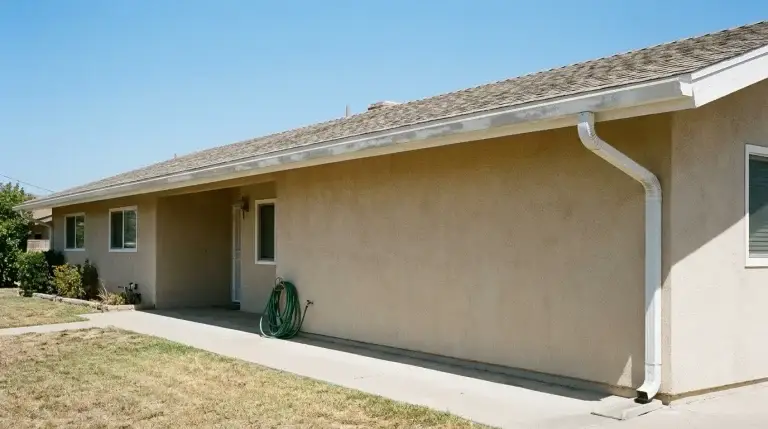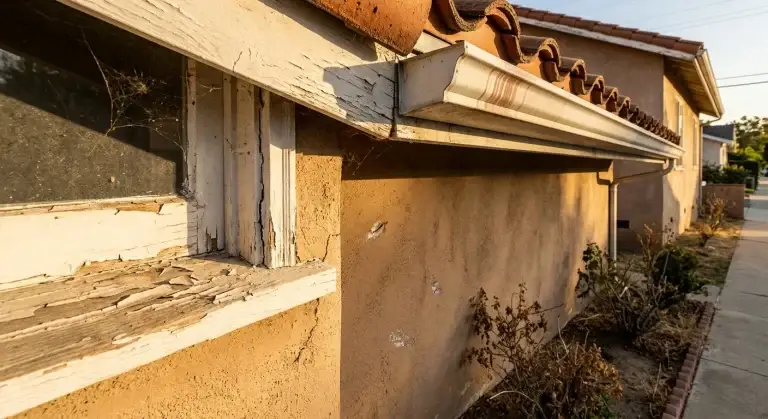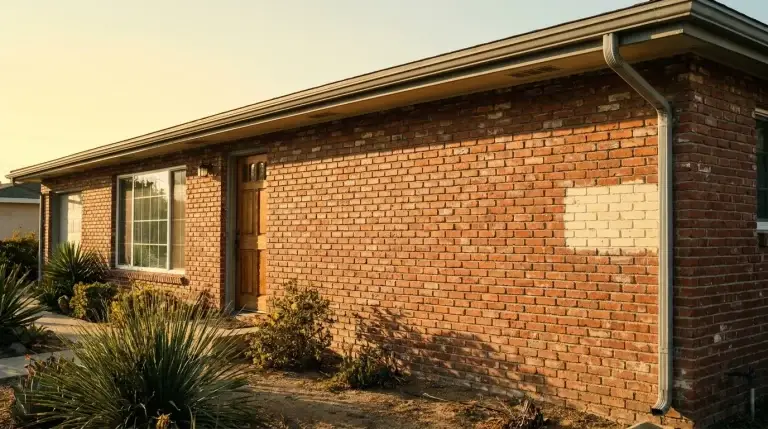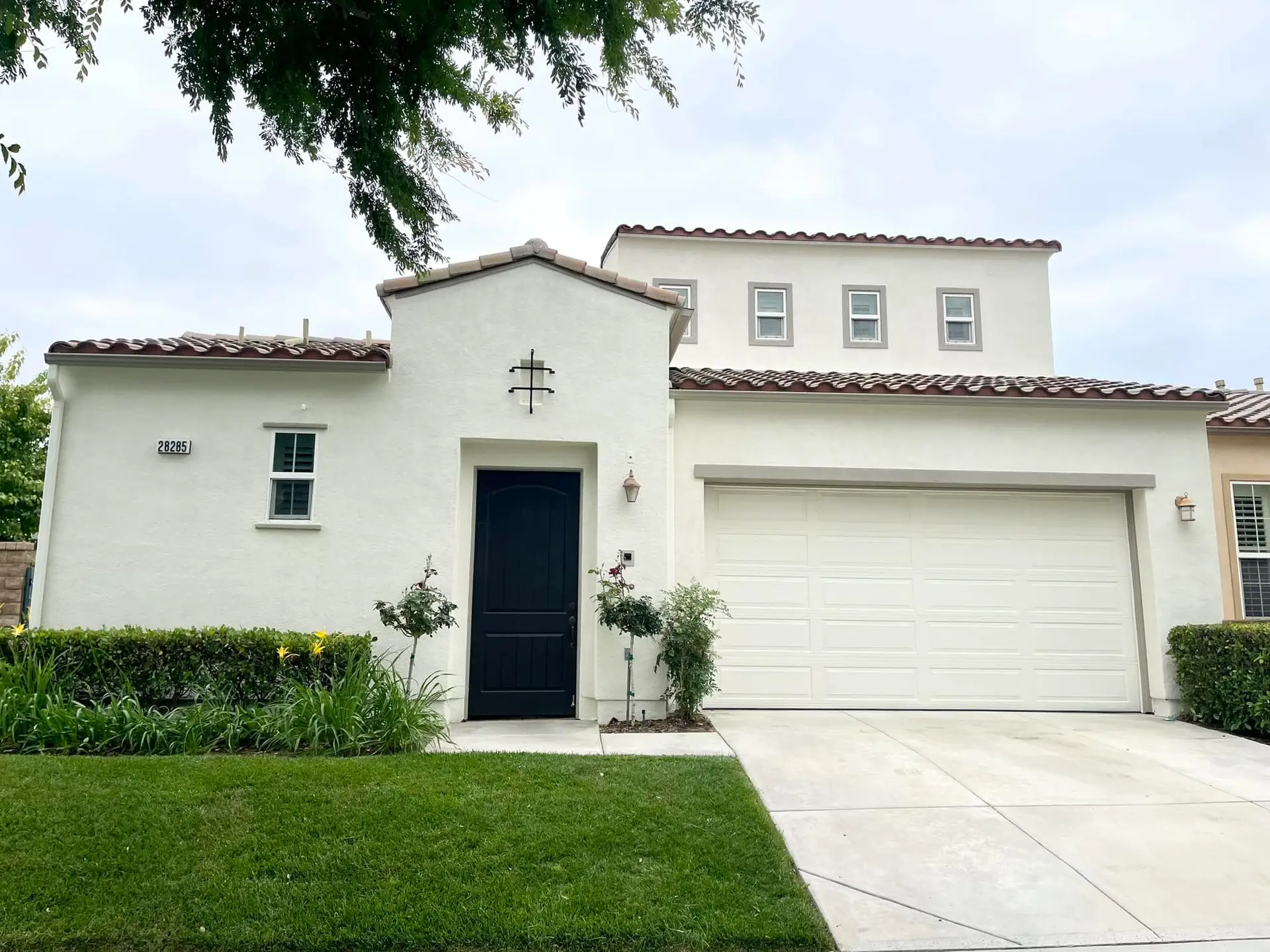
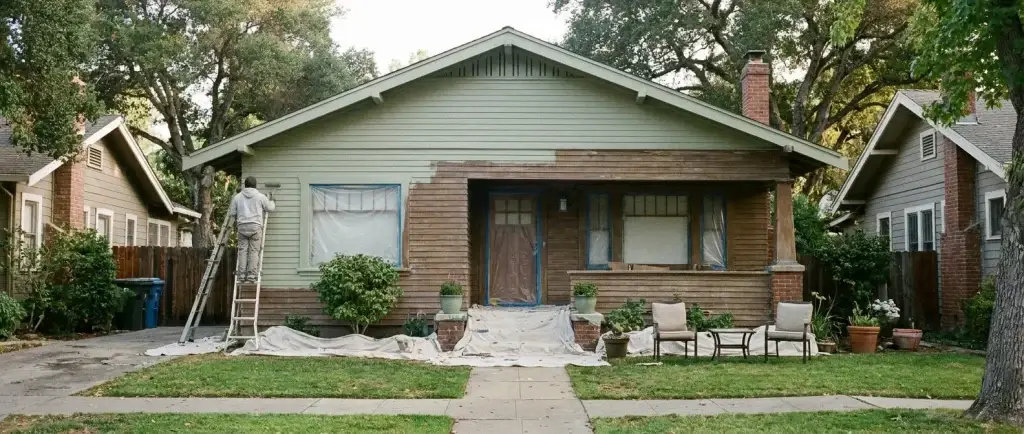
A typical single-story house siding painting project takes 4 to 7 working days of crew time, spread across about 1 to 2 calendar weeks once drying and recoat waits are counted. Most of the waiting is planned. Wet wood, curing caulk and recoat windows set the pace as much as the brushes do.
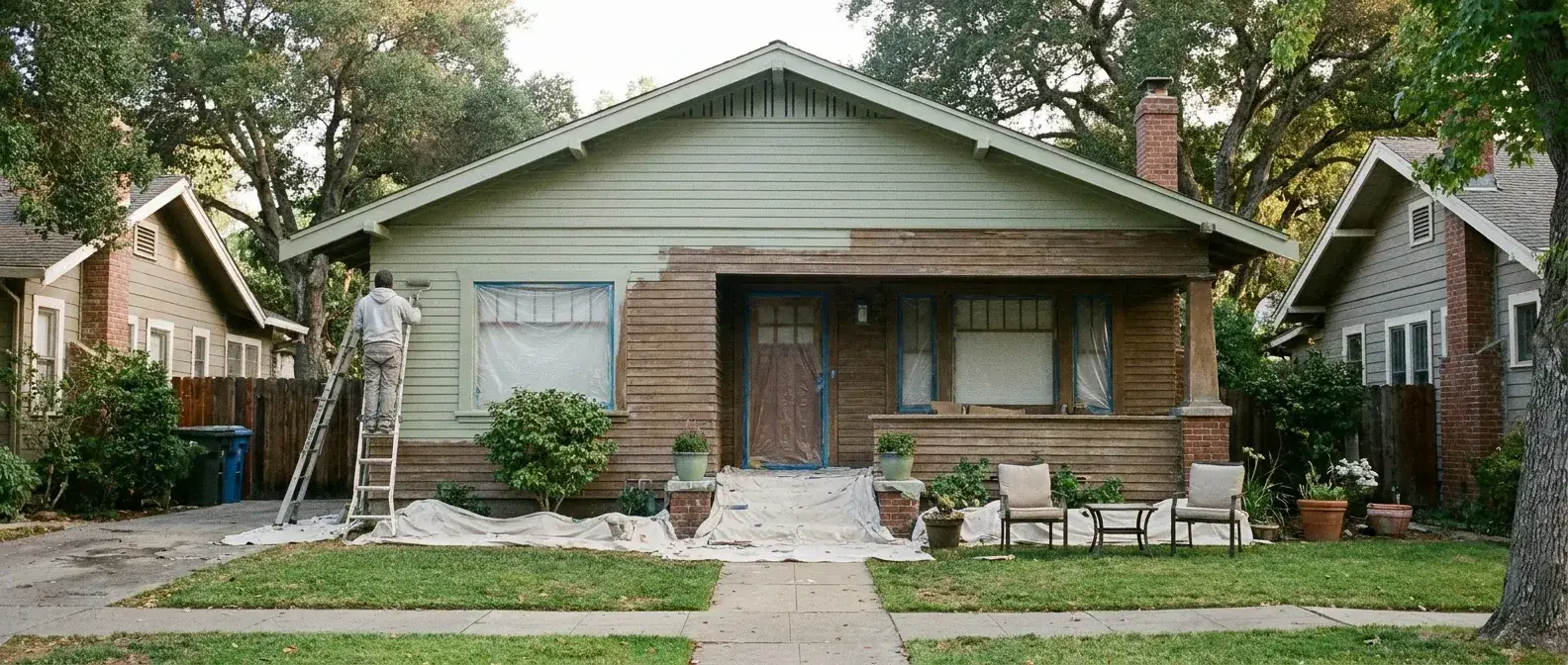
How Many Days House Siding Painting Takes
A typical single-story siding repaint takes 4 to 7 working days of crew time, spread across about 1 to 2 calendar weeks once drying and recoat waits are counted. A two-story home, or one with real repairs, usually runs 2 to 3 weeks. No single number fits every house. Size, height, siding type, the condition of the old paint and the weather can each add days.
House siding painting jobs tend to move in the same sequence:
- Inspection and a written scope.
- Protection and washing.
- A dry-out wait.
- Scraping, repairs, caulking and primer.
- Two finish coats.
- Cleanup and a walk-through.
The crew works about half of that calendar. The other half is waiting, and that waiting protects the paint.
Timeline at a Glance
A realistic schedule runs phase by phase. Each phase has its own time range and a small job for you.
| Phase | What happens | How long | What you do |
|---|---|---|---|
| Inspection and scope sign-off | Surfaces checked, repairs noted, schedule written | 1 to 2 hours on site, then days until start | Pick colors and sheen, approve repairs, sign |
| Site prep | Furniture, vehicles and plants cleared | Your time before day one | Move items, trim plants, secure pets |
| Masking | Windows, doors, plants, HVAC and lights covered | A few hours to 1 day | Keep windows closed |
| Washing | Dirt, chalk and mildew removed | A few hours to 1 day | Leave hose bibs and power available |
| Dry-out | Siding and joints dry fully | Overnight to 2+ days | Nothing, expect a quiet day |
| Scraping and sanding | Loose paint removed, edges feathered | Half a day to 2+ days | Keep kids and pets away from debris |
| Repairs and caulking | Rot fixed, gaps sealed, caulk cures | A few hours to several days | Approve any change order in writing |
| Priming | Bare wood, repairs and stains primed | 1 day spot, 2+ days full | None |
| First coat | Field of the siding painted | About 1 day | Watch the forecast with the crew |
| Recoat wait | Coat reaches recoat condition | Several hours to next workday | None |
| Second coat and details | Siding, trim, doors and edges finished | About 1 day | Point out anything you notice |
| Cleanup and walk-through | Masking pulled, debris hauled, punch list | A few hours | Walk every wall with the lead |
Phase 1: How to Prep Your Exterior House for Painting
Prep starts with an on-site inspection of about 1 to 2 hours, followed by a written schedule, and then a short list of jobs you finish before day one. The inspector checks siding type, peeling, chalking, mildew, soft wood, failed caulk, height and access. You should leave with a scope that names every repair and a start date tied to the forecast.
At Foothill Painting, every job gets a written contract that sets out scope, materials, timeline and price before work begins, with no hidden fees and no mid-job upsells. If you want that kind of documented scope on your own house, start with a free on-site estimate.
Getting the yard ready before day one
- Move patio furniture, grills, planters, hoses and decorations at least a few feet off the walls
- Park vehicles away from the house and driveway edges
- Trim or tie back shrubs and vines touching the siding
- Flag irrigation heads and shut off sprinklers on work days
- Keep pets inside or boarded during washing and spraying
- Unlock gates and tell the crew about alarms and cameras
- Confirm access to an outdoor faucet and an outlet
The most common snag here is a vague repair line. “Repair as needed” turns into an argument once the old paint comes off. It helps to have repairs listed by location, with a written rule for anything newly found.
Phase 2: Masking, Washing and the Dry-Out Wait
Pressure-washed siding usually needs to dry overnight at minimum, and longer on shaded walls, on humid days or on porous wood. Masking takes a few hours to a full day. Washing takes a few hours to a day. Then the house sits. That pause is what keeps the new paint from bubbling a year later.
Here’s the catch most homeowners never hear. A wall can look dry by afternoon while the lap joints, end grain and the back of the boards are still holding water. Paint sealed over that moisture builds vapor pressure as the sun heats the wall. You get blisters, then peeling, and the cause is usually painting too soon rather than bad paint. A good rule of thumb is a full dry day after an ordinary wash or a light rain for wood and composite siding, and closer to two days after heavy rain. Those are field guidelines, not label specs.
Washing alone is enough only when the old paint is sound, tight and not chalky. Rub the siding with a dark cloth. If it comes away coated in powder, or if paint lifts at the edges, the wall needs scraping, sanding and a bonding primer before any finish coat.
Checking that the wall is really dry
Check the shaded side and the bottom laps first, since they dry last. A pin moisture meter on wood siding should read in the low teens or below before primer goes on. No meter? Tape a square of clear plastic to the wall for a few hours. Fog on the underside means wait.
Phase 3: Scraping, Repairs, Caulking and Priming
The right paint for siding is a 100% acrylic exterior paint over a primer matched to the siding material, applied according to the manufacturer’s data sheet. Before either goes on, the surface work happens in three steps:
- Scraping and sanding take half a day to 2 or more days. The crew removes loose paint, feathers the edges so they don’t telegraph through, scuffs glossy spots and cuts out failed caulk.
- Repairs and caulking take a few hours to several days. Rotten boards, fascia and trim get fixed or replaced. Joints and nail holes get filled. Caulk then needs to skin over or cure per its label before paint touches it.
- Priming takes about a day for spot-priming bare wood, repairs and stains. Full priming takes longer. Primer has its own recoat window, so it adds a wait of its own.
Primer and topcoat should come from the same system, or at least be listed as compatible on the data sheet. Bare cedar and redwood need a stain-blocking primer. Galvanized or aluminum surfaces need a metal-rated primer.
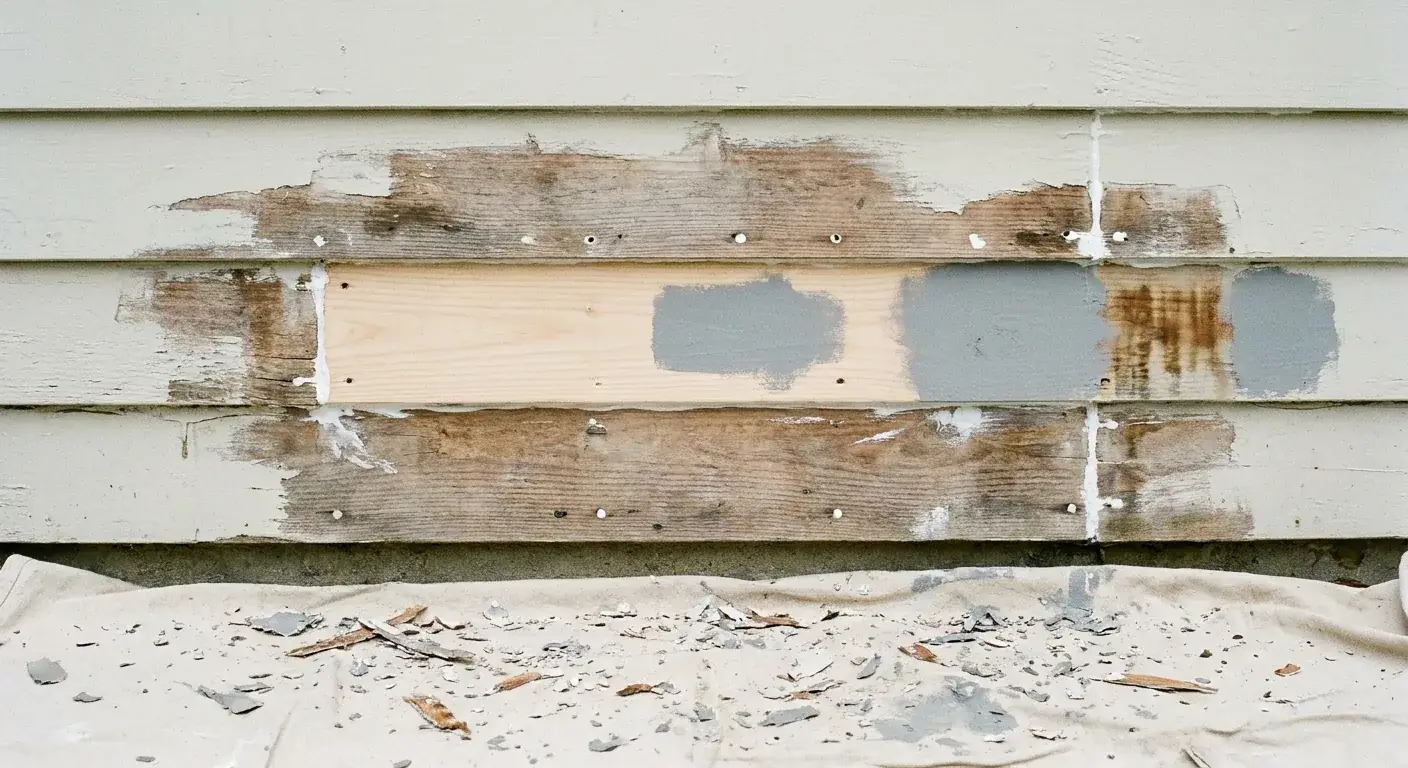
The biggest surprise in this phase is rot found after washing. Soft, swollen or punky wood shows up once the dirt and loose paint are gone. Painting over it hides the problem for a season while water keeps getting in behind the boards. That’s where a written change order earns its keep. Get the new repair priced and approved before anyone picks up a brush.
Phase 4: Finish Coats, the Recoat Window and Detail Work
If rain hits before a coat is rain-resistant, the crew stops, lets the wall dry completely, inspects it and recoats the damaged areas. Streaks, wash marks, sticky brown drips from surfactant leaching, and dull patches are what they look for.
The first coat usually takes about one working day. Crews work the walls in sections and keep a wet edge so lap marks don’t show. Paint passes through four different conditions, and they’re easy to confuse:
- Dry to touch: often within an hour or two. It means nothing for rain.
- Recoat-ready: usually several hours to the next workday. Cool or humid air stretches this.
- Rain-resistant: for most latex paints, plan on roughly 4 to 6 hours before a light shower and about 24 hours before a hard rain. Oil-based coatings need longer. The label wins when it says otherwise.
- Fully cured: weeks, covered below.
The second coat and the detail work take about one more day. That covers trim, doors, shutters, soffits and the transitions where colors meet. Every coat restarts the rain clock. A dry afternoon after coat one doesn’t protect coat two, so a good crew reads the forecast before each coat, not just on the first morning.
What Changes the Timeline
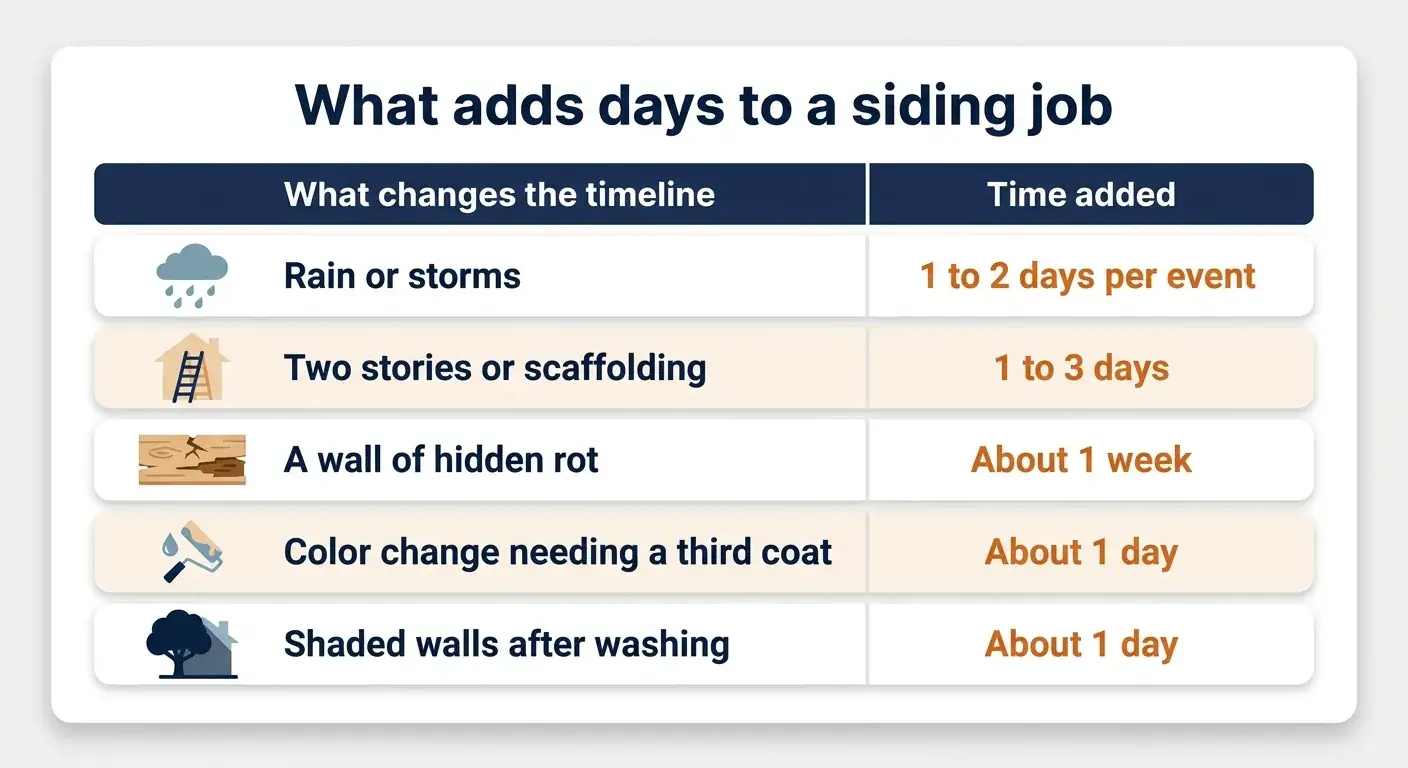
Jobs run past the estimate mostly because of weather holds, hidden repairs and access, not because the crew is slow. A crew can work between storms, but only after the wall dries again. One rainy afternoon often costs a full day.
- Rain and storms: add 1 to 2 days per event for dry-out and inspection.
- Humidity and morning dew: delay starts until mid-morning and can push recoats to the next day. Most crews won’t paint above about 85% humidity.
- Shaded walls: north sides and walls under trees dry last and can add a day after washing.
- Heat: hot walls make paint skin over before it bonds, so crews follow the shade around the house. Expect shorter work days, not faster ones.
- Height: two stories, ladders on slopes or scaffolding add 1 to 3 days for setup and moves.
- Repairs: a few boards add hours. A wall of rot can add a week.
- Color changes: going light over dark, or dark over light, may need a third coat, which adds about a day.
- Pre-1978 homes: containment and cleanup add time. As the U.S. EPA notes, firms that disturb lead-based paint in homes built before 1978 must be EPA- or state-certified under the federal 2008 rule, which took effect April 22, 2010. Minor exterior work that disturbs only a small patch of paint may be exempt from most of the rule’s requirements. Foothill Painting is EPA certified for lead-safe work practices, so lead-safe setup gets planned into the schedule from the start.
- Siding material: wood needs the most prep. Fiber cement is quicker. Vinyl and aluminum can be painted with the same wash-and-prime process and a coating rated for that surface. Vinyl also needs a color no darker than the original so it doesn’t warp in the sun.
One more line worth getting in writing: how weather delays are handled, and whether a return visit changes only the finish date or also the price. For pricing, the full breakdown is in “Painting a Brick House: Costs, Coatings and When to Hire.”
After the Job: Curing, Final Walk-Through and Warranty
Most latex exterior paints can take several weeks to fully cure. Until then:
- Skip pressure washing.
- Keep ladders, bikes and patio furniture off the walls.
- Let sprinklers spray away from the siding.
Walk the house with the crew lead before final payment and write down anything that needs a touch-up.
What to look for on the final walk
- Lap lines or uneven color in the middle of a wall
- Missed edges under laps, around fixtures and behind downspouts
- Overspray on windows, roofing, hardscape or cars
- Gaps or cracks in new caulk
- Sheen that changes from one wall to the next
- Broken plants, moved irrigation heads or paint drips on paths
Keep the contract, the color and product list and your punch list together. Those records back up the written warranty if a problem appears later. Foothill Painting backs every job with a written warranty and a follow-up maintenance program that keeps it valid. When you’re ready to put a real schedule on your own walls, request a free estimate and we’ll walk your home, tell you what we found and give you a written price.
Frequently Asked Questions
Can old metal siding be painted?
Yes. Aluminum and steel siding take paint well once the chalky oxide is washed off and any bare or rusted spots get a metal primer. Test adhesion with a strip of tape after washing. If the old factory finish lifts, sand those areas before priming. A 100% acrylic topcoat follows, the same as on wood.
What is the downside of painting vinyl siding?
Vinyl expands in heat, so a color darker than the original can make panels warp or buckle. Painting may also void the siding manufacturer’s warranty, so check that before you commit. Use a paint labeled vinyl-safe, and expect to repaint on roughly the same cycle as painted wood.
Should painters wait for morning dew to burn off?
Yes. Dew leaves a film of water on the siding even when the air feels dry. Most crews start painting mid-morning on the side that has already had sun. They also stop early enough in the afternoon that the last coat isn’t still soft when the evening dew settles.
Can house siding painting be done at 80% humidity?
It can, but slowly. At 80% humidity, water-based paint dries and reaches recoat condition much later than normal, so a crew may paint only one coat that day. Many crews treat 85% as the cutoff. The paint’s data sheet lists the actual limits.
Do I need to be home while the siding is painted?
Usually not every day. Be there for the start of the job and the final walk-through, and stay reachable by phone if a repair question comes up. Leave gates unlocked and outdoor water and power on, and keep windows closed on washing and spraying days.
Who makes good exterior paint?
Sherwin-Williams, Dunn-Edwards and Benjamin Moore all make 100% acrylic exterior lines with published technical data sheets. The brand matters less than the product tier and how it goes on. Thinned paint or paint spread past the manufacturer’s coverage rate fails early, whatever the label says.
How long does a house siding paint job last?
A well-prepped two-coat acrylic job on wood siding usually lasts 7 to 10 years. Fiber cement often lasts longer. Walls in full sun wear fastest. Recaulking cracked joints and washing off mildew every couple of years can add years before a full repaint.