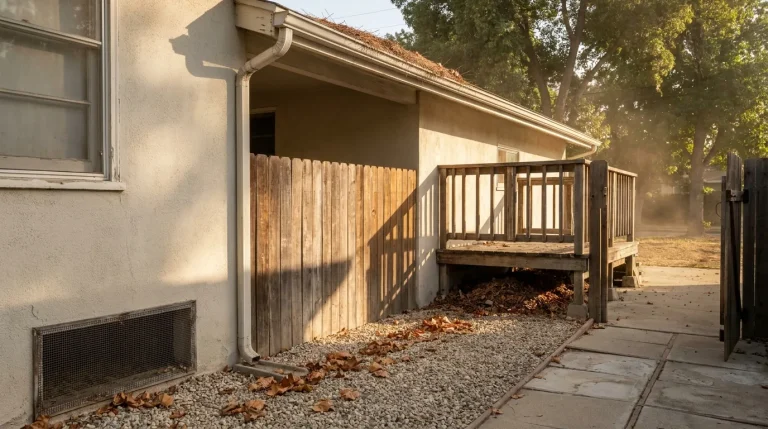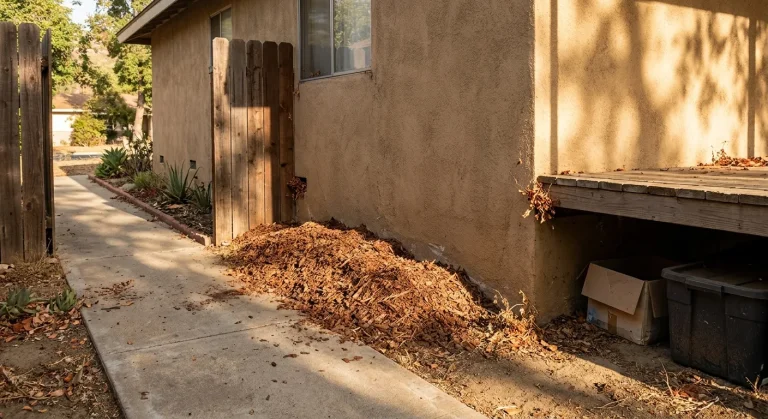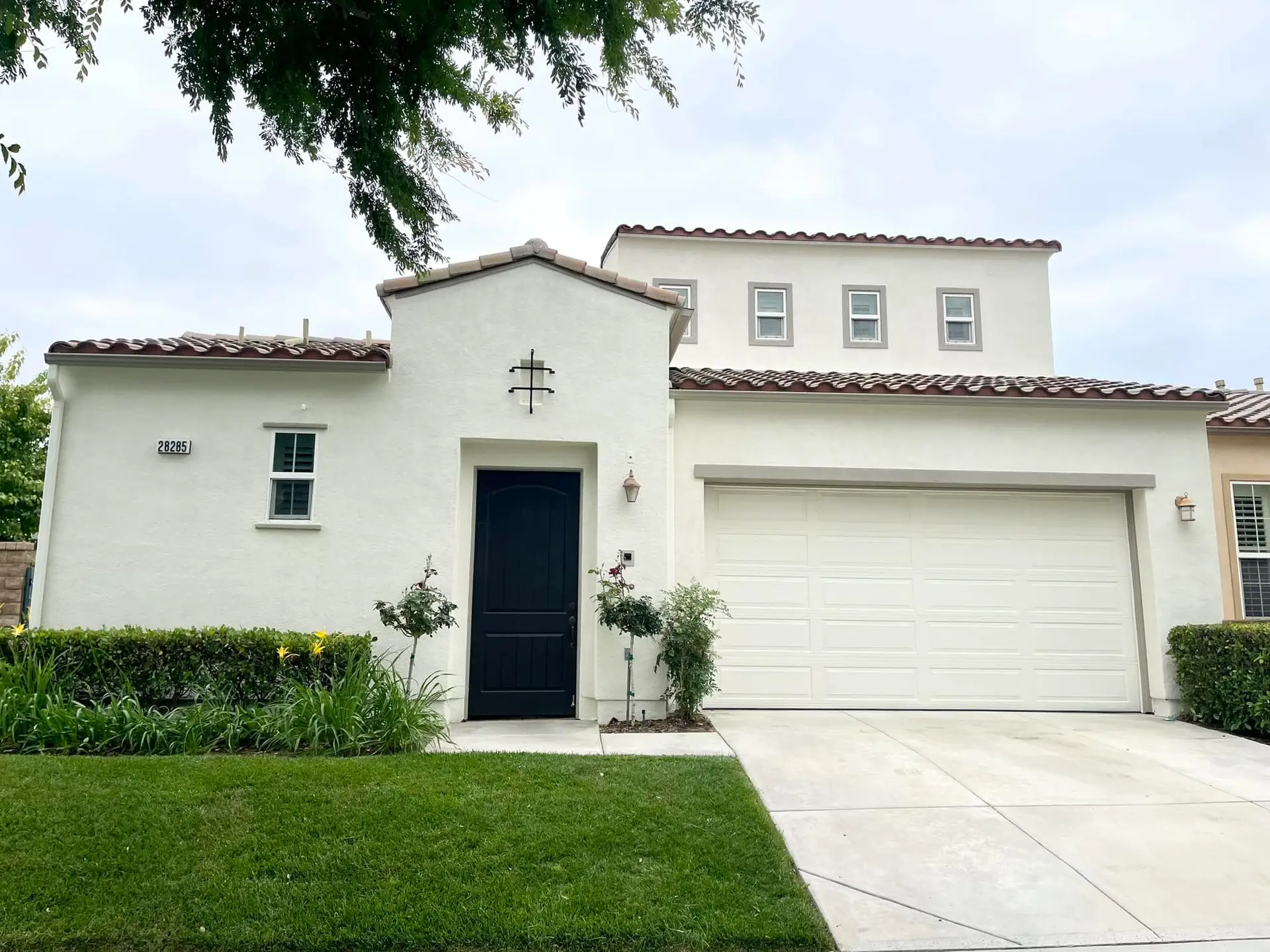
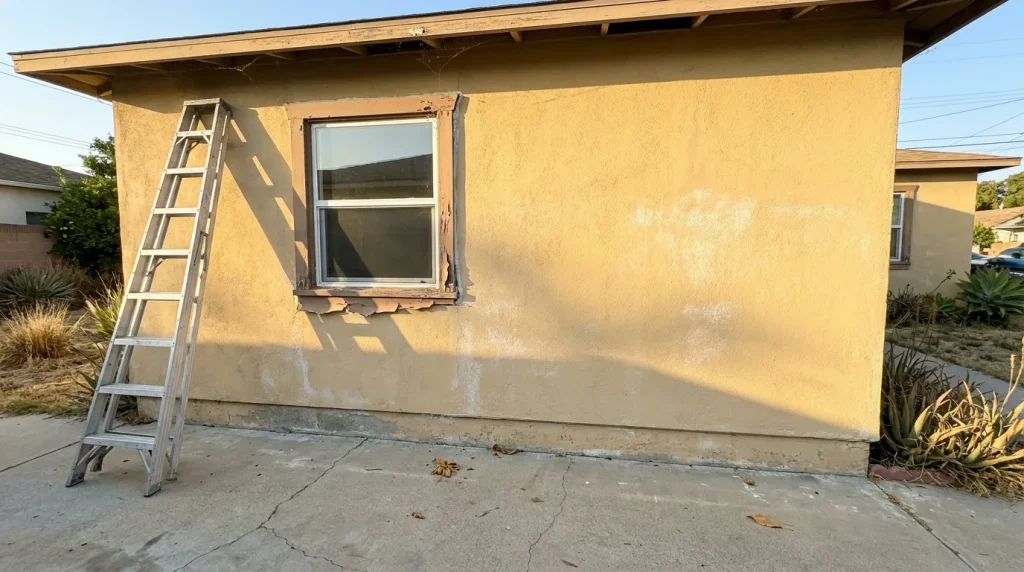
How often should you paint your house exterior? In the San Fernando Valley, the San Gabriel Valley and Santa Clarita, most homes need a repaint somewhere between 3 and 15 years after the last job. Your siding sets where you land in that range, and the sun on your walls moves you up or down it. Condition tells you when it’s time: once paint stops shedding water, the date of the last job stops mattering.
Foothill Painting has painted homes from its Burbank office since 1929, and the schedule we see on a Magnolia Park bungalow is different from the one on a Valencia stucco tract or an Altadena Craftsman. This guide covers the typical cycle for each siding type, how your part of the valley changes it, and how to tell a cosmetic problem from one that needs attention before the rainy season.
In this guide:
- How often should you paint your house exterior in Southern California?
- When to repaint, by siding type
- How your part of the valley changes the schedule
- When repainting is the wrong move
- Repaint, repair, bridge or replace
- A yearly walk-around
- Getting a written estimate
- FAQ
How Often Should You Paint Your House Exterior in Southern California?
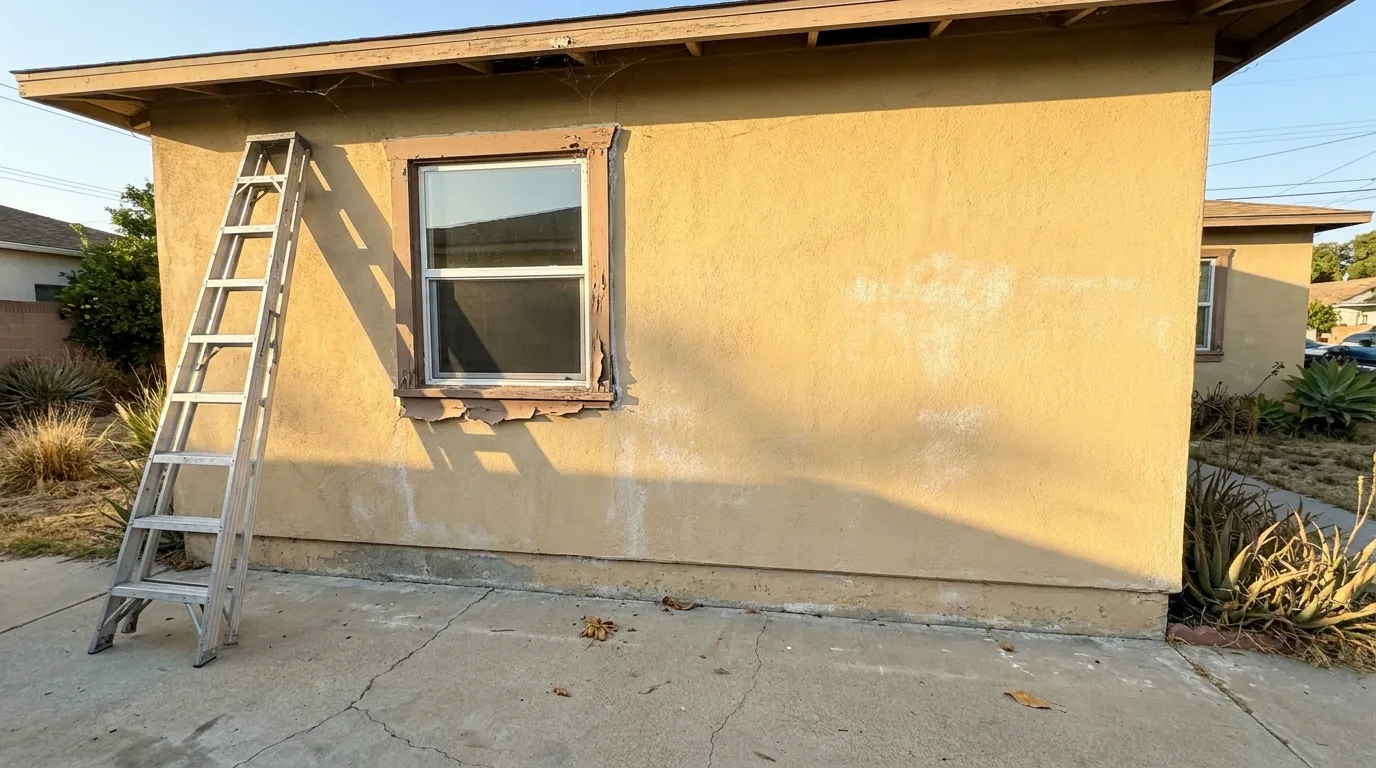
The calendar is useful for budgeting. It’s a poor judge of when to pick up a brush. Sort what you see into two groups. Chalking, fading and a dull sheen are cosmetic, and they can wait while you plan. Peeling paint, open caulk and bare wood or stucco let water in, and those need attention before the next wet season.
Our climate makes that split matter. Long dry summers, triple-digit heat waves and Santa Ana winds wear paint down slowly and visibly. Then the winter storms arrive and find every crack the summer opened. A house repainted while the finish is only dull needs a wash, light prep and two coats. A house that sat through a few rainy seasons with peeling trim may need new boards before anyone opens a can.
That’s why two houses on the same Burbank street, painted the same year, rarely need paint again in the same year. Siding, sun exposure, color and the quality of the last prep job all move the date.
When to Repaint Your House Exterior: Cycles by Siding Type
Use these as planning ranges for homes in the Valleys and foothills. The low end applies to walls that take full afternoon sun.
- Stucco: about 5 to 10 years. This is the most common siding in our service area, from Glendale’s Spanish Revival homes to Santa Clarita’s 1980s and newer tracts. Hairline cracks from heat movement usually start the clock, and chalking on the south and west walls follows. Our stucco repair and painting page shows how cracks get fixed before paint goes on.
- Wood siding, shingles and trim: about 3 to 10 years. Wood swells and shrinks every season, which stresses the paint film, so it has the shortest cycle. If you’re asking how often to paint house exterior wood, plan on the short end for fascia, rafter tails and anything facing west.
- Painted brick and concrete block: about 10 to 15 years. Masonry moves less than wood, so paint holds longer, but it needs a breathable masonry coating. White salt deposits (efflorescence) mean moisture is pushing through the wall. Unpainted brick never needs paint, and painting it starts a maintenance cycle you’ll keep for good.
- Fiber cement: about 10 to 15 years for painted boards. Factory-finished boards may still carry a manufacturer finish warranty, so check the install date and the approved coatings before you repaint.
- Vinyl: about 10 to 12 years with a vinyl-safe acrylic. Vinyl is less common here, and fading usually sets its timing.
These are the signs that the cycle is up:
- Chalk that rubs off on your hand, along with fine cracking
- Paint lifting at board edges, laps, window trim or fascia
- Any bare wood. Unprotected wood can start taking on water and rotting within 6 to 12 months.
- Caulk pulled away around windows, doors and trim
- Stucco cracks with staining or damp patches below them
A repaint doesn’t have to cover the whole house at once. Trim, fascia and the sun-facing walls often fail first and can be painted a cycle ahead of the body. Touch-ups work for small chips on sound paint. Once touch-ups spread across a wall, you’re repainting that wall anyway.
Catching it at the dull-and-chalky stage pays off four ways: lighter prep, no carpentry in the bid, fewer surprises once scraping starts, and your pick of season instead of the weather picking it for you.
How Your Part of the Valley Changes the Repaint Schedule
Foothill Painting works in 13 cities across the San Fernando Valley, the San Gabriel Valley and Santa Clarita, and the housing changes a lot from one to the next. Here’s what we see on the walls in each area, and what it means for your timing.
Burbank, Glendale and the Verdugo Foothills
Burbank’s Magnolia Park bungalows still carry original wood siding, window trim and porch details. Those surfaces sit at the short end of the wood cycle, and they come back only with hand-scraping and spot-priming. Glendale climbs from the flats around Brand Boulevard into the Verdugos, and its Spanish Revival homes are mostly about stucco done right: hairline-crack repair, a breathable coating and clean lines where the wall meets tile. Glendale is also one of the region’s biggest apartment markets, where owners often repaint several buildings on a set schedule. Local details are on our Burbank and Glendale pages.
Pasadena, Altadena and the San Gabriel Valley
Pasadena’s Craftsman blocks in Bungalow Heaven mean shingle siding and exposed rafter tails, hand-prep and hand-brush work that wears fastest on south and west exposures. Nearly all of that housing predates 1978, so lead-safe practices are part of every repaint there, and the same goes for many older homes in South Pasadena and Altadena. Hastings Ranch’s mid-century tracts run on a stucco schedule instead. Farther east, North Arcadia rises into the foothills below the Angeles National Forest, where bigger lots leave more wall exposed to full sun. See our Pasadena and Arcadia pages for more.
Santa Clarita
Santa Clarita has the newest housing we serve: stucco-bodied Spanish and Mediterranean homes from the 1980s onward in Valencia, Saugus and Canyon Country, plus older streets in Newhall. The valley runs hotter than the LA basin, and heat plus Santa Ana wind shows up as faded south walls, chalking stucco and cracked caulk lines. Expect the short end of the stucco range on exposed elevations. Many homes sit under an HOA with a defined color scheme, so build approval time into your plans. More on our Santa Clarita page.
Studio City, Sherman Oaks and Toluca Lake
Studio City splits at Ventura Boulevard, with traditional and ranch homes on the flat streets and hillside homes rising to the south. Mid-century homes with smooth stucco show every roller flaw, so a repaint there depends on careful prep more than anything else. Hillside homes add sloped lots and multi-level elevations, which change access and cost more than they change the schedule. See our Studio City, Sherman Oaks and Toluca Lake pages.
Homes Along the Foothills in Fire Hazard Zones
Homes along the foothills in La Crescenta, La Canada Flintridge, Glendale, Burbank and Altadena face one more question at repaint time. Embers catch on wood eaves and rafter tails and slip through attic vents. A repaint already puts ladders on every one of those surfaces, so it’s the practical time to ask about Class A fire-rated CoolWall coating on stucco, intumescent coatings on exposed wood, or ember-resistant vents. No coating makes a home fireproof, and none of this carries an insurance approval or discount. These materials slow ignition and flame spread as one layer of a hardening plan, and Foothill Painting documents what it installs so you have a written record. Our home hardening page covers the full list.
When Repainting Is the Wrong Move
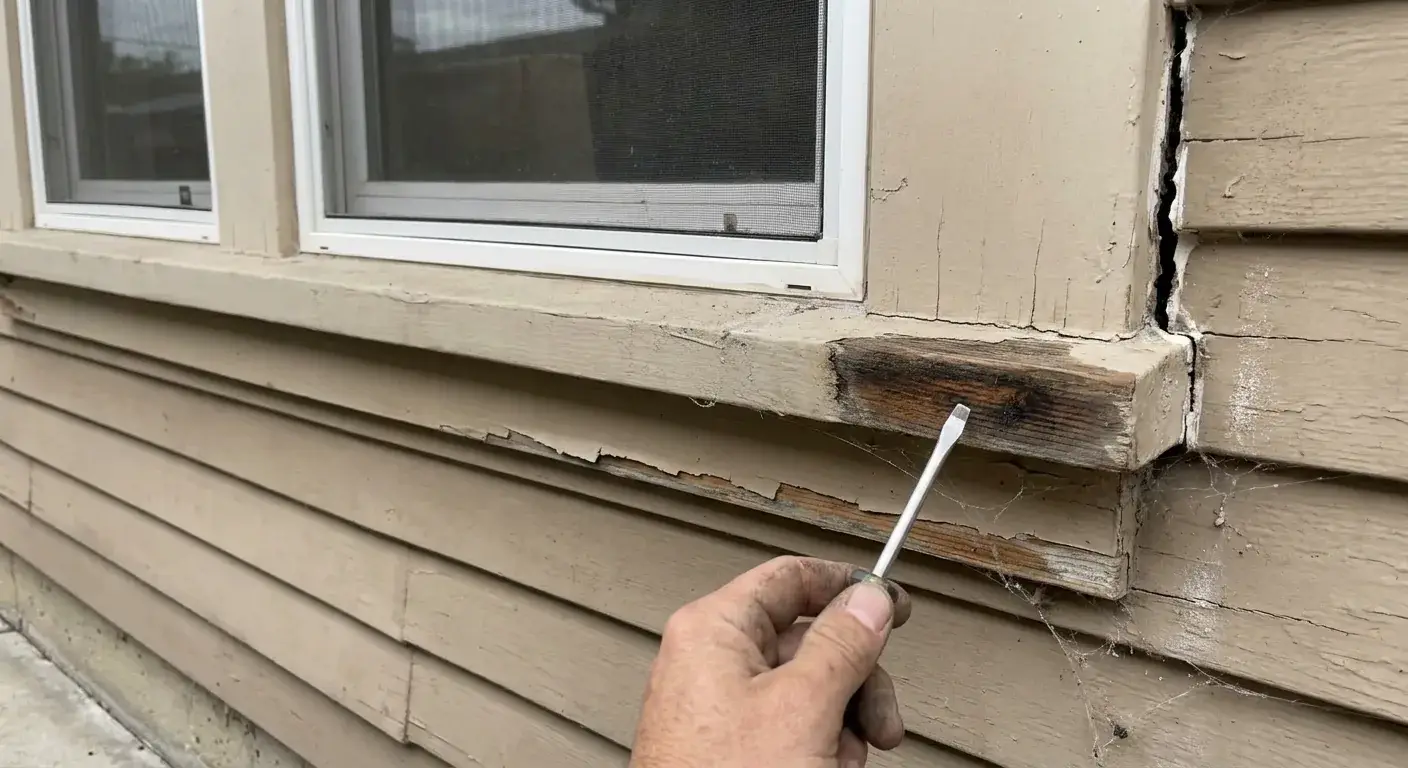
Skip the repaint when the wood underneath is soft or wet. Paint can’t restore rotted fiber or stop water coming in from behind the siding. Painted-over damage looks finished for a season, then traps moisture and fails sooner.
Two quick checks tell you where you stand:
- Probe test: push a screwdriver into end grain, sills, fascia and the lowest siding courses. If it sinks in, you have a carpentry problem first.
- Moisture reading: use a pin meter on bare wood after a dry stretch. Around 15% is the warning line, and primer shouldn’t go on above it. A reading of 19% or higher after two dry weeks points to an active water source.
What to do next depends on what you find:
- Fix the water source first. Failed flashing, a leaking gutter or a sprinkler hitting the wall will defeat any coating.
- Spot repair or replace a section when damage stays on one wall and readings are under about 19%, then prime and paint.
- Bridge coat a sound but aging exterior to buy time before a planned replacement.
- Replace when rot reaches the sheathing or several walls fail the same way. Call a carpenter or siding contractor first.
Where the rot sits tells you the cause. Rot at one open joint around one window points to the caulk. Rot along the lower siding courses, below window heads or across several walls points to failed flashing or the water-resistive barrier, and new caulk won’t stop it. Our fire hardening team tells homeowners the same thing about steel trim cladding: cladding covers wood, so the wood under it has to be sound first.
Pre-1978 homes: Assume lead paint is under the newer layers until a test says otherwise. That covers most Craftsman homes in Pasadena and the older bungalows in Burbank. According to the U.S. Environmental Protection Agency, paid work on a pre-1978 home requires a lead-safe certified firm once more than 20 square feet of exterior painted surface is disturbed. Don’t dry-scrape or power-sand old paint until it has been tested. Foothill Painting is EPA certified for lead-safe work practices.
Why Paint Sometimes Fails in Under Two Years
Early failure almost always traces back to moisture or poor prep. Paint age and brand are rarely the cause. Match what you see to the likely problem:
- Blisters around months 8 to 10: moisture trapped under the film, usually from wood painted while still wet or water getting in from behind.
- Peeling down to the old coat: loose paint left in place, chalk never washed off, or no bonding primer over glossy or oil-based layers.
- Peeling down to bare wood: the wood was wet when painted, or bare spots got no primer.
- Fast chalking and see-through color: thinned paint or one thin coat. Two coats is the typical recommendation, according to Benjamin Moore’s painting guide. Foothill Painting applies Dunn-Edwards and Sherwin-Williams paint at the manufacturer’s spread rate and never thins it, which keeps the full manufacturer paint warranty valid.
- Rough, gritty finish: dust blown into wet paint. Santa Ana winds do this in the Valleys, so good crews watch the wind forecast.
- Flaking soon after a wash: too much pressure, bleach left on the surface, or paint applied before the wall dried.
Some wear is normal: even fading on the sunniest wall, light chalking after five or more years, and fine checking on old wood. Blistering, peeling or lost adhesion within two years usually isn’t. That’s grounds for a contractor callback or a warranty claim, so take dated photos.
Substrate and prep matter most, primer and application come next, and paint brand comes last. Premium paint over wet, chalky wood fails just like cheap paint does.
Repaint, Repair, Bridge or Replace: What Each Option Costs You
Repainting a sound house now almost always costs less than replacing rotted siding later, and the repaint is the predictable bill of the two. Here’s how the five realistic options compare.
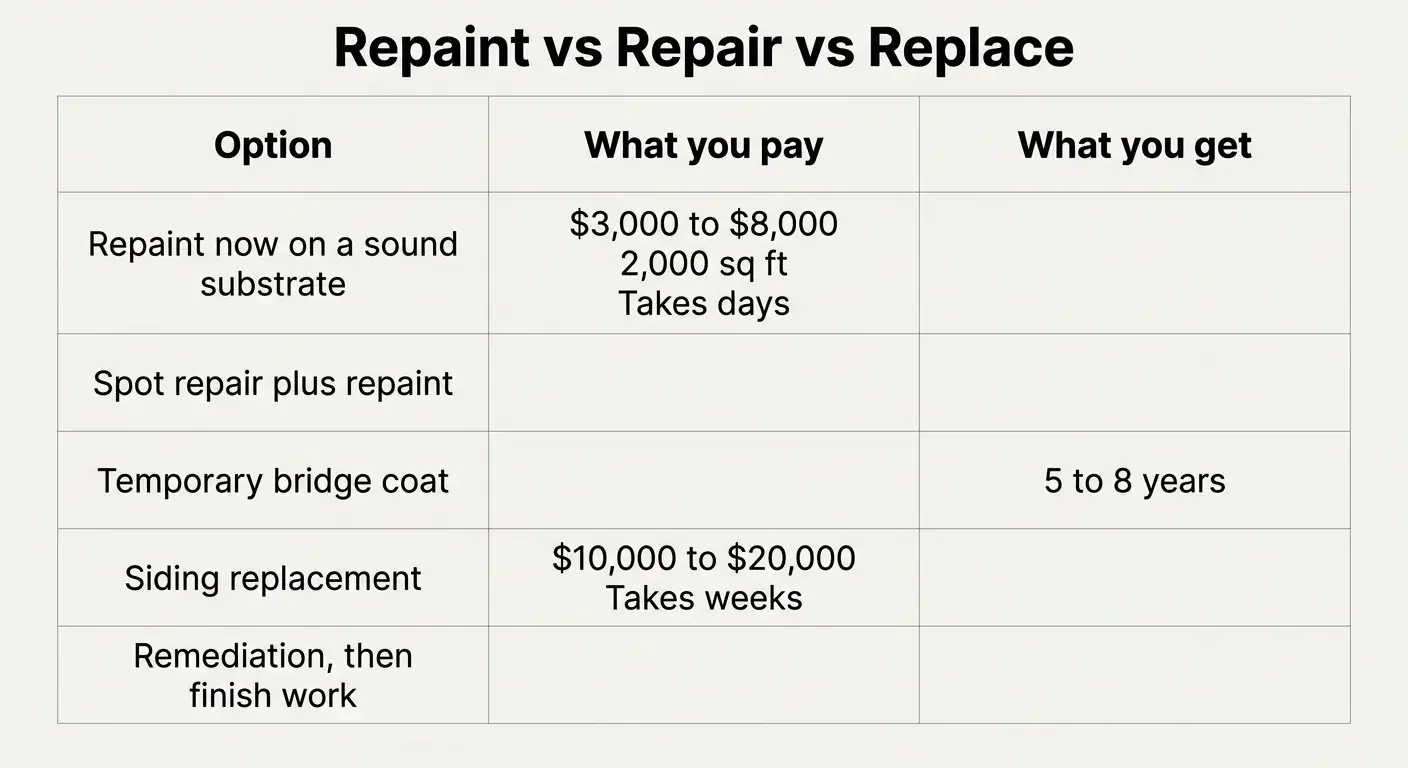
| Option | What you pay: money, time, risk | What you get |
|---|---|---|
| Repaint now on a sound substrate | Lowest cost of the five. A typical 2,000 sq ft repaint is reported at about $3,000 to $8,000. Takes days. Low risk. | A full new cycle on the material’s normal schedule |
| Spot repair plus repaint | Repaint plus carpentry and priming on repaired areas. A few extra days. Low to moderate risk if the moisture source was fixed. | Local damage removed before it spreads |
| Temporary bridge coat | Close to a repaint, with more limited repairs. Risk: aging underneath keeps advancing. | Roughly 5 to 8 years before replacement, if the substrate stays suitable |
| Siding replacement | Replacing rotted wood siding is reported at about $10,000 to $20,000. Takes weeks. Hidden sheathing damage can appear once boards come off. | New cladding, often with flashing and wrap corrected |
| Remediation, then finish work | Highest and least predictable cost. Scope depends on what’s behind the wall. Longest timeline. | A dry, sound wall ready for paint |
The figures above are published ranges, and your written estimate is the number that counts. A low repaint bid may leave out carpentry, lift or scaffold access on hillside lots, and lead-safe containment, which are the same items that show up as extra charges later. Our exterior painting page walks through the 7-step process, from inspection to warranty.
Costs climb in steps. An open joint costs a tube of caulk this year. Leave it through a wet season and it can become a soft sill, then a replaced sill and trim, then sheathing once the siding comes off. Each step brings in another trade, and the bill grows with it.
A Yearly Walk-Around for Homes in the Valleys and Foothills
Walk your house once a year, sort every defect as cosmetic or water-related, and fix the water problems first. Late summer works well here, since the heat damage is fresh and you still have time before the rains.
- Walk it. Circle the house in daylight. Check the south and west walls, the bottom siding courses, every window head and sill, and the fascia.
- Sort it. Fading, light chalking and a dull sheen are cosmetic. Peeling, bare wood, open caulk, soft spots and stained stucco cracks are water-related.
- Act on it. Plan cosmetic repaints within the next several months. Repair and seal water-related issues before the rainy season.
Fading needs its own note. Sun-bleached walls are a fair reason to repaint for looks. Dark colors fade and heat up faster than light ones, so deep blues, reds and charcoals run on a shorter cycle, and on vinyl a dark color can make panels warp unless it comes from the siding maker’s approved palette. You can repaint only the faded walls, with one catch: the shaded walls have shifted color too, so the original color may no longer match.
Key Takeaway: If any defect lets water reach wood or stucco, fix it before the winter storms. If the only problem is how the paint looks, you have time to plan, compare bids and pick your season.
Getting a Written Repaint Estimate in Burbank, Pasadena or Santa Clarita
Call a pro when the probe test finds soft wood, a moisture reading is borderline, cracks keep coming back, or the house was built before 1978. A professional moisture reading and a written scope often tell you more than three more paint bids.
Ask for a fixed price in writing that lists prep, repairs, primer, number of coats, products and warranty terms. If the scope just says “paint house,” ask for more detail.
At Foothill Painting, every person on your property is a trained, W-2 employee, and every job gets a written contract with no hidden fees. Every project comes with a written warranty, kept valid through our follow-up maintenance program, which inspects and re-coats on schedule so you don’t have to track the cycle yourself. Customer Amanda Ragan wrote on Google: “Quoted me accurately, arrived and finished on time.”
Our office is at 2134 Floyd St. in Burbank, and our crews cover all 13 cities we serve across the San Fernando Valley, the San Gabriel Valley and Santa Clarita. We respond to every request within 24 hours, usually the same day. Request a free written estimate or call (818) 748-3227. We’ll walk your home, tell you what we found, and separate what can wait from what can’t.
Frequently Asked Questions About Repainting in the Valleys and Foothills
What is the best month to paint a house exterior in Burbank and the foothills?
Spring and fall are the easiest stretches, roughly April through June and late September through November. Summer works too, but on triple-digit days in the Valleys and Santa Clarita, crews start early and follow the shade so paint never goes onto a hot wall. Winter is workable between storms once surfaces have dried out.
What is the ideal weather to paint outside?
Mild, dry and calm. Air and surface temperatures should sit inside the range on the paint label, and many exterior acrylics list a minimum between 35 and 50°F. You also want no rain for at least a day and light wind. Avoid painting a wall in direct midday sun, and skip Santa Ana and red flag days, when wind dries paint too fast and blows dust into it.
Is October too late to paint outside in Southern California?
Usually not. October is often one of the better months here. Plan around Santa Ana wind events, which tend to pick up in the fall, and around shorter days with morning dew, which mean later starts and earlier finishes.
Can you paint a house exterior during the rainy season?
Yes, between storms. Wood and stucco need to dry after rain before primer or paint goes on, which usually takes a few dry days, and a moisture meter is a better test than how the wall looks. Ask how your contract handles rain days before the job starts.
How long does an exterior repaint take?
For a typical single-family home, plan on about a week of working days. Stucco repair, carpentry, lead-safe containment on pre-1978 homes and hillside access all add time. Your written estimate should list the expected timeline before work begins.
Do I need HOA approval to repaint my house?
If your home is in an HOA, you almost always need approval for a color change, and some associations also review same-color repaints. Many Santa Clarita communities have an approved color list. Get the approval in writing before you schedule, and give your painter the approved color codes so the estimate matches.
Are elastomeric wall coatings a good idea for stucco?
On the right wall, yes. Elastomeric and high-build coatings such as CoolWall flex over hairline cracks and go on several times thicker than paint, which helps on sun-baked stucco. CoolWall’s infrared-reflective formula can also lower wall surface temperature by up to 40°F compared with conventional paint in the same color, depending on color and sun exposure. The wall still has to release moisture, so cracks and water sources get fixed before any coating goes on.