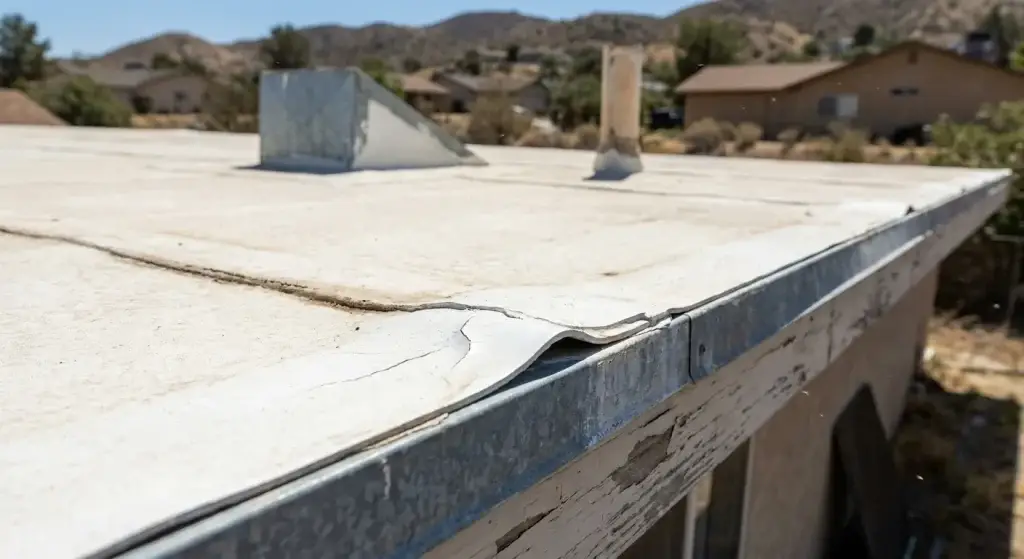
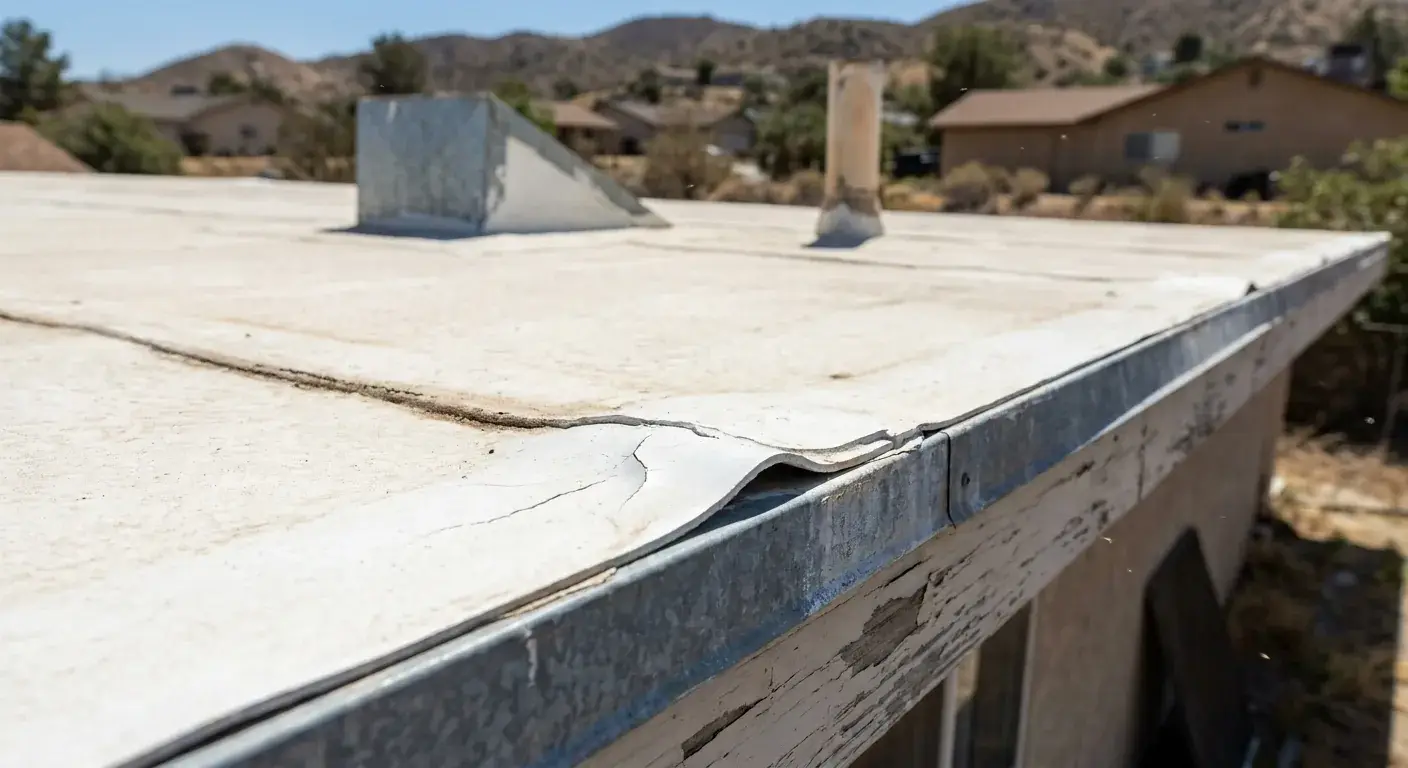
A good acrylic roof coating bid names the product, states a dry mil target, lists the gallons, and puts the prep and repair plan in writing before anyone climbs a ladder. A weak bid gives you one line that reads “coat roof, two coats” and a total. Two quotes for the same roof can differ by thousands of dollars because one includes moisture testing, seam work, and enough coating to reach warranty thickness, while the other quietly skips all three. Edges are the same story. Where the coating meets fascia, metal flashing, and trim cladding is where cheap jobs tend to leak first.
What Actually Decides Whether a Coating Bid Is Any Good
The bucket matters less than five things: the roof diagnosis, the thickness, the prep, the warranty, and the people doing the work. A low quote usually leaves out one of these, and it’s rarely the coating brand.
- Roof diagnosis. Is the roof dry, sound, and draining? A roof with wet insulation, a soft or rotted deck, or widespread membrane failure needs repair or replacement first. Coating it only hides the problem for a season or two.
- Thickness. The bid should state a target in dry mils and the gallons needed to reach it.
- Prep and repairs. Cleaning, adhesion testing, seams, flashing, and transitions to trim should each be written down.
- Warranty. You should know who issues it, what it covers, and what it excludes.
- Contractor. License scope, real insurance, and recent comparable jobs you can check.
Whether acrylic is the right chemistry for your roof in the first place is its own question. “Is Acrylic Elastomeric Roof Coating Worth It?” lays out acrylic’s pros and cons and when coating beats replacement.
Does the Bid State Thickness, Gallons and Coats?
It should state all three. “Two coats” alone tells you nothing, because a thin coat and a full coat both count as one. Acrylic roof coatings are generally tested against an industry standard, so ask which standard the product meets.
-
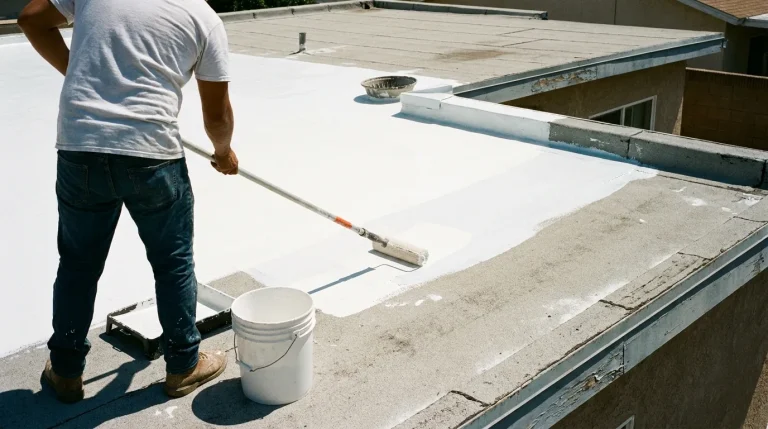
What dry mil thickness will the finished roof have? – Good answer: “Two coats at 1.5 gallons per 100 square feet each, about 24 wet mils per coat drying to roughly 12 dry mils, so about 24 dry mils total. We’ll check it with a wet film gauge.” – Bad answer: “Two good heavy coats. We never skimp.”
-
How many gallons are you buying for this roof? – Good answer: A total gallon count tied to the measured area. At 1.5 gallons per 100 square feet, a 5-gallon bucket covers about 333 square feet for one coat, or about 167 for two. – Bad answer: “Whatever it takes.”
When you’re stacking bids side by side, convert each one to total gallons per 100 square feet and total dry mils. A bid that’s cheaper per square foot is often just thinner. Funny how that works.
Is the Prep, Repair and Roof Condition Plan in Writing?
It should be, line by line. Prep decides whether the coating sticks. Repairs decide whether the roof is worth coating.
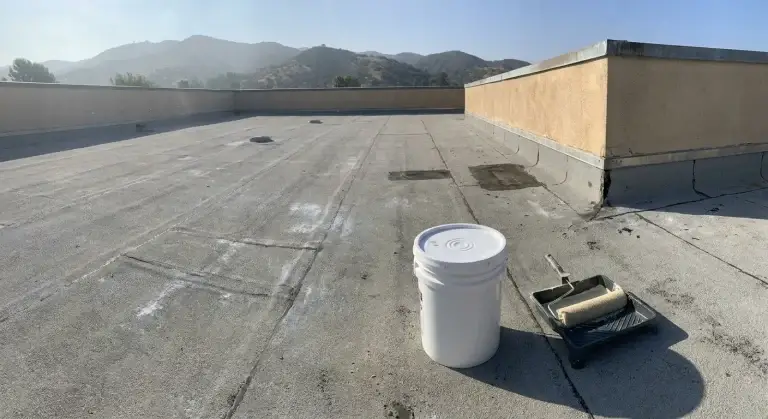
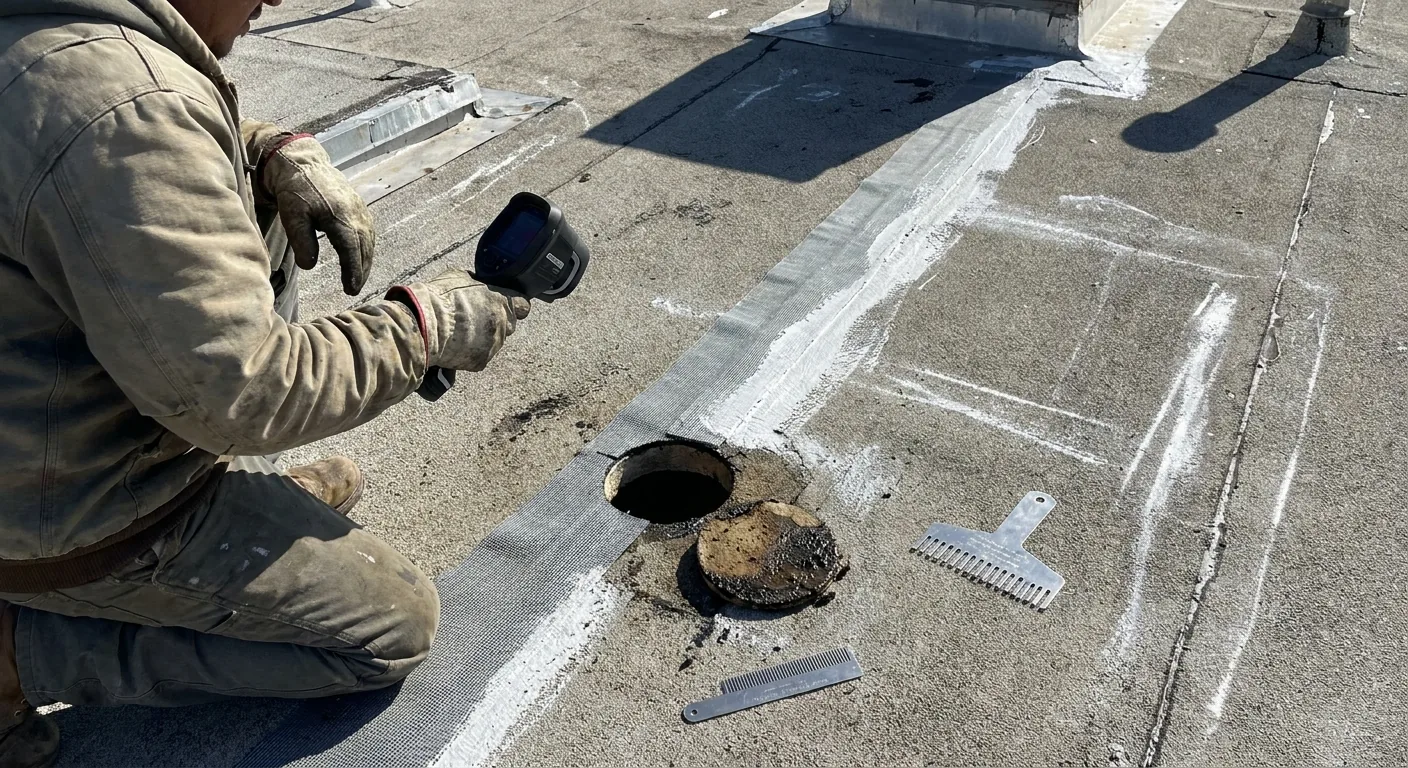
- How will you clean the roof and confirm the coating will bond? – Good answer: Power washing, loose material removal, rust treatment, then a field adhesion test. One manufacturer’s guide calls for at least two test patches, plus one per 10,000 square feet and in worn areas. – Bad answer: “We’ll blow it off and start rolling.”
Primer depends on the roof. Rusted metal wants a rust-inhibiting primer, TPO and EPDM need a membrane-specific one, and old acrylic that’s gone chalky takes a bonding primer.
-
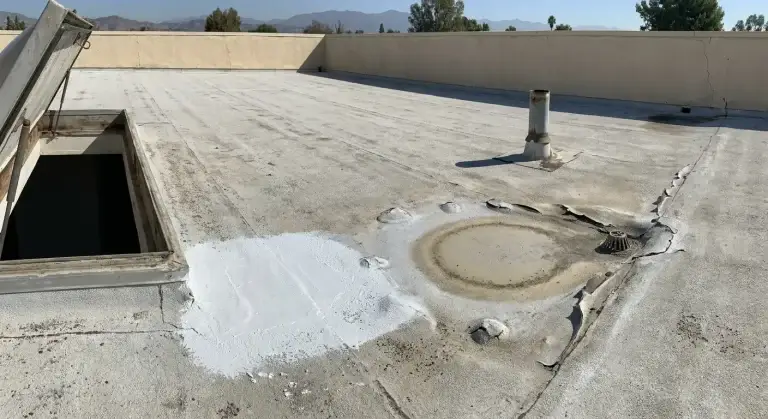
Will you check for wet insulation? – Good answer: “We’ll do an infrared or moisture scan, confirm with core cuts, and replace wet sections before coating.” – Bad answer: “The coating seals everything in.” Trapped moisture is why coatings blister from underneath.
-
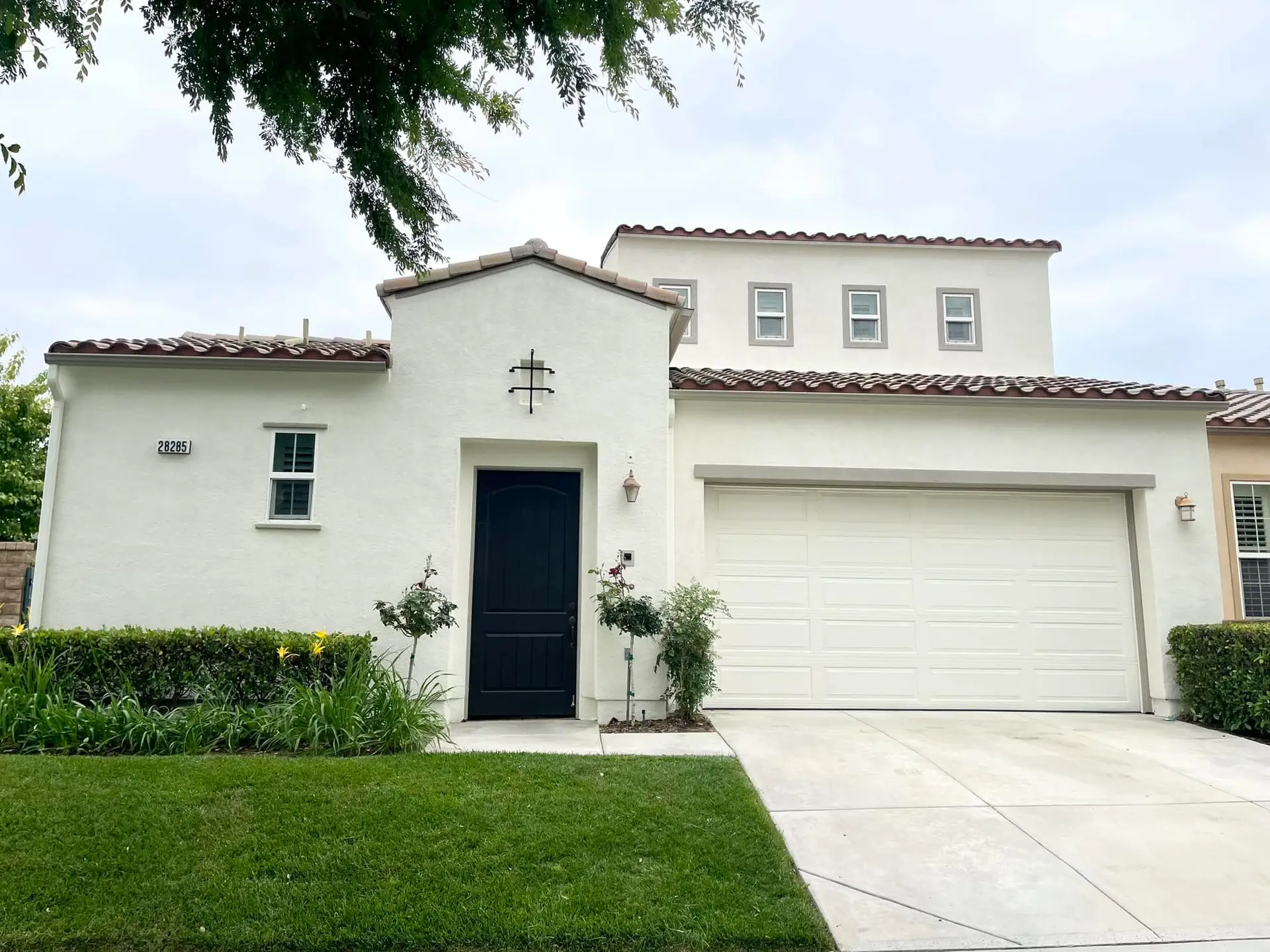
What happens at seams, flashing, and edges? – Good answer: Seams and flashing get fabric and extra coating, and the bid says where coating stops at drip edges, gutters, and wood trim. At Foothill Painting, that trim can be clad with Trim2Steel, 26-gauge steel bent to match and installed over the existing wood with no tear-off. – Bad answer: No mention of edges.
-
Does water sit on this roof? – Good answer: “That low spot holds water past 48 hours, which is a problem for acrylic. We’ll fix the drainage, exclude that area, or propose a coating rated for ponding.” – Bad answer: “Acrylic handles a little water fine.”
-
When will you coat? Roughly when air is at 50F and rising, with no rain for 24 hours after application and 8 to 12 hours between coats, unless the product data sheet says otherwise.
-
How are hidden repairs priced? A fixed repair list or unit prices, such as per foot of seam. “Repair as needed” with no price is an open checkbook.
Which Warranty Are You Actually Getting?
Most coating jobs involve two separate warranties. Ask for both in writing. The manufacturer warranty covers the coating material or system. The contractor workmanship warranty covers how it was installed.
| Manufacturer warranty | Contractor workmanship warranty | |
|---|---|---|
| Issued by | Coating maker | Installer |
| Usually covers | Defective material; full-system versions may include labor | Application errors, adhesion failures from poor prep |
| Often requires | Authorized applicator, minimum dry mils, inspection, registration | Following the written scope and any maintenance terms |
| Common exclusions | Ponding water, building movement, pre-existing damage, interior damage, skipped maintenance | Damage from other trades, foot traffic, storms |
Longer manufacturer terms usually require more thickness. Broad planning tiers run about 35 dry mils for 10 years, 40 for 15, and 45 for 20. Exact numbers vary by maker and substrate. One acrylic system lists 26 mils for a 10-year term on metal. If a bid promises a term, it should name the mil target that earns it, and say whether the contractor is authorized by the manufacturer to register it.
Don’t read a 10-year warranty as 10 leak-free years. Many are prorated, cover material only, and lapse if ponding develops or required inspections get skipped. Foothill Painting treats a roof coating as maintenance that extends a roof’s service life. It doesn’t replace the roof, and it carries no guaranteed lifespan and no insurance outcome.
Can the Contractor Prove License, Insurance and Track Record?
A trustworthy contractor gives you a license number to look up, a certificate of insurance sent by their carrier, and references for similar roofs. Check all three before signing.
- License scope. Look the number up on the state contractor board’s site. Confirm it’s active, check the classification against the work, and read any discipline history.
- Certificate of insurance. Ask the contractor’s broker or carrier to send it to you directly, naming you as certificate holder. Check the policy dates, limits, and whether general liability includes roofing operations. Some policies exclude roof work.
- Workers’ compensation. General liability doesn’t cover an injured worker. Without workers’ comp, that injury can land on the property owner. Roofing also carries federal fall protection duties, so ask how the crew will meet them.
- Comparable references. Ask for two or three jobs with a similar roof type, finished at least a year ago. Call and ask whether leaks came back and whether warranty calls got answered.
In reviews, skip the star average and look for patterns. Repeated complaints about leaks after coating, large deposits, surprise change orders, or unreturned warranty calls matter more than one angry post.
Coating is usually voluntary maintenance. Property insurance rarely pays for it.
Red Flags That Mean Walk Away
Walk away when a bid hides its scope, rushes your signature, or asks for too much money up front.
Red-flag warning box
- One lump-sum line with no breakdown of prep, repairs, and coating.
- No product name, no dry mil target, no gallon count.
- A deposit above about 25%, or payment in full before work starts.
- “Today only” pricing or “crew’s already in the area” urgency.
- “Your insurance will pay for this,” with no carrier confirmation.
- No moisture scan or adhesion test on an older roof.
- “Repair as needed” with no unit prices.
- A price far below every other bid, with no clear reason.
- A certificate of insurance that only exists as a PDF the contractor emailed.
A contractor with fewer reviews but a detailed written scope may carry less risk than a five-star outfit that won’t put specifics in writing.
What a Fair Bid Looks Like
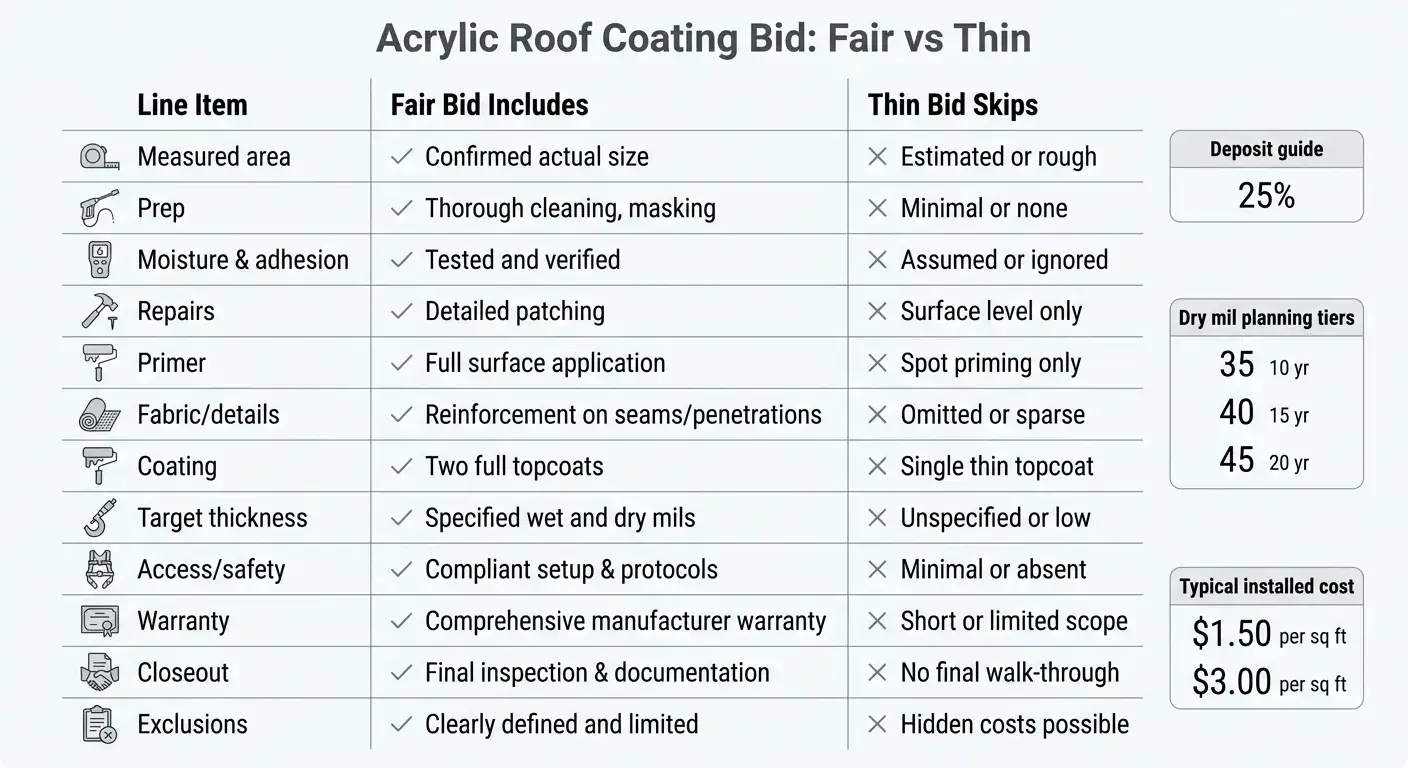
A fair bid puts every phase of the work on its own line.
| Line item | What it should say | What a thin bid skips |
|---|---|---|
| Measured area | Square feet and how it was measured | A rounded guess |
| Prep | Washing, loose material, rust treatment | Lumped into “coating” |
| Moisture and adhesion | Scan method, test locations | Not mentioned |
| Repairs | Fixed list or unit prices | “As needed” |
| Primer | Product and rate for the substrate | Left out |
| Fabric and details | Seams, drains, penetrations, trim | Edges ignored |
| Coating | Brand, product, gallons, coats | “Elastomeric, two coats” |
| Target thickness | Total dry mils | Nothing |
| Access and safety | Lifts, fall protection, cleanup | Added later |
| Warranty | Both warranties and their issuers | One vague number |
| Closeout | Photos, batch records, thickness readings, registration | Nothing in writing |
| Exclusions | Ponding areas, structural work, permits | Discovered mid-job |
Installed acrylic coating commonly runs about $1.50 to $3.00 per square foot, and the full cost breakdown lives in “Elastomeric Roof Coating: The Complete Guide.” For a written bid built line by line like this, you can request an estimate here.
Acrylic Roof Coating Bid Checklist
Saveable checklist box
Roof
- [ ] Moisture scan done, wet areas marked for replacement
- [ ] Ponding areas handled in writing
Thickness
- [ ] Dry mil target and total gallons stated, with waste allowance
- [ ] Primer, fabric, and detail coating listed separately
Prep
- [ ] Adhesion testing and weather limits described
- [ ] Seams, flashing, and trim edges scoped
- [ ] Repair unit prices or a fixed repair list
Warranty
- [ ] Both warranties in writing, mil target matching the term
- [ ] Exclusions and maintenance terms read
Contractor
- [ ] License checked on the state board site
- [ ] Insurance certificate from the carrier, workers’ comp included
- [ ] Comparable references called
Paperwork
- [ ] Change orders require written approval
- [ ] Closeout documents promised
Compare bids line by line, never by the bottom number alone. Foothill Painting gives every job a written contract with a fixed price, and you can schedule a roof assessment to get a documented scope to hold beside any other quote.
Frequently Asked Questions
How effective are roof coatings?
On a dry, sound roof that drains, acrylic coating reflects sunlight, seals minor surface wear, and can push back replacement. It won’t fix a wet deck or failed flashing. A roof that gets its full dry mil target and a yearly inspection outlasts a thin coat that’s ignored.
What are the pros and cons of acrylic roof coatings?
Acrylic is water-based, reflective, easy to recoat, and usually costs less than silicone. It wears faster under standing water and heavy foot traffic, and it can’t go on in cold or wet weather. “Is Acrylic Elastomeric Roof Coating Worth It?” weighs both sides and shows when coating beats replacement.
Does the quoted dry mil thickness include reinforcing fabric?
Sometimes, so ask. At least one manufacturer counts about 6 mils for fabric inside its three-course thickness figures. A total that includes fabric may carry less actual coating than a coating-only number.
Does the coating color change what the bid should list?
White reflects the most heat, and most acrylics also come in light grays, tans and custom tints, with darker colors reflecting less. If cool roof rules apply, such as California’s Title 24 on some low-slope roof work, the bid should name the color and its CRRC rating or Energy Star listing.
What maintenance can void an acrylic roof coating warranty?
Common triggers are clogged drains that let water pond, skipped annual inspections, unapproved penetrations by other trades, and foot traffic outside walk paths. Read the maintenance section before signing and book a yearly inspection.
Is acrylic roof coating better than silicone?
Silicone handles standing water better and usually costs more, while acrylic is reflective, water-based and cheaper on roofs that drain. “silicone vs acrylic roof coating” compares the two side by side.
Can acrylic coating go over metal flashing, trim or cladding?
Acrylic can bond to cleaned and primed metal flashing, but the bid should say whether coating bridges or stops at each joint, with a compatible sealant at the termination. Factory-finished trim cladding is usually left uncoated.