Correction: the original H1 title was not included in the draft, so the article begins at its opening paragraph.
A sound, dry, well-draining low-slope roof is the best case for acrylic elastomeric coating. On that kind of roof, a few hundred gallons of white coating can push a tear-off back by a decade. On a roof that holds water or hides wet insulation, the same coating buys a year or two of good looks and then peels, blisters and lets go. The roof decides the answer, not the product.
The Short Answer: Worth It on a Dry, Draining Roof, Not on a Failing One
Yes, if the roof is dry, structurally sound and sheds water within 48 hours of a rain. No, if it ponds chronically, has wet insulation or leaks in more places than you can count.
Over 10 or 20 years, a sound roof coated once and recoated once usually costs well under a full reroof. A failing roof coated anyway often ends up costing both. In the sunny inland valleys of Los Angeles and Ventura County, a reflective white film also cuts heat on flat and low-slope roofs, so the payoff is real when the substrate qualifies.
When Acrylic Coating Is Worth It
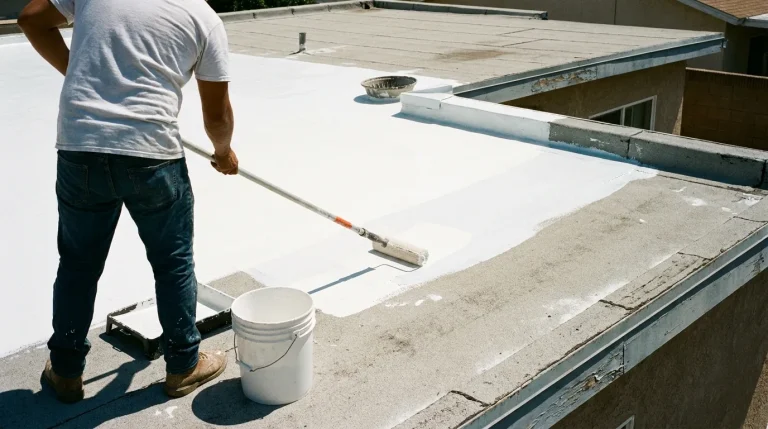
Coatings do three things well. They bridge hairline cracks, reflect UV and heat, and add a renewable wear layer over a membrane that still works. Small, localized leaks stop once they’re found and repaired first. A leak from failed flashing, a split seam or water already inside the assembly won’t stop, no matter how much you roll on.
The answer is usually yes when most of these are true:
- The membrane is dry and sound. It still bonds, flexes and holds fasteners. Age alone doesn’t disqualify it.
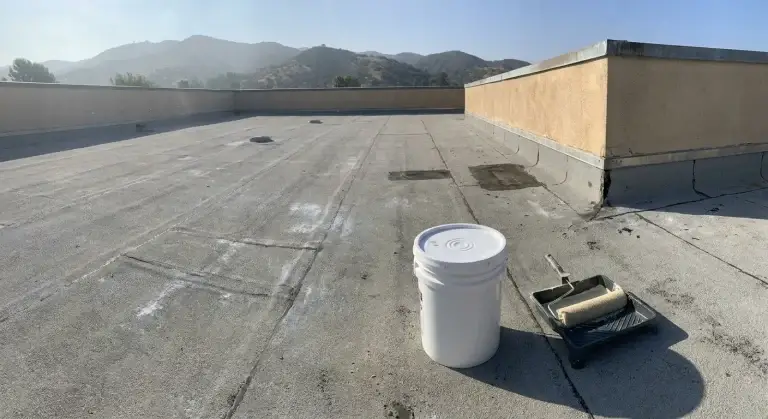
- Water drains. The roof has positive drainage, roughly 1/4 inch of fall per foot at minimum, and no low spots that hold water for days.
- You want to defer a tear-off. No dumpster, no open deck, no weeks of disruption on a mid-century flat roof or the low-slope sections behind a Spanish Colonial parapet.
Thickness is what makes a coating last, and the product data sheet sets it. The Roofing Brief reports that one white acrylic product calls for two coats at 1.5 gallons per 100 square feet each, 3 gallons per 100 square feet in total. A crew that thins the material or skips the second coat hands you half the roof you paid for.
Pros – Adds roughly 7 to 15 years of service when applied to spec on a sound roof – Cooler roof surface and less heat into rooms below – Renewable: a recoat restarts the clock without a tear-off – Little disruption and almost no landfill waste
Cons – Life depends heavily on prep, thickness and drainage. Some industry estimates put acrylic at only 5 to 8 years, according to ArmorThane. – Breaks down under standing water – Hides, rather than fixes, problems underneath – Needs periodic inspection and eventual recoating
When It Is Not Worth It, and What to Do Instead
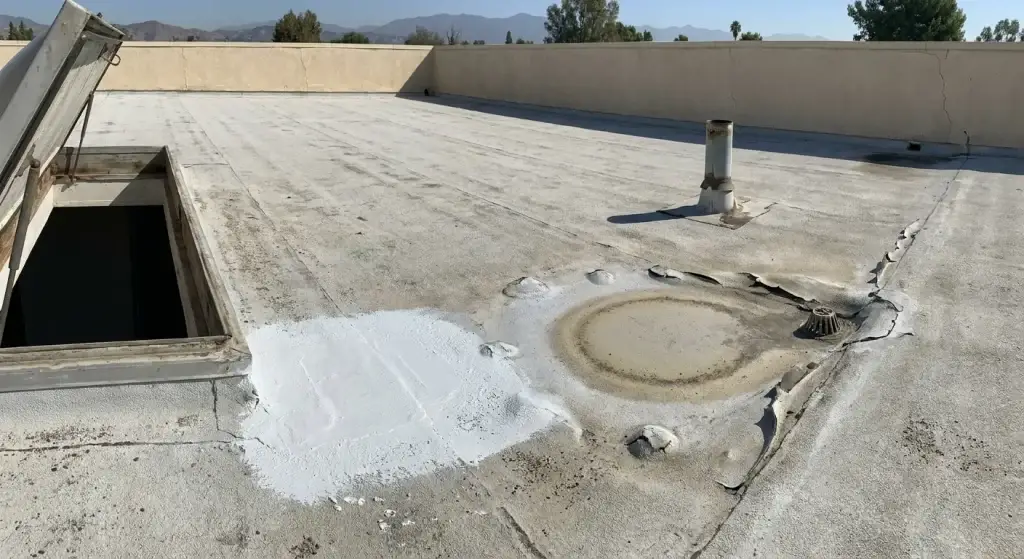
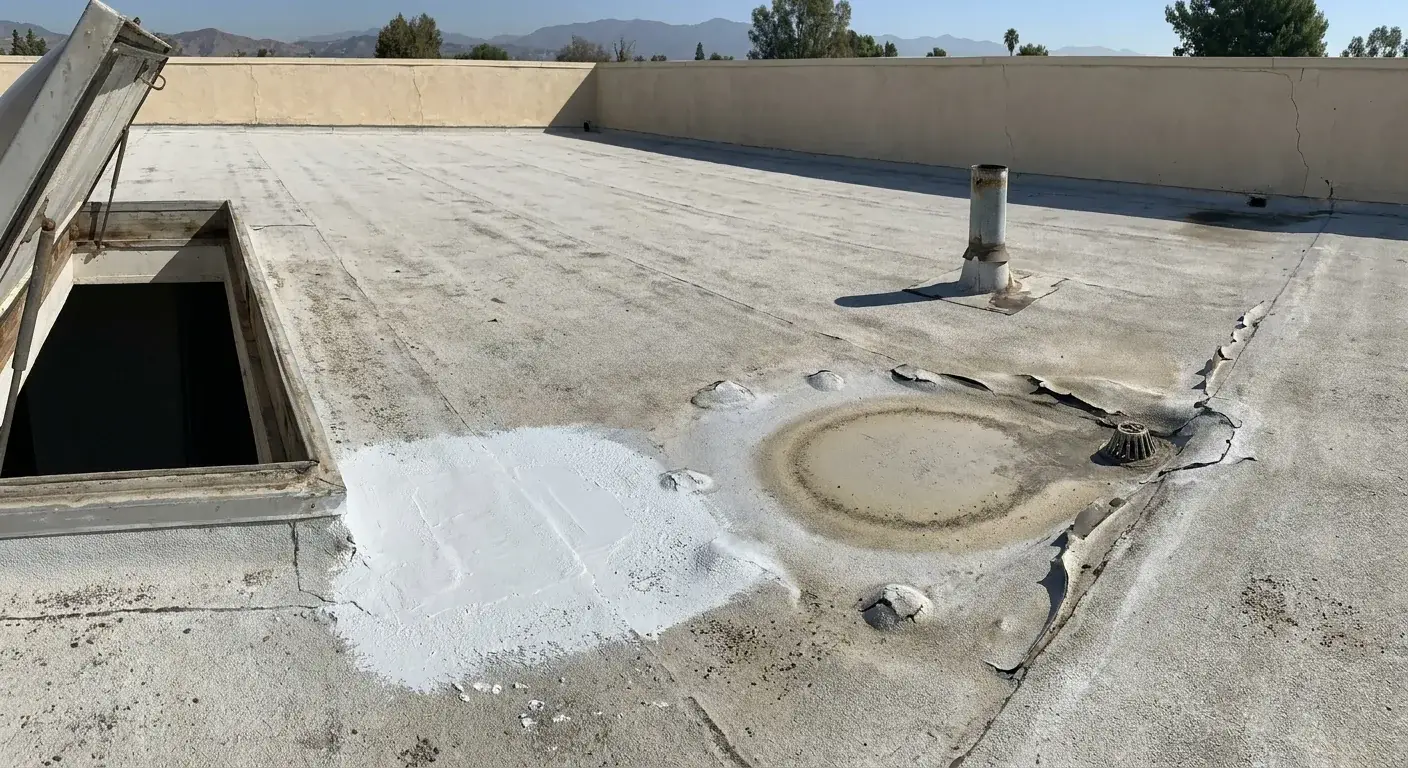
Acrylic won’t fix ponding on a flat roof. More coating in a low spot doesn’t change the slope, unclog a drain or lift a sagging deck. All it does is give standing water a thicker film to soften.
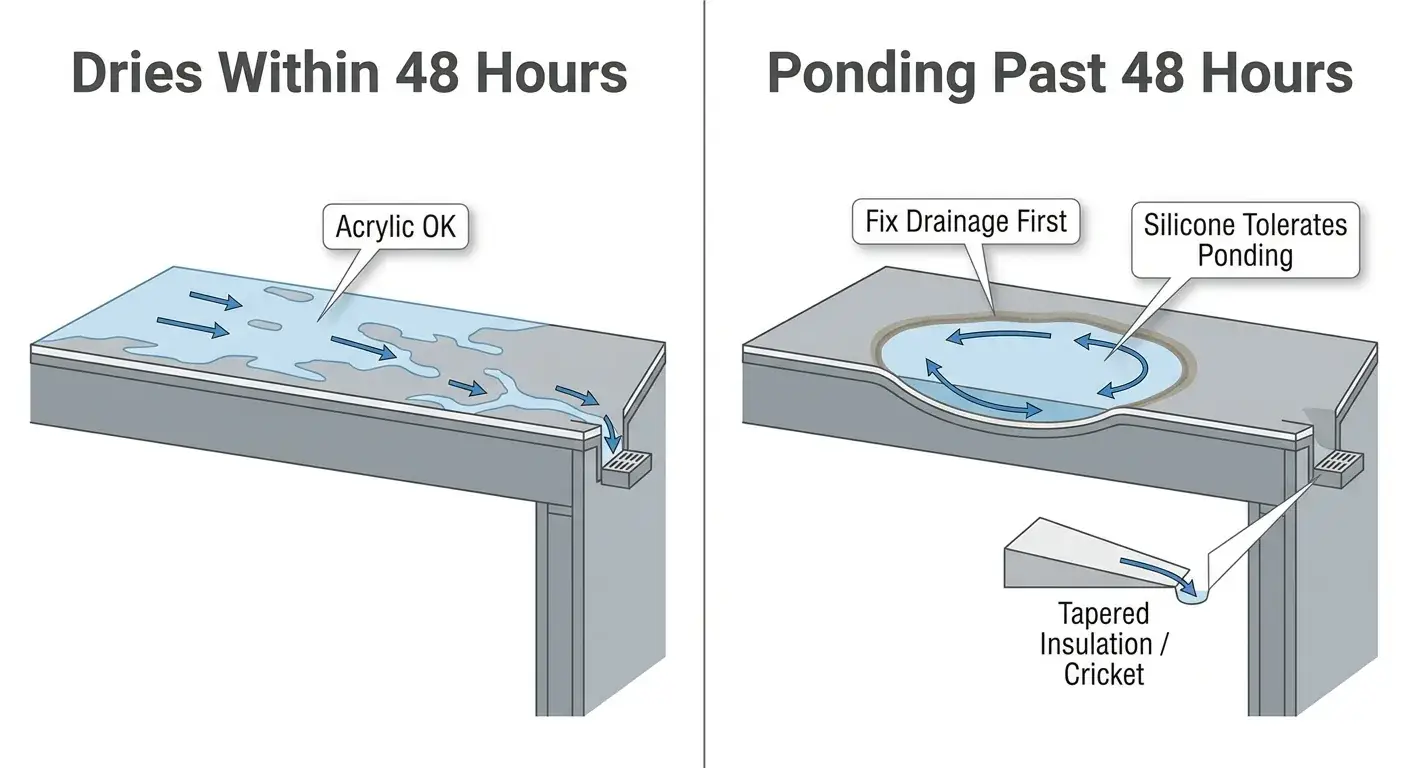
Warning: the ponding rule. Water that clears within 24 hours of a rain is normal on a low-slope roof. Water still standing after 48 hours, in conditions that would normally dry it, is ponding. A shallow film that evaporates by the next afternoon is acceptable. A birdbath that’s still there three days later, with a dirt ring around it, rules that area out for a standard acrylic system until drainage is corrected.
Here are the conditions where coating is a bad bet, and the fix for each:
- Ponding past 48 hours: Correct the drainage first. Tapered insulation, crickets behind curbs and chimneys, or added drains and scuppers move the water.
- Wet insulation: Restoration screens commonly reject or limit coating when wet insulation runs above 10 to 25 percent of the roof, confirmed by an infrared survey and core samples. Wet areas get cut out and replaced. If saturation is widespread, the roof gets replaced.
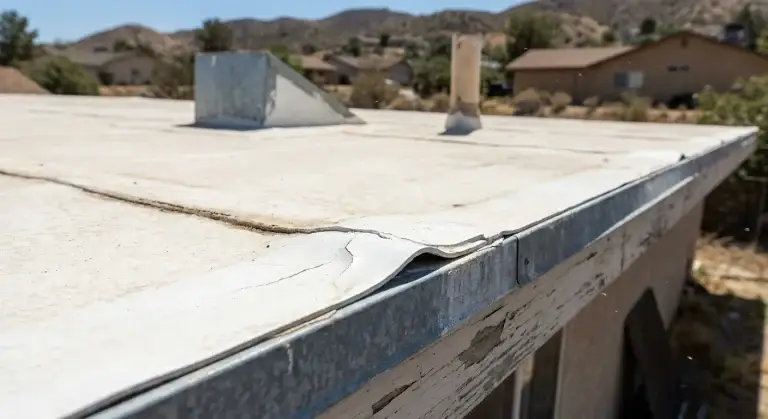
- Brittle or cracked membrane: Coating can’t hold together a roof that’s coming apart. A recover or replacement is the realistic plan.
- Active leaks: Find them, repair the seams and flashing, then coat. Never encapsulate a leak.
- Blisters from trapped moisture: These point to moisture inside the assembly, not a surface flaw. Moisture testing comes before anything else.
- Rotted wood trim at the roof edge: Coating won’t save fascia or rake boards that are already soft.
That last item matters because wood trim often fails before the roof does. At Foothill Painting, Trim2Steel cladding handles it as a permanent cosmetic fix for rotted, cracked or weathered trim, and it takes that trim out of the repaint cycle. It also acts as an ember barrier at eaves, rake edges and soffit lines, and it meets Chapter 7A requirements as a noncombustible covering.
If some ponding can’t be engineered away, a different chemistry may fit better. Silicone tolerates standing water far better than acrylic, but it costs more, collects dirt, and is hard to recoat with anything except more silicone. The full comparison is in “silicone vs acrylic roof coating.” And if you’re thinking about silicone over old acrylic, or any new coat over a failed film, an adhesion test comes first.
Blisters, Peeling and Old Coatings: Recoat or Remove?
Isolated peeling can be repaired and recoated. Widespread blistering usually points toward replacement. Peeling at seams, edges, drains or old patches typically traces back to local contamination, poor detailing or missing primer. In that case, scrape to a sound edge, feather the transition, clean, prime and recoat.
Blisters scattered across the field, or adhesion that changes from one square to the next? Moisture is moving inside the roof. Recoating over that just puts a cosmetic layer on a failing bond.
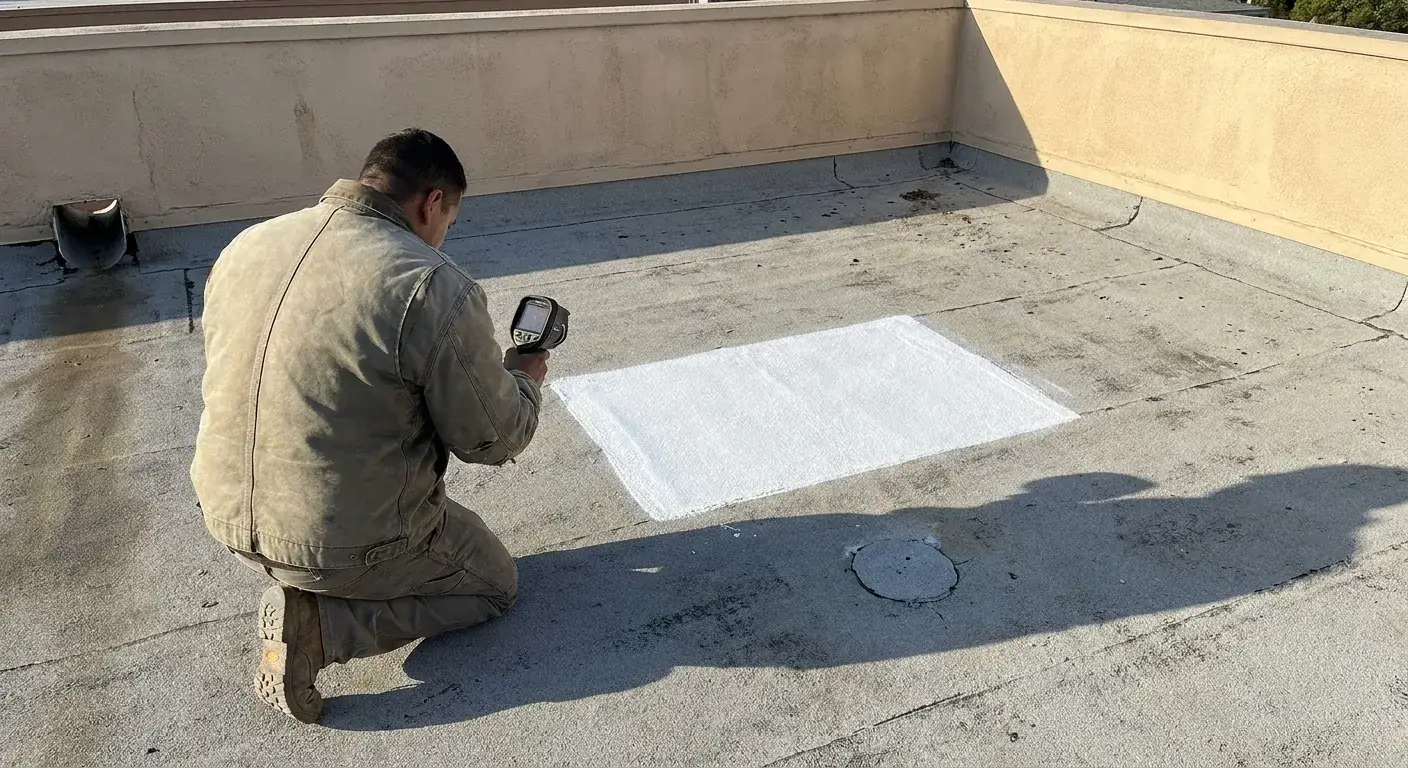
Before you commit, ask the installer to put down a small test patch with the specified primer and let it cure for 24 to 72 hours. Then pull it. One major manufacturer’s benchmark is 2.0 pounds per linear inch, and the failure should happen inside the coating or the substrate, not cleanly at the bond line. A patch that peels off like a strip of tape tells you the full roof would too.
The Tradeoff: Coating vs Recover vs Tear-Off
Coating beats a full reroof over 20 years only if it reaches its expected life without major substrate work. Once you’re paying for repeated repairs, drainage fixes and early recoats on a roof that can’t outlast them, replacing wins. Installed coating prices alone span roughly $1 to $6 per square foot depending on chemistry.
| Option | What you pay: money | What you pay: time and risk | What you get |
|---|---|---|---|
| Acrylic coating | About $1.50 to $3.00 per sq. ft. | 2 to 4 days; fails early if moisture or ponding is missed | 7 to 15 years, limited material warranty |
| Repair plus coating | About $2.50 to $5.00 per sq. ft. | Longer prep; moisture survey and adhesion test needed | 10 to 15 years on a sound roof |
| Recover | About $4 to $7 per sq. ft. | Adds weight; only allowed over a dry, single existing layer | 20 to 25 years, new membrane warranty |
| Full tear-off | About $7 to $22 per sq. ft. | Open deck, disposal, the most disruption | 25 to 30 years, full system warranty |
Worked example, per square foot: A $2.50 coating that lasts 10 years costs $0.25 a year. Add a recoat at year 10 at about 50 percent of the original, and 20 years of coverage costs $3.75, or about $0.19 a year. A $10 replacement lasting 25 years runs $0.40 a year.
Coating wins that math only on a roof that stays dry and drains. Headline quotes often leave out seam reinforcement, primer, moisture testing and drainage work, and those line items can close the gap fast. The full cost table is in “Elastomeric Roof Coating: The Complete Guide.”
If you’d like to know which column your roof belongs in before you spend anything, you can request an inspection and written estimate.
A Rule of Thumb You Can Apply Today
Three questions cover most of it. If all three answers are yes, coat. If any answer is no, fix or replace first.
- Does it drain within 48 hours? Check after the next rain, or run a hose on a dry day and come back.
- Is it dry? An infrared scan and a few cores answer this. Looking at it from a ladder doesn’t.
- Can the existing roof live out the coating’s term? A 10-year coating over a membrane with three years left is money spent twice.
The same test works for a commercial building or an HOA roof. Three yeses mean coat. A no on drainage means repair plus coating. A no on dryness or remaining life means recover or tear off.
Key Takeaway: One no among the three answers turns the coating into the most expensive option on the table.
Read the warranty language closely. A 10-year coating warranty covers the coating material under stated conditions, usually tied to thickness, approved prep and maintenance. It doesn’t promise a leak-free roof. As RoofingCalculatorUSA notes, the industry spec for acrylic coatings, ASTM D6083, covers the material itself and leaves thickness, coverage and cure limits to the product data sheet. Ask to see that sheet. The weather window matters too. Most acrylics need about 50 to 55°F and rising, with no rain for 24 hours.
For vetting bids and installers, “Acrylic Roof Coating: What to Look For Before You Buy” lays out the checks. The application steps are in “how to apply elastomeric roof coating.”
The next step is an inspection with moisture testing, before anyone quotes a coating. Foothill Painting handles roof coatings and Trim2Steel cladding under the owner’s general contractor license, so coating work and edge trim run under one contract and one crew schedule. Every person on your property is a trained W-2 employee, and the price is fixed in a written contract. Schedule a roof and trim assessment, and Foothill Painting will tell you what the roof can take before you pay for anything.
Frequently Asked Questions
Can I put silicone over acrylic roof coating?
Usually yes, if the acrylic is clean, well bonded and primed with a product the silicone maker approves. Run a cured test patch and pull it before full application. Going the other way is harder. Acrylic won’t bond to silicone, so once a roof goes silicone it generally stays silicone.
What is the 25 rule in roofing?
It usually refers to a building code provision. If more than 25 percent of a roof is repaired or replaced within 12 months, the whole roof may have to be brought up to current code. Adoption and wording vary by jurisdiction, so check with your local building department before splitting a large repair into phases.
What type of paint is best for a metal roof?
A high-solids acrylic elastomeric rated for metal, applied over a rust-inhibiting primer, works well on most residential and light commercial metal roofs. Treat rust spots and seal or replace loose fasteners first. Exposed screw heads are the most common leak source on metal.
How long can acrylic roof coating withstand standing water?
Not long. One commercial comparison describes acrylic breaking down after roughly 48 to 72 hours of constant immersion. Occasional puddles that dry in a day are tolerable. Repeated multi-day ponding softens the film until it re-emulsifies and peels.
Can acrylic roof coating be applied when the roof is above 120°F?
It needs special care at that point, according to at least one major manufacturer. The film can skin over too fast and trap air or moisture. On summer days in the valleys, crews often start at first light, once dew has burned off, and stop by early afternoon.
How long should a new TPO or asphaltic roof weather before acrylic coating?
At least 30 days for the referenced GAF acrylic topcoat. Fresh membranes carry release agents and oils that block adhesion. Even after weathering, the surface needs cleaning and, depending on the product, a primer.
Can pressure washing fix poor adhesion on an old roof?
It helps but rarely solves it alone. One acrylic guideline calls for at least 3,000 psi to strip chalk, grease and loose coating. Then the roof has to dry completely, which can take a full day or more. Washing does nothing for wet insulation or a membrane that’s already failing.