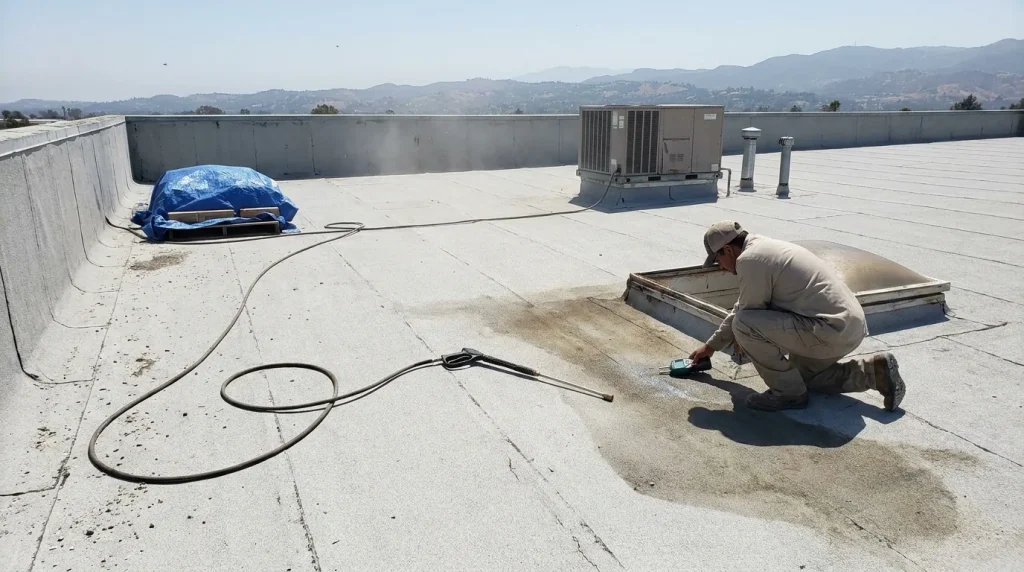
A commercial flat roof coating job spends way more hours waiting than spraying. A trained crew can cover a lot of square footage in a single day. What sets the calendar is washing, drying, repairs, and the manufacturer’s recoat intervals.
The short version
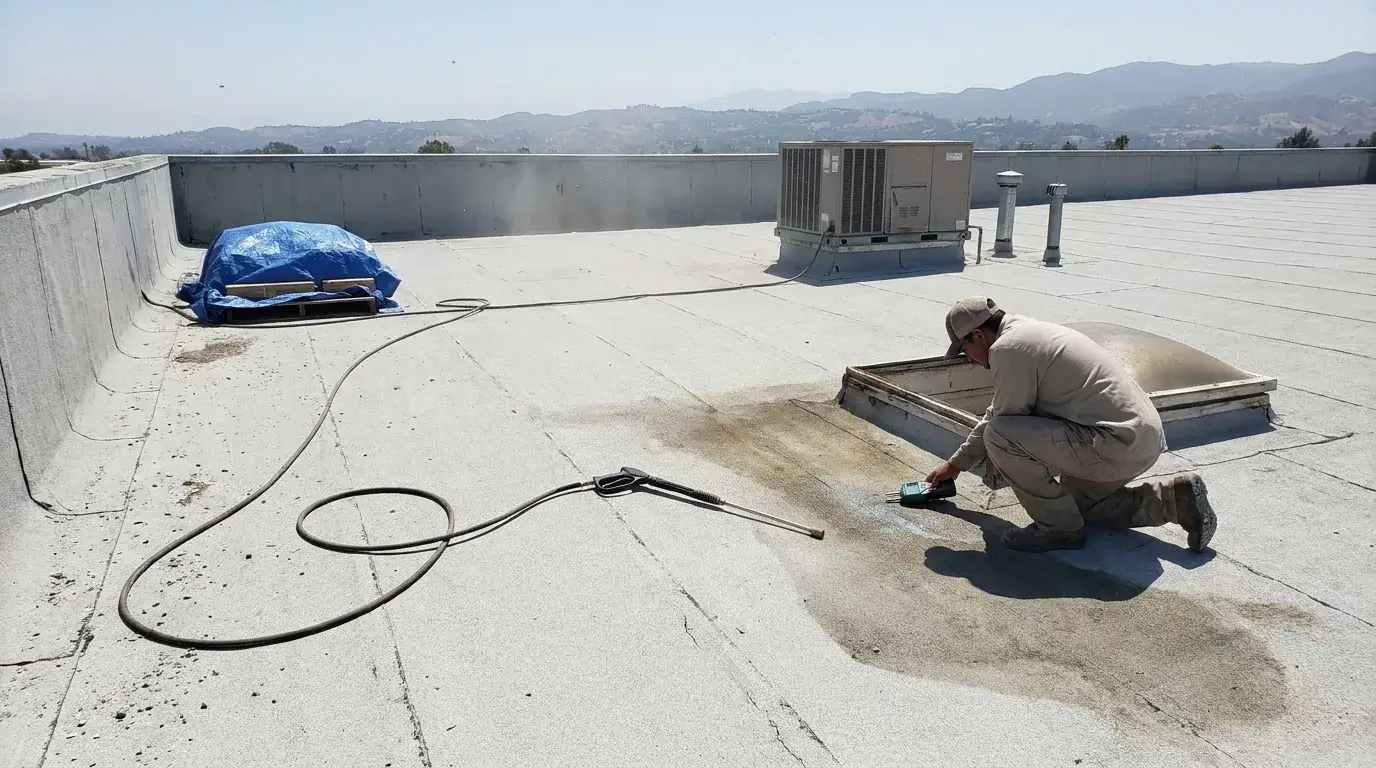
From the first inspection to a fully cured roof, most commercial flat roof coating projects run about two to five working days for a 5,000 to 10,000 square foot roof and roughly three to seven working days for a 25,000 to 50,000 square foot roof. Inspection and scheduling usually happen a week or two before anyone mobilizes. The order rarely changes: inspect and test the existing roof, confirm it’s still a coating candidate, prepare the building and site, pressure wash and let the roof dry, repair seams, flashings, trim metal and drains, apply primer where the system calls for it, lay down the base coat, wait out the recoat interval, apply the top coat, verify thickness, then let the system cure before anyone walks on it again. Spread across real weather, those working days often land inside a one to two week window.
Timeline at a glance
| Phase | What happens | How long | What you do |
|---|---|---|---|
| 1. Inspection and scope | Walkthrough, core or moisture survey, adhesion test patch, written scope | 2 to 4 hours on the roof, plus 3 to 10 days for results, proposal and scheduling | Provide roof access, share past repair records and warranty paperwork |
| 2. Client prep and site setup | Tenant notices, staging area, equipment protection, access plan | 1 to 5 days before mobilization, mostly on your side | Notify occupants, clear parking, label sensitive intakes, confirm hours |
| 3. Cleaning and drying | Debris removal, pressure washing, runoff control, dry-out | Washing a large roof is a day’s work. Drying usually 24 to 48 hours | Expect noise and water. Keep vehicles and deliveries clear |
| 4. Repairs and detail reinforcement | Seams, punctures, flashings, curbs, trim metal, drains, reinforcing fabric | Half a day to 2 days, longer if wet insulation is found | Approve any change order in writing before work continues |
| 5. Primer and first coat | Bonding primer where required, then the base field coat | Primer about 1 day, with 12 to 24 hours before base coat. Base coat about 1 day | Keep the roof clear. Postpone rooftop service calls |
| 6. Recoat and thickness checks | Second coat, wet film gauge readings, touch-up of thin spots | 8 to 24 hours between coats, then about 1 day per coat | Hold all roof traffic, including other trades |
| 7. Final cure and handoff | Cure period, final walk, cleanup, documentation | 24 hours to several days, product specific | Restrict access, file the warranty and inspection records |
Phase 1: Inspection and scope definition
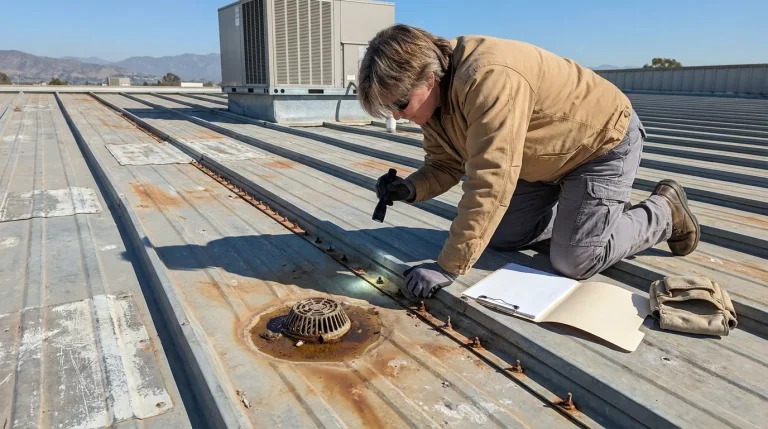
Whether you can coat over the existing roof comes down to four things: is the substrate dry, is it bonded, is it structurally sound, and does it drain. A roof that passes all four is a coating candidate. A roof with widespread wet insulation, soft decking, or an old coating that peels off in sheets is a tear-off. No amount of new material fixes that.
A proper inspection is written down, not narrated. Here’s what belongs on that list:
- Membrane or substrate type and age, including whether a previous coating is already in place and what chemistry it is
- Seam condition, with any open, lifted or fishmouthed laps marked and measured
- Flashings, curbs, pitch pans, skylight frames and metal trim or edge cladding, checked for separation and fastener backout
- Penetrations and drains, including whether strainers are present and whether drains sit below the surrounding field
- Ponding areas, noted with location and how long water sits after rain
- Blisters, splits, punctures and soft spots, found by walking the whole roof, not just the problem corner
- Moisture survey results, from infrared, capacitance or core cuts, mapped so wet areas can be cut out and replaced
- Adhesion test patch, usually a small coated square left to cure and then pulled. If it lifts cleanly, the surface needs more cleaning, a primer, or a different system
Simple pass or fail logic: the roof is eligible when the test patch holds, moisture testing shows only isolated wet areas that can be cut out, the deck is solid underfoot, and drains work. It fails when moisture is widespread, the existing coating has poor adhesion over large areas, or the deck flexes. This phase takes a few hours on the roof. Getting lab or survey results and a written scope back usually adds several days.
Phase 2: Client preparation and site setup
Your part happens before the crew arrives. It’s the cheapest place to save days. Occupied buildings lose more schedule to access problems than to rain.
Send tenant notices at least a week out. Cover the work dates, expected noise from washers and generators, the possibility of odor, and any hours when roof access is closed. Clear a staging area for material pallets and a lift or hoist, and confirm who holds keys, alarm codes and elevator access. Walk the roof with the contractor and point out anything that matters: fresh air intakes that may need to be shut down or filtered during spraying, exhaust fans, kitchen hoods, refrigeration lines, solar arrays, antennas, and any equipment under a separate warranty.
Loose rooftop items get removed or relocated ahead of time. Anything that can’t move gets masked. Also settle the small things that quietly stall a job: where the wash water will drain and whether local rules restrict runoff, where contractor vehicles park, whether deliveries need to shift for a morning, and who signs off on change orders. Written contracts with fixed pricing make that last point easy, since the scope, materials, timeline and price are already on paper.
Phase 3: Cleaning and drying
Plan on 24 to 48 hours of drying after the roof is washed, and longer in cool, humid or shaded conditions. Washing itself is quick by comparison. As Can This Roof Be Saved notes, power washing a 20,000 square foot roof typically takes 4 to 6 hours. Debris removal, drain clearing and masking of equipment happen the same day.
According to Upstate Roofing, commercial prep work commonly uses pressure washing in the 2,500 to 3,500 PSI range, adjusted to what the substrate can take. The goal is removing dirt, chalk, oxidation, biological growth, loose granules and any failing coating. On single-ply, too much pressure damages the membrane. On aged modified bitumen, too little leaves a film that no coating will stick to.
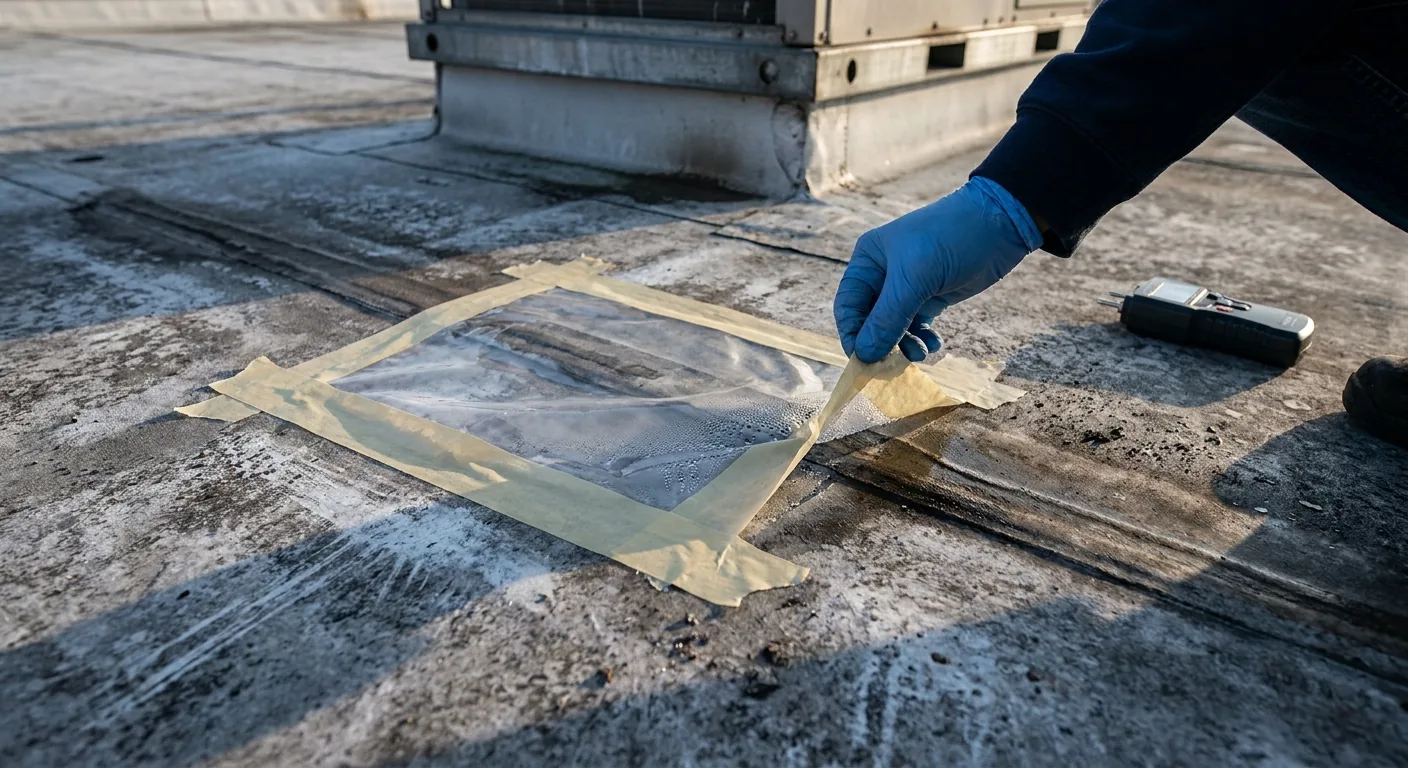
Pro tip: dry to the touch doesn’t mean dry. A roof surface can feel dry by mid-afternoon while water is still held in seams, lap edges, insulation joints, under flashings and inside old blisters. Coating over that trapped moisture is how blisters, delamination and warranty denials start. Before primer goes down, a good crew checks shaded areas, the north side of curbs, and low spots with a moisture meter or a plastic sheet taped down overnight. If the underside of that plastic shows condensation in the morning, the roof waits another day. At Foothill Painting, prep is treated as the biggest factor in how long a finish lasts and is never rushed, which is why the company runs a 7-step prep-and-paint process on every job.
If you are weighing a coating project on your own building and want the condition questions answered before you budget, you can request a written estimate and roof assessment.
Phase 4: Repairs and detail reinforcement
Coating doesn’t seal a failed detail. It bridges a clean, sound surface. Open seams, split laps, punctures, backed-out fasteners, separated base flashings, rusted edge metal, loose coping and cracked pitch pans all get repaired first, as their own line item, before any field coat goes down.
The repair list that typically shows up after washing:
Seams and laps get cleaned, primed where required, then covered with reinforcing fabric or polyester mesh embedded in coating, usually in a strip 4 to 6 inches wide. Penetrations, drains, scuppers, vent curbs and skylight frames get the same treatment because they stay the most common leak points on any flat roof. Metal trim and cladding at the perimeter need fasteners reset and rust addressed before coating, since a coating film over active corrosion lifts within a season. Wet insulation found during the moisture survey gets cut out and replaced in kind. Ponding areas may need tapered insulation crickets or a drain correction. A thicker film over standing water solves nothing and sits outside most manufacturers’ warranty coverage.
Repairs usually take half a day to two days. They’re also the most common source of a mid-project change order, which is why the scope should list repair allowances up front. Metal roofs carry their own prep and fastener rules, and those are covered in “commercial metal roof coating.”
Phase 5: Primer and first coat
Primer isn’t automatic. It depends on the substrate and the system. Aged TPO and PVC, galvanized or Galvalume metal, highly porous modified bitumen and roofs with any residual contamination generally need a bonding primer. Clean, well-adhered acrylic or granulated surfaces often don’t. The coating manufacturer’s data sheet decides. When primer is specified, skipping it voids the warranty.
Priming a large roof is about a day’s work, with roughly 12 to 24 hours before the base coat under good conditions. Before the first field coat, the crew checks conditions rather than the clock. Surface temperature, air temperature, dew point and the forecast all get read on site. Many roof coating manufacturers call for favorable surface temperatures, moderate humidity, and no rain in the forecast for at least 24 hours.
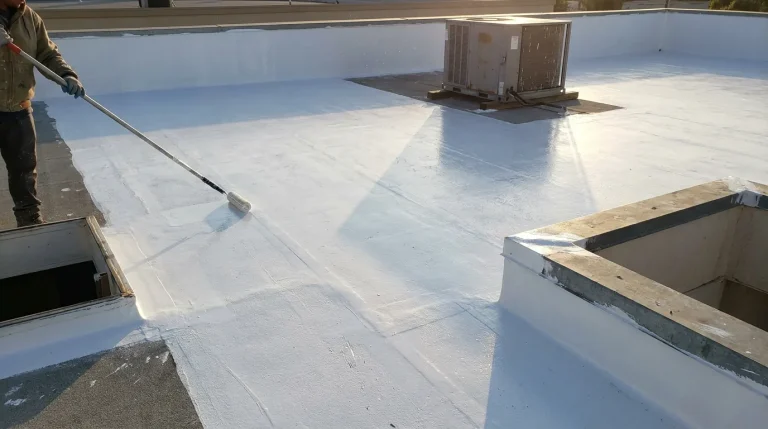
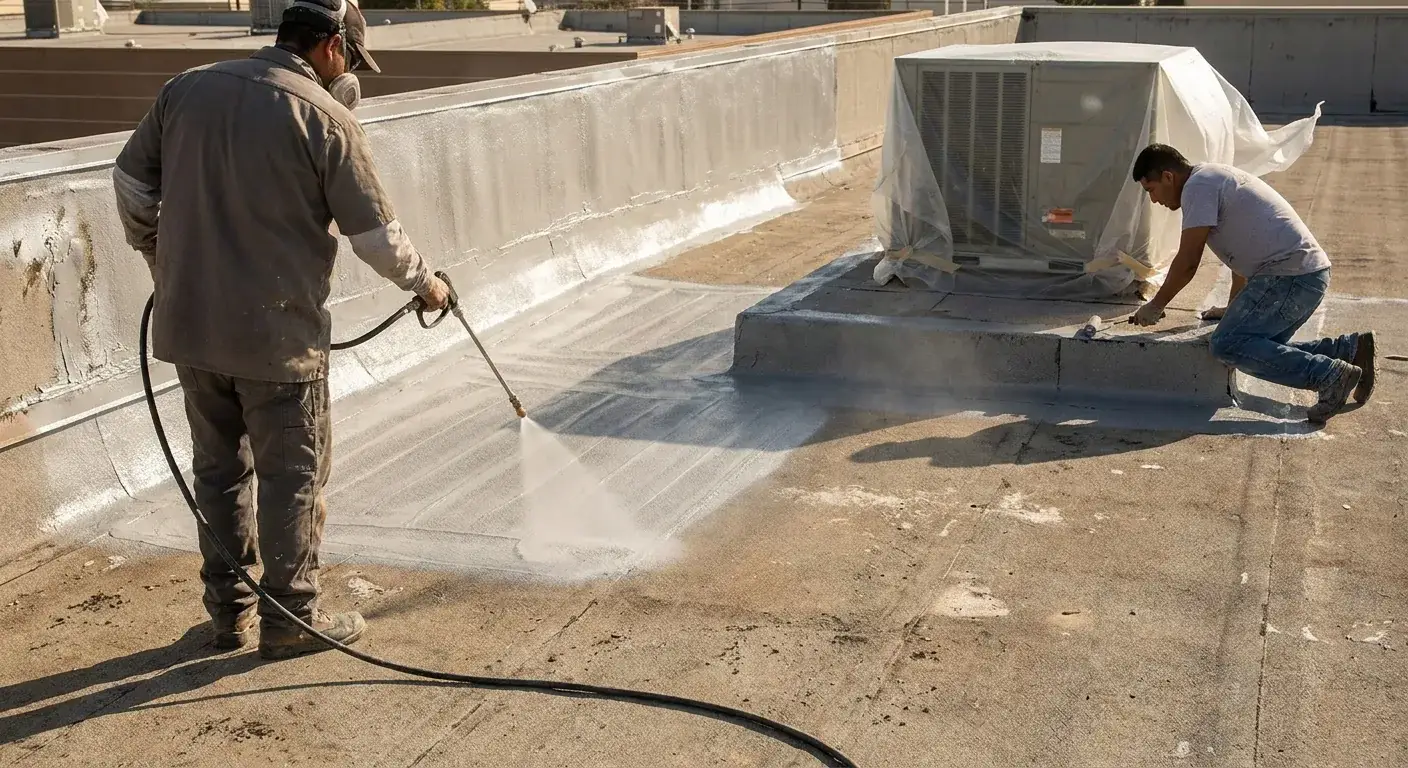
Application pace on open field area is fast. A crew of three to four applicators can coat 20,000 square feet in 4 to 6 hours. Edges, parapets, equipment curbs and tight spaces are rolled or brushed. Sprayed areas are often back-rolled to work material into the surface texture. Overspray control matters here more than anywhere else, since a breeze carries atomized coating onto cars, condensers and neighboring walls.
Phase 6: Recoat, thickness checks, and final cure
Most systems want 8 to 24 hours between coats. The second coat goes on in a different direction than the first so that thin lines from the spray pattern get covered. The recoat window is set by the manufacturer and by the weather, not by how the surface feels. A film can be walkable and still be too green to accept a top coat.
Thickness is the part owners should insist on seeing. Coverage is verified during application with a wet film gauge and by tracking gallons used against roof area. The specified rate is what produces the cured thickness the warranty is written against. Application should follow the manufacturer’s specified coverage rate, typically 1.0 to 1.5 gallons per 100 square feet per coat. Rough surfaces, embedded granules and fabric-reinforced details soak up more material than flat field area. Gallons-per-square tracking catches thin spots that a visual check misses.
After the final coat, the roof looks finished and isn’t yet serviceable. Expect restricted foot traffic for at least 24 hours and longer for some systems, with no other trades, HVAC service calls or equipment staging until the contractor releases the roof. Rain inside the cure window can wash out, pit or discolor a fresh film and may force inspection and recoating of affected areas. Closeout should hand you photos, repair documentation, coverage records, weather logs and the warranty paperwork. Foothill Painting backs every project with a written warranty plus a follow-up maintenance program that inspects and re-coats on schedule, which is what keeps the finish and the warranty both valid. When you are ready to put real dates on a roof, schedule a no-pressure estimate and get the scope in writing first.
Frequently Asked Questions
Can a commercial building remain open while the roof is being coated?
Usually yes. Most coating work happens entirely above the occupied space. The main interruptions are noise during pressure washing, temporary shutdown or filtering of rooftop air intakes during spraying, and limited roof access for several days. Odor-sensitive tenants, such as medical or food service operations, are the usual exception. Those buildings often schedule spray days for nights or weekends.
How much rain-free weather is required after applying a commercial roof coating?
Most manufacturers want at least 24 hours of dry weather after each coat. Acrylic systems typically want more because they cure by water evaporation. Dew counts as moisture. An evening application that gets hit by heavy overnight dew can be just as damaging as light rain. Contractors generally stop spraying several hours before sunset for that reason.
How long after the final coat can employees or HVAC contractors walk on the roof?
Plan on a minimum of 24 hours for light foot traffic and several days before equipment service, material staging or anything dragged across the surface. Silicone reaches a walkable state quickly but stays easy to scuff while it finishes curing. For routine service routes, walk pads installed after cure prevent the wear that shows up first at hatch doors and around rooftop units.
What is the 25 rule in roofing?
It refers to the common code-based threshold that if more than 25 percent of a roof area is being repaired or replaced within a 12 month period, the entire roof section must be brought up to current code rather than patched. For coating projects, it matters when the moisture survey finds extensive wet insulation. Removing that much of the assembly can push the job from restoration into replacement.
What delays commercial roof coating projects the most?
Weather and hidden moisture, in that order. Rain, dew, humidity above the manufacturer’s limit, cold substrate temperatures and short daylight windows all push application days.
What is the longest lasting roof coating?
High-solids silicone generally holds up longest on flat roofs that pond, since it doesn’t soften in standing water. Acrylic is the easier and cheaper system to recoat on a well-draining roof. Polyurethane handles foot traffic and impact better than either. Comparisons of specific manufacturers and flat roof coating options are covered in “roof coating industries.”
What is the typical cost of commercial roof coating?
Flow Roofing reports that commercial roof coating installations typically run $2 to $7 per square foot, depending on system type and roof condition. The full breakdown, including repair allowances, primer, access and minimum charges, is in “commercial roof coating.”
What is cladding on a roof?
Cladding is the outer skin applied over the structure. On a commercial building that usually means the metal panels, fascia, coping and trim that cover the roof edge and parapet. Those trim details are where coating projects most often leak afterward, because fasteners, laps and corners need separate repair and fabric reinforcement before the field coat goes on.