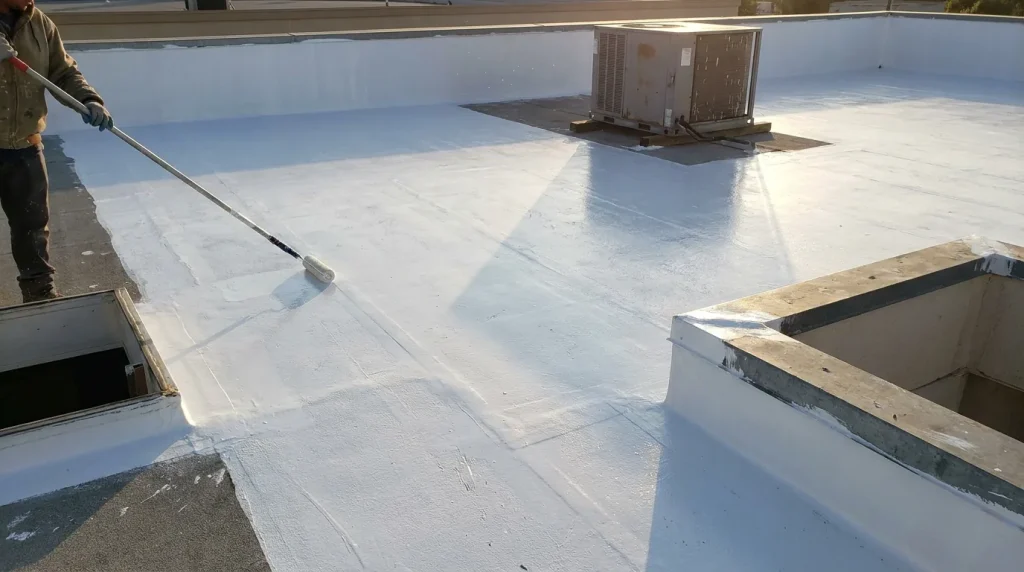
Commercial roof coating buys time on a roof that is still sound. It does not rebuild one. That single distinction decides almost everything else: whether your building needs a coating, a repair, or a tear-off, which chemistry fits the roof you actually have, and what a fair installed price looks like once preparation and detail work are included.
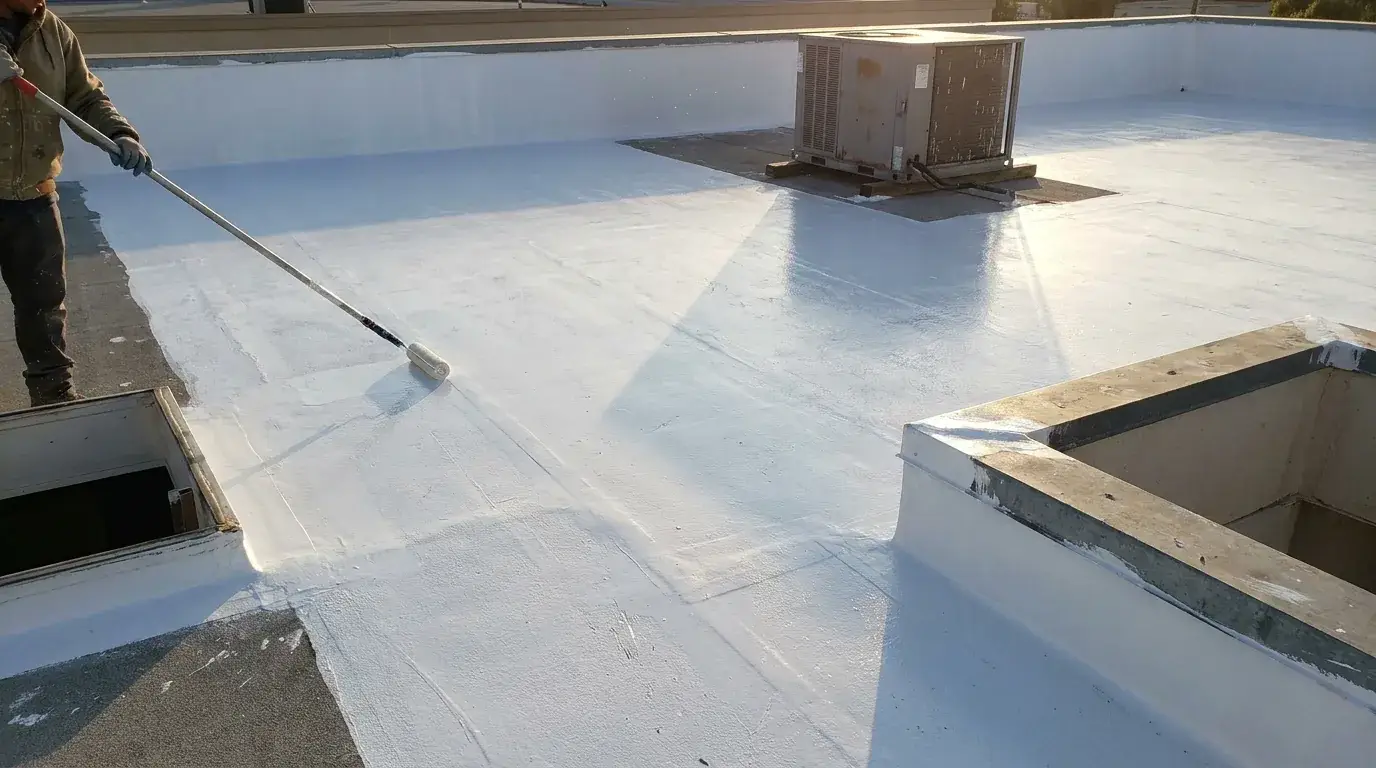
What commercial roof coating is and who needs it
A commercial roof coating is a fluid-applied membrane sprayed or rolled over an existing roof. It cures into one elastic skin with no seams and no fasteners to leak. It sheds water, blocks UV, and reflects heat. The main families are acrylic, silicone, polyurethane, polyurea, asphalt emulsion, and spray polyurethane foam with a protective topcoat.
Coating makes sense in four common situations:
- Extending a serviceable roof that is weathered on the surface but dry underneath.
- Stopping chronic small leaks at seams, fasteners, and flashings after those details are repaired.
- Cutting rooftop heat gain on a dark, sun-baked low-slope roof.
- Restoring metal or aging modified-bitumen assemblies where corrosion and open laps are the real problem.
There is no single best type. The best type is the one matched to the roof’s condition: silicone where water stands after rain, acrylic on well-drained roofs in dry climates, polyurethane where traffic and impact are the risk, asphalt emulsion on asphaltic roofs, and SPF with a topcoat where added insulation is also a goal. A product that performs for 20 years on a dry metal roof can blister off a ponding membrane in one season.
A coating does not repair a roof. It does not replace wet insulation or a failing deck.
How to decide whether your roof should be coated, repaired, or replaced
Your roof is a candidate for coating when the deck is sound, the insulation is dry, drainage works, and the damage is limited to the surface and the details. It’s a replacement candidate when water has already gotten into the system. Nothing applied on top fixes what is wet underneath.
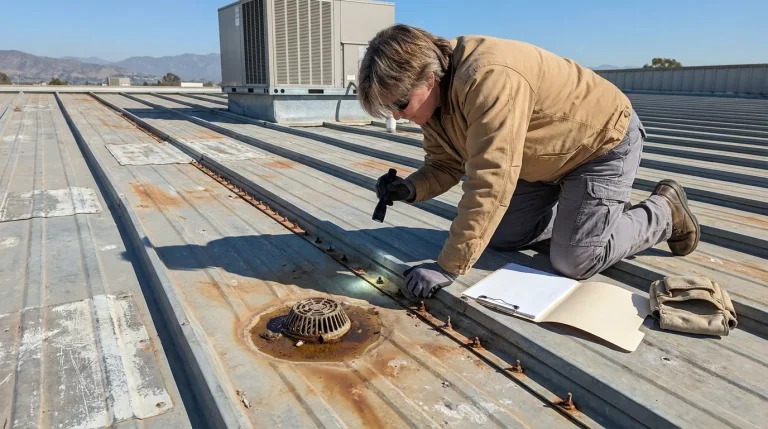
Walk the roof with a contractor and settle these checks before any product is named:
- Moisture survey. Run an infrared scan after sunset, a capacitance moisture meter on a grid, or core samples cut at suspect spots. Cores are the only method that confirms what the other two suggest. Pass: readings come back dry. Fail: wet areas get cut out and replaced, or the project stops.
- Deck condition. Pass: the deck is firm underfoot. Fail: soft spots, spongy areas, rusted steel deck, or deflection around drains.
- Seams and laps. Pass: laps are tight and intact. Fail: open seams, fishmouths, splits, exposed reinforcement, or alligatored asphalt.
- Fasteners and flashings. Pass: terminations are tight and sealed. Fail: backed-out screws, failed gaskets, loose termination bars, cracked pitch pans, lifted coping.
- Drainage. Pass: the roof is dry 48 hours after rain. Fail: standing water, blocked drains, crushed scuppers, debris at the sump.
- Leak tracing. Pass: interior staining maps back to a confirmed source. Fail: the source is a guess.
- Existing roof layers. *According to Commercial Roof Cost Guide, code permits a maximum of two roof coverings on a building before a tear-off is required. Fail: a third covering is proposed.
Decision guide: Dry roof, good drainage, surface wear only, go to coating. Isolated wet areas under 25 percent of the field, repair or replace those sections first, then coat. Widespread saturation, deck deterioration, or a third covering, replace. Leak source unknown, test before you buy anything.
Silicone roof coatings for ponding water
Silicone is the usual answer for a low-slope roof that holds water after normal rainfall. It keeps its water resistance when submerged, while acrylic softens and erodes under chronic ponding. That’s the practical difference buyers care about.
What silicone won’t do is change the shape of your roof. It can’t create slope, clear a blocked drain, or fix a crushed scupper. Water sitting on silicone still collects dirt, loses reflectivity, and makes the surface slick when wet. If your HVAC crews cross a ponding area weekly, plan on walk pads or reinforced traffic lanes as part of the scope. Drainage correction, tapered insulation at the sumps, or added drains should be priced before the coating.
For a system-by-system comparison of the coating families and where each one earns its place, see “roof coating industries”.
Which roof materials can be coated and what prep they need
Most commercial substrates accept a coating: EPDM, TPO, PVC, modified bitumen, built-up roofing, concrete, and metal. Each one needs different cleaning, a different primer, and proof of adhesion before the system is specified. A proposal that says only “elastomeric roof coating” has skipped the part that decides whether it sticks.
Aged EPDM usually needs a rinse, a bleed-blocking primer, and seam treatment. TPO and PVC need the chalked, oxidized layer scrubbed off and a compatibility check (plasticizer migration can undermine adhesion). Modified bitumen and BUR need cracks bridged with reinforcing fabric. Metal needs rust removal, fastener replacement, and seam reinforcement. Where code or an insurer calls for it, Class A fire-rated coating systems are available for most of these substrates.
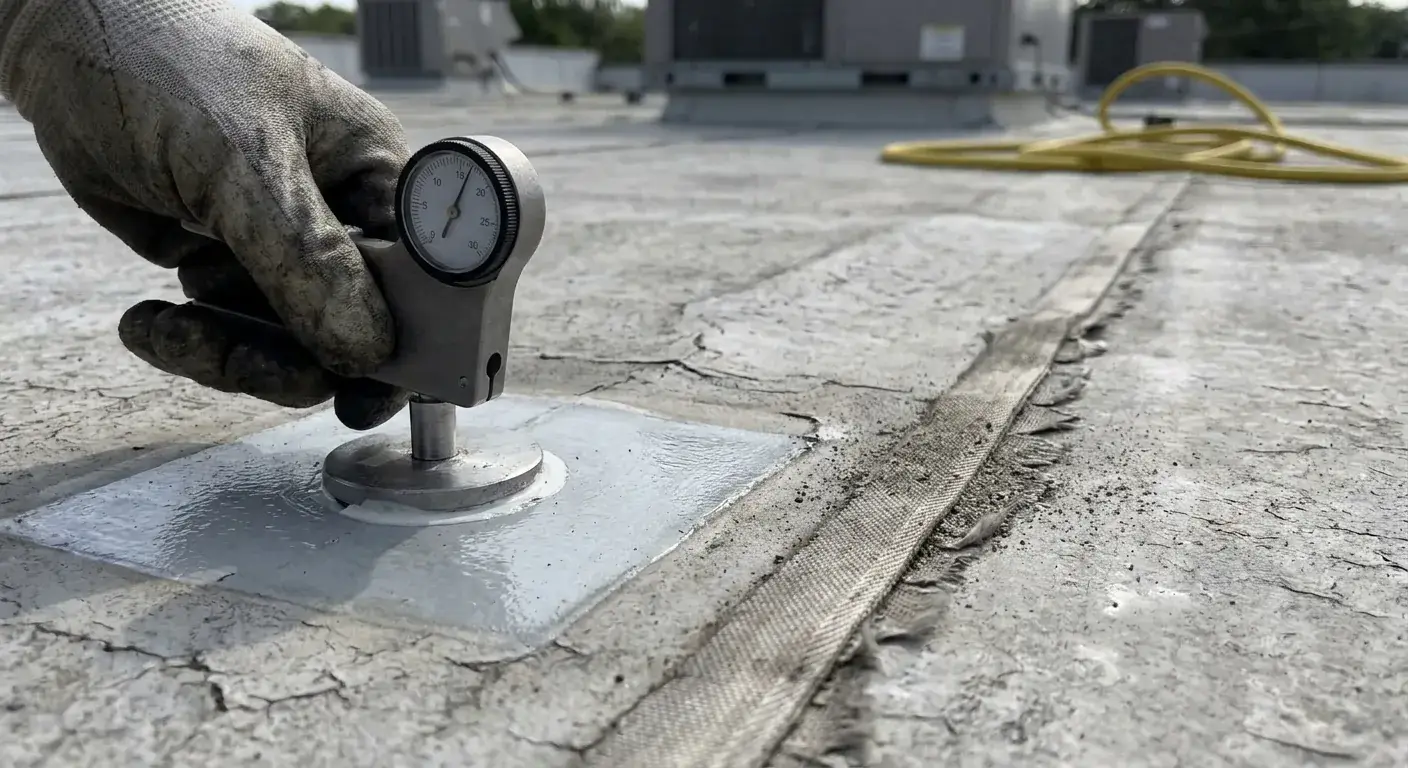
The test that settles it is a field adhesion pull on a cleaned, primed sample area. For how that testing works on a metal assembly, read “How to Choose a Commercial Metal Roof Coating“.
What has to happen before application
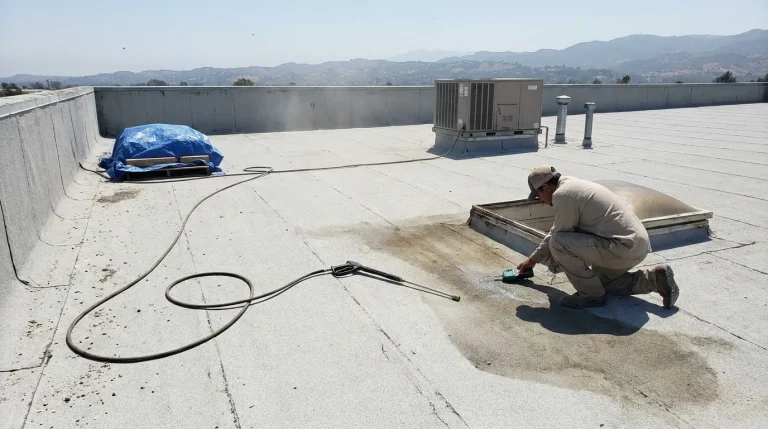
Repairs come first. Remove and replace wet insulation. Re-fasten or replace loose deck and fasteners. Rebuild failed flashings and curbs. Treat rust. Reinforce seams and penetrations with fabric and base coat. Correct drainage. The field coating goes on last, over a clean, primed surface.
Most two-year coating failures trace back to that list rather than to the product. Dirt and chalk left on the surface, substrate moisture that never dried, or a film applied too thin all produce a roof that looks finished and fails early.
A straightforward roof can be coated in 1 to 2 days. Repairs, cleaning, and cure time stretch that out, and the forecast controls the calendar. The full sequence from inspection through cure, the temperature and rain windows it depends on, and how a building keeps running during the work are in “Commercial Flat Roof Coating Timeline From Start to Finish“.
Will coating help with energy savings and reflectivity?
A white reflective coating lowers roof surface temperature on a sunny day. Silicone products can deflect upwards of 90 percent of the sun’s rays. Whole-building utility savings are a smaller and far more variable number. The roof is one layer in a system that also includes insulation depth, HVAC efficiency, ductwork, occupancy, and your utility rate.
Insulation does most of the work. Current energy codes require R-25 to R-35 depending on climate zone. On a roof already at that level a reflective surface changes less than a brochure suggests. On an under-insulated warehouse with rooftop units in a hot, sunny climate, the effect is larger and can shorten compressor run time.

If cutting heat is a goal, plan for dirt pickup, which cuts reflectance within the first year or two unless the roof is washed on a schedule.
How long commercial roof coatings last and when they need recoating
Service life runs roughly 7 to 15 years for acrylic, 15 to 25 years for silicone, 10 to 20 years for polyurethane, and 20 years or more for maintained SPF systems. Those are ranges tied to conditions.
Four things move a roof toward the short end: ponding and poor drainage, concentrated foot traffic along HVAC service routes, hail and freeze-thaw cycling, and a film applied thinner than the warranty specification. Roofs with heavy equipment traffic often need recoating in the 8 to 12 year window. UV grade matters as well. Aromatic polyurethane base coats break down in sunlight and have to stay covered, while aliphatic topcoats hold color. SPF assemblies need their protective elastomeric coating reapplied about every 10 to 15 years (a planned maintenance cost rather than a failure).
Annual inspection, debris removal from drains, and prompt repair at penetrations add years. The warranty and recoating questions to put to a contractor are in “How to Choose a Commercial Metal Roof Coating”.
How much commercial roof coating costs
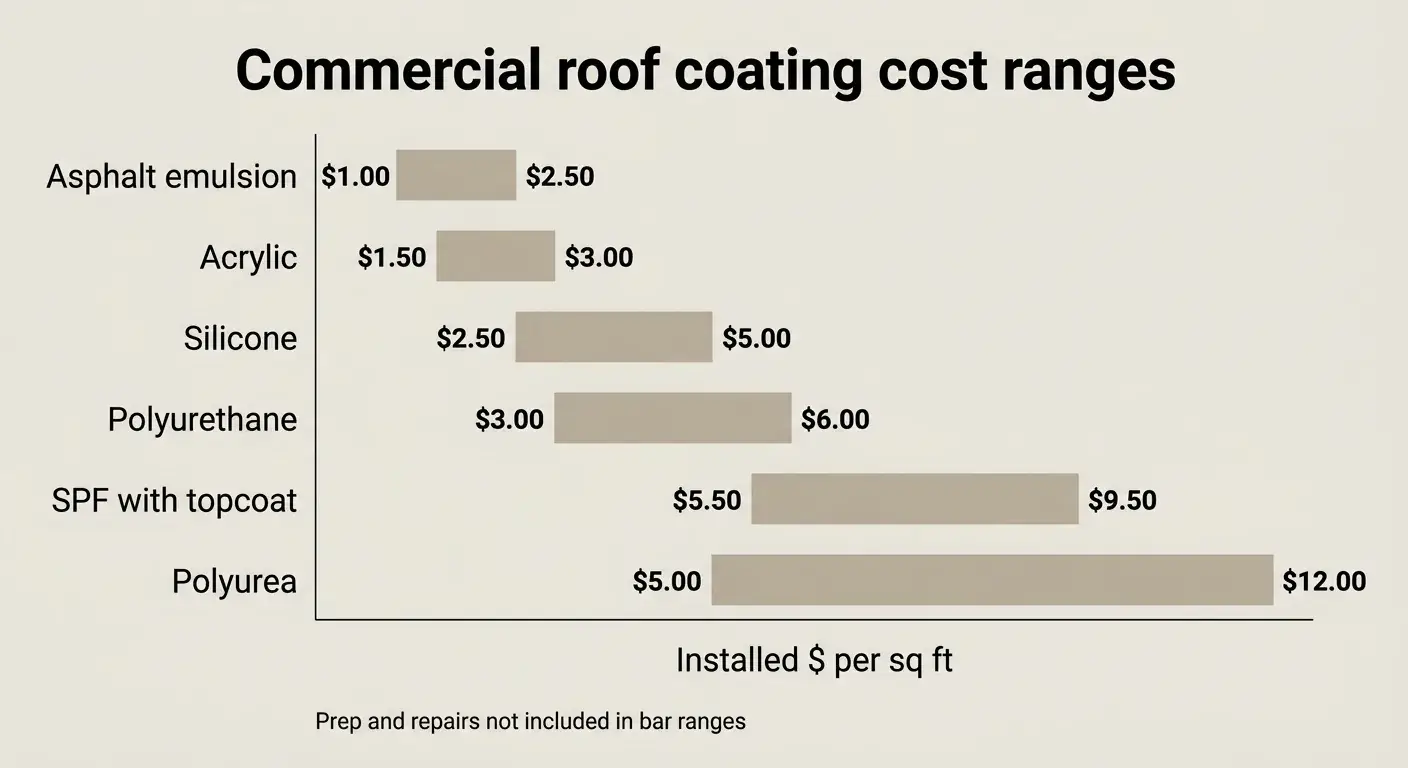
Installed commercial roof coating generally runs between $1.50 and $9.50 per square foot, with most restoration projects landing in the middle of that band. As Maxwell Urethane Roofing’s 2026 pricing guide notes, a professional commercial roof coating system typically ranges between $2.50 and $7.00 per square foot installed in 2026.
| Coating system | Typical installed range per sq ft | Where it fits |
|---|---|---|
| Asphalt emulsion | $1.00 – $2.50 | Asphaltic and BUR roofs, budget work |
| Acrylic | $1.50 – $3.00 | Dry climates, sloped or well-drained roofs |
| Silicone | $2.50 – $5.00 | Low-slope roofs with ponding exposure |
| Polyurethane | $3.00 – $6.00 | Traffic, hail, mechanical abuse |
| SPF with topcoat | $5.50 – $9.50 | Added insulation and a seamless surface |
| Polyurea | $5.00 – $12.00 | Chemical exposure, industrial traffic |
The published per-square-foot number is the coating alone. The project cost also carries cleaning, repairs, primer, seam reinforcement, access equipment, fall protection, mobilization, permits, and warranty registration. A 10,000 square foot roof can land anywhere from $15,000 to $80,000 once system, prep and repairs are counted. The difference between a bare price and a complete scope runs into tens of thousands of dollars.
If you want a written scope and a fixed price before you start comparing numbers, request a free estimate here.
When commercial roof coating makes sense, and when it does not
Coating is appropriate on a dry, serviceable roof with working drainage. It’s the wrong call when the insulation is wet, the deck is unstable, corrosion is structural, or leaks are active with no confirmed source.
Hire a licensed professional when:
- The leak source is unclear or interior damage suggests trapped water under the membrane.
- Access is hazardous: fragile panels, skylights, open edges, energized rooftop equipment, spray operations.
- A manufacturer warranty matters, since eligibility depends on approved products, documented preparation, measured film thickness, and approved applicator status.
- Chemical or grease exposure exists, as at restaurants, plants, and laboratories.
- Edge metal, coping, fascia, or wall cladding is part of the job. Rusted coping, loose cleats, or open joints get replaced or over-clad with new metal rather than coated (a coating bridging a moving joint will split). That work sits outside a C-33 painting license. The owner of Foothill Painting also holds a general contractor license, so the roof edge and the wall transition can run under one scope.
Read the bids and the warranty before the brand:
- Compare line items, not square-foot prices. A serious proposal prices moisture testing, repairs, primer, seam reinforcement, target dry film thickness, warranty registration, and required maintenance on their own lines. A single unexplained number hides whichever of those a low bidder left out.
- A material warranty replaces failed product and nothing else.
- A labor warranty covers the contractor’s workmanship for a stated period.
- A system or NDL warranty from the manufacturer covers both, and usually requires an approved applicator, documented thickness, and annual inspections you must pay for.
- Few coating warranties cover ponding water, and almost none cover leaks from a condition that existed before the work. Ask which exclusions apply to your roof in writing.
Before you sign, ask four questions: what the moisture testing found, whether the firm is a certified applicator for the system it’s quoting, what dry film thickness is specified and how it will be logged, and whether the people on the roof are the contractor’s own employees. Watch for the standard red flags: a large deposit demanded before materials are ordered, pressure to sign the same day, and crews whose employment nobody will confirm. At Foothill Painting every person on the roof is a trained W-2 employee, never a subcontractor or day labor. Every job gets a written contract setting out scope, materials, timeline and price before work begins, with no hidden fees and no mid-job upsells.
If you want your roof evaluated before you choose a system, request a free estimate or stop by the Burbank office at 2134 Floyd St.
Frequently Asked Questions
Can roof coating stop an active commercial roof leak?
Only after the leak source is found and repaired. Coating applied over an active leak seals water inside the assembly, where it saturates insulation and corrodes the deck out of sight. Trace the leak with a moisture scan or core samples. Make the repair. Let the area dry. Then coat.
Which roof coating chemistry is best?
Silicone handles ponding and extreme UV. Acrylic costs less per square foot and recoats easily, but it erodes under ponding. There’s no universal winner, so match the chemistry to drainage, substrate and traffic.
What warranty applies to a silicone roof coating?
Manufacturer warranties on silicone systems commonly run 10 to 20 years. The length depends on the specified film thickness. Eligibility turns on an approved applicator, logged thickness, and scheduled inspections. The paperwork has to be registered after the job. Ask whether ponding areas are included (that exclusion is common on the exact roofs silicone is sold for).
What temperature does it need to be to apply a commercial roof coating?
Most systems need the roof surface at or above 50 degrees Fahrenheit and below 100 degrees, with temperatures staying above the minimum overnight while the film cures. Hot surfaces flash the coating off too fast and can trap solvent. Cold or damp mornings delay the start, so crews often wait for dew to burn off before spraying.
What coating is best for a metal commercial roof with rust and leaking fasteners?
The coating matters less than the prep. Rust has to be removed or converted. Failed fasteners get replaced with oversized screws and new gaskets. Every seam gets reinforced with fabric and base coat before any field coat goes down. Silicone and polyurethane both perform on metal once that work is done.
How many square feet will 5 gallons of roof coating cover?
At 20 mils dry film thickness, about 250 to 330 square feet. A 10-year warranty typically requires about 20 mils dry film thickness (roughly 1.5 to 2 gallons per 100 square feet, logged as wet mil readings during application). Surface texture changes the math. A smooth TPO membrane takes far less material than a granulated cap sheet, which can absorb a third more. Ask the contractor for the gallons per 100 square feet in the proposal and compare it to the data sheet.
Is SPF roof coating appropriate for a warehouse or industrial building?
It can be, when added insulation is a goal and the deck is sound. Spray polyurethane foam adds R-value and a seamless surface, but the foam itself isn’t UV stable and depends entirely on its elastomeric topcoat. Budget for recoating that protective layer and for keeping the surface clear of dropped tools and sharp debris.
What can I put on a flat roof to make it look better?
A reflective coating evens out patch marks, discoloration, and mismatched repairs into one uniform surface (popular ahead of a sale or a tenant walkthrough). Appearance alone is a weak reason to spend the money. If the roof is sound, you get the look as a bonus on a project that’s already extending service life.