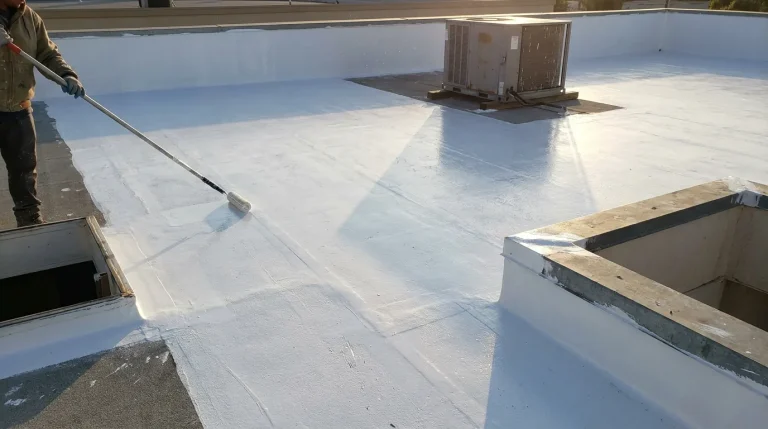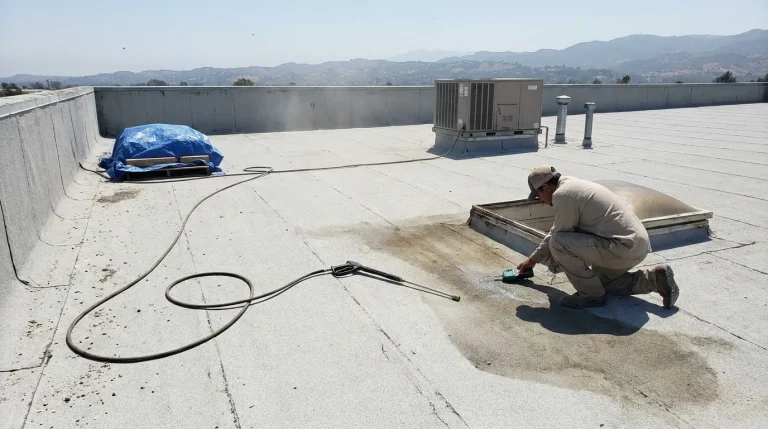
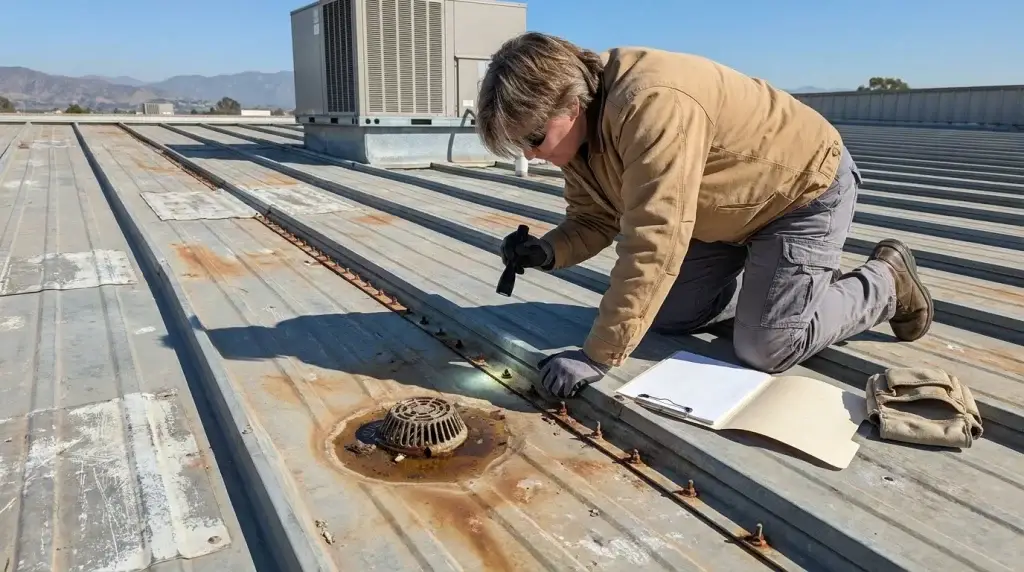
The best commercial metal roof coating is the one matched to your roof’s substrate, its drainage, and the real condition of its seams and fasteners. Chemistry comes second. Two contractors can quote the same silicone system on the same warehouse and deliver results a decade apart, because one priced preparation and repairs while the other priced a spray crew and two coats.
So the vetting work happens before you compare prices. You’re buying an inspection, a repair sequence, a documented system spec, and a company that will still be around when a seam opens up after the first heavy rain.
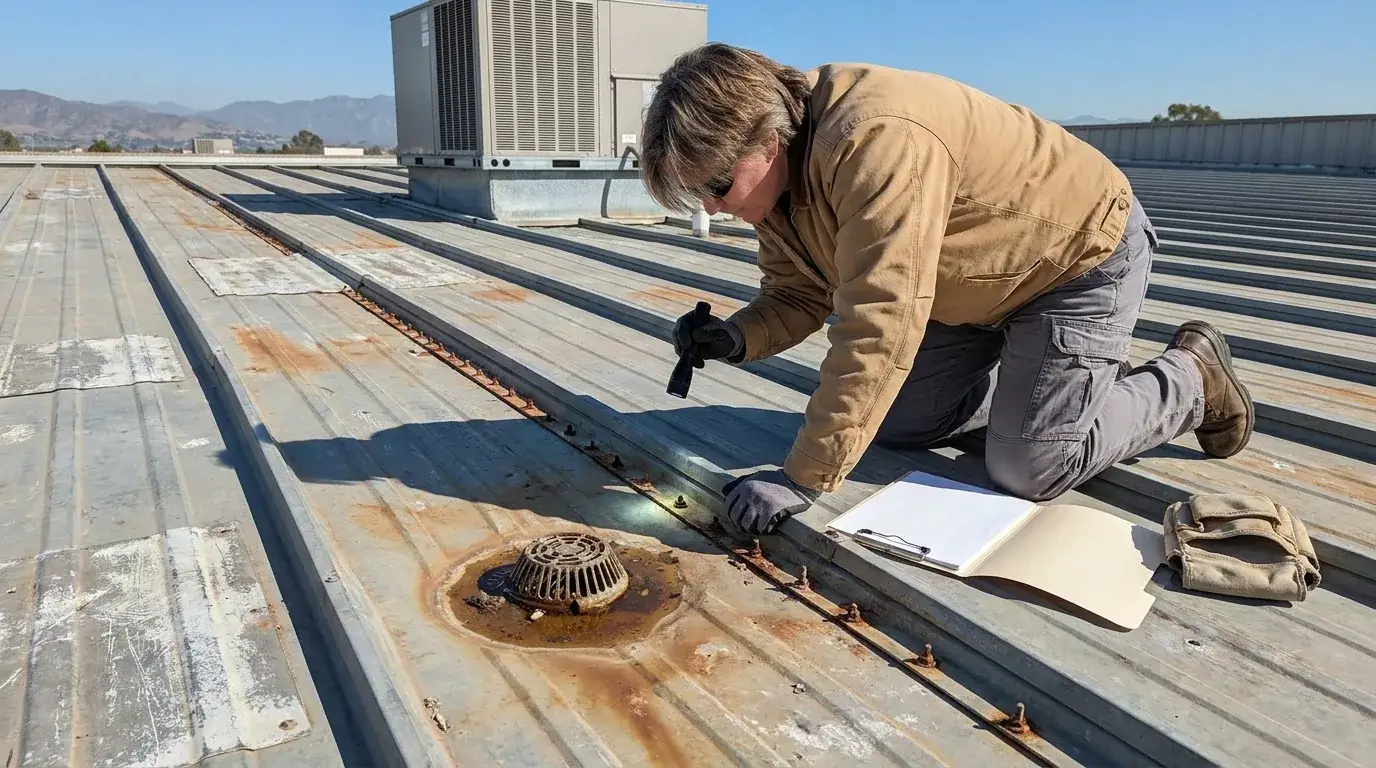
What actually matters before you choose a commercial metal roof coating
Five things decide whether a coated metal roof performs: the condition of the metal, compatibility with the existing finish, drainage, preparation, and a written system specification. Everything else in a bid is detail.
Roof condition. Coating is maintenance for a roof that still has structural integrity. Panels with rust-through, soft decking, loose or deflecting framing, or widespread failed laps need repair or replacement first. A coating sprayed over a roof that’s already coming apart buys a season, not a decade.
Substrate and existing finish. Aged galvanized, Galvalume, bare aluminum, and most weathered pre-finished panels will accept a coating system. Siliconized and fluorocarbon factory finishes often won’t, because coatings struggle to bite into them. The contractor should tell you which finish is on your roof and how they know.
Drainage and ponding. Low-slope metal, back-pitched valleys, and blocked gutters hold water. Coating specifications commonly treat standing water after rainfall as unacceptable and require positive drainage to be corrected first. Silicone tolerates standing water better than acrylic, but no chemistry fixes a drainage problem.
Preparation. Cleaning, rust treatment, fastener work, and seam reinforcement are the job. The coating is the last step.
The written system. Manufacturer, primer, seam compound, reinforcing fabric, finish coat, coverage rate, and target dry film thickness, all in writing.
Here’s how the common metal roof coatings types compare once the roof itself is sound:
| System | Strongest at | Watch for |
|---|---|---|
| Acrylic elastomeric | Reflectivity, UV, dry climates, low cost per gallon | Thins over time, poor choice where water stands |
| Silicone | Standing water, UV stability, long weathering | Dirt pickup, slick when wet, recoating needs silicone |
| Polyurethane | Impact, hail, foot traffic, equipment areas | Usually needs a UV-stable topcoat, stronger odor |
| Butyl or synthetic rubber | Seams, movement joints, detail work | Often used as a detail material, not a full field coat |
Brand-level comparisons of these systems belong in “roof coating industries.” For this decision, the manufacturer matters less than whether the contractor is writing a full system and following its spread rates.
How do I know if the roof can be coated at all?
A metal roof is a candidate for coating when the panels are structurally sound, dry underneath, and clean enough for the coating to bond. It’s not a candidate when corrosion has perforated panels, insulation or deck is wet, or an existing coating is delaminating across large areas. You don’t have to strip everything, but you do have to earn the bond.
Ask for a written substrate assessment with these checkpoints answered:
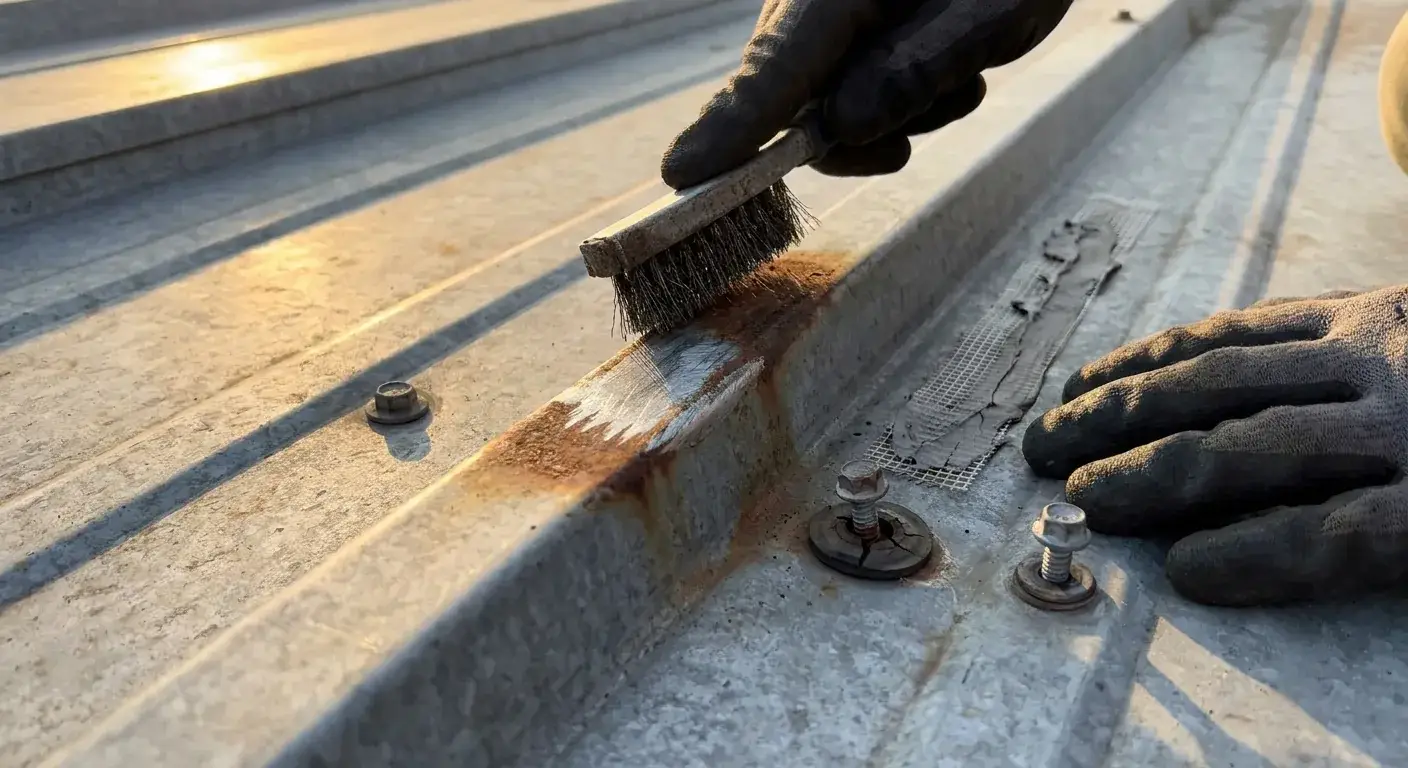
- Rust. Surface rust gets wire brushed or abraded to sound metal and primed with a rust-inhibiting primer. Rust that’s eaten through gets cut out. According to Roofing Contractor, galvanized sheet conforming to ASTM A-653 with a G60 or G90 designation is adequate for most roofing applications.
- Existing coating. Chalked but tight coating can usually stay after cleaning. Peeling, blistering, or lifting coating has to come off in those areas. A roof covered in patches usually means the previous system already failed more than once, and coating over it moves that failure onto the new contractor’s warranty.
- Adhesion testing. When the finish or the old coating is unknown, the specification should require peel adhesion tests on test patches before full application. The bid should state who performs the test, how many locations, what counts as a pass, and what happens if it fails.
- Moisture. Trapped moisture under insulation or in seams will push a coating off the metal. Infrared scanning or a core cut answers this.
- Fasteners and seams. Loose, backed out, or corroded screws and deteriorated neoprene washers get replaced, often with oversize screws. Seams get cleaned and reinforced with fabric and seam compound.
If the roof fails these checks in more than isolated spots, the honest answer is replacement or partial panel work, not a thicker spray on metal roof coating.
What should a commercial metal roof coating quote include line by line?
A fair quote is measurable and auditable. You should be able to read it and know the roof area, the materials, the gallons, the repairs, and what’s excluded. Two bids can sit within a few percent of each other while one includes fastener replacement, seam reinforcement, and testing and the other includes none of it.
Look for these line items:
- Measured roof area and the method used to measure it
- Cleaning with the method stated, low pressure wash or power wash, and detergent where oils are present
- Rust treatment and primer, with the primer product named
- Fastener work, with a count or unit price for replacements
- Seam, lap, and flashing treatment, including fabric reinforcement where specified
- Penetrations, curbs, skylights, drains, and parapets, each named rather than bundled under “details”
- Trim and edge metal, stating what’s coated, what’s replaced, and what’s clad
- Coating system, with manufacturer, product names, number of coats, coverage rate, and target wet and dry film thickness
- Access, including lifts, hoisting, fall protection, and roof protection
- Testing and documentation, adhesion tests, film thickness readings, and photos
- Mobilization, disposal, taxes, exclusions, payment schedule, and change order procedure
Trim is the line item most often missing. Fascia, rafter tails, eaves, and edge metal move and corrode at a different rate than the roof field, and a coating that stops at the gutter line leaves the weakest wood exposed. Foothill Painting’s steel trim cladding, sold as Trim2Steel, uses 26 gauge sheet steel custom bent to match the home’s trim profiles and installed directly over existing wood trim, fascia, rafter tails, corbels, soffits and eaves, with no tear-off and no reframing. On commercial buildings the same principle applies: decide in the contract whether trim is coated, wrapped, or replaced.
If new aluminum-coated panels are part of the scope, ASTM A-463 sets a minimum aluminum coating weight of 0.65 ounces per square foot on both sides of the metal panel.
Comparing two bids and not sure what the gaps are? A free written estimate gives you a third scope to read against the others.
How can I verify the contractor is licensed, insured, and actually qualified?
Verify both at the source, not from the PDF the contractor emails you. In California, search the state licensing board by license number or legal business name and check status, classification, expiration date, bond, and any disciplinary history. Confirm the license permits the type of work being proposed and that the name on the license matches the name on your contract.
For insurance, ask the contractor’s agent or insurer to send a current certificate directly to you, and ask to be listed as certificate holder. Then read it:
- Named insured matches the contracting legal entity exactly
- Commercial general liability in force, with the policy period covering your work dates
- Workers’ compensation for every person who will be on your roof
- Automobile liability where vehicles and equipment come on site
- Limits appropriate to the size of your building and whatever your lease or lender requires
A license and a certificate prove legality, not capability. Ask separately how many metal roofs of this size the crew has coated, whether the company is an approved applicator for the system being specified, and whether the people on the roof are employees or subcontracted labor. Crews that change every week tend to produce film thickness that changes every week too.
What warranty language is worth paying for?
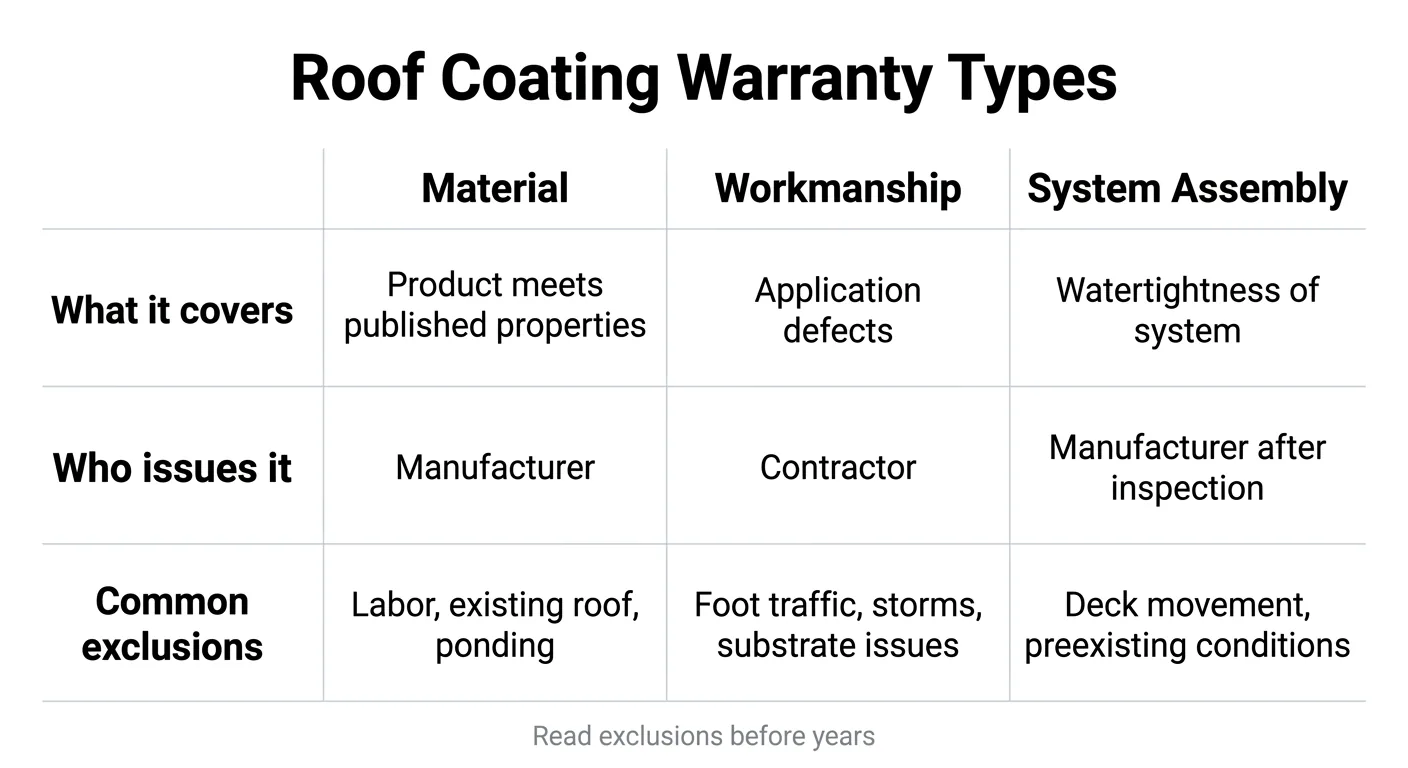
Three different warranties get blurred together in sales conversations, and only one of them concerns leaks. The material warranty says the manufacturer’s product meets its published physical properties. The workmanship warranty says the applicator’s installation is free of application defects. A roof assembly or no dollar limit warranty, issued by the manufacturer after an inspection, is the only one that typically addresses watertightness across the system.
Read the exclusions before you read the number of years. Common carve-outs include the existing roof, the structural deck, labor, ponding water, foot traffic damage, storm damage, and substrate movement. One widely used acrylic specification excludes the existing roof, the deck, and project labor outright, which means a twenty year warranty can still leave you paying for the leak repair.
Ask four questions and write the answers into the contract: who responds to a leak call, who pays for labor, what maintenance is required to keep coverage valid, and how a claim is filed.
At Foothill Painting, a roof coating is treated as maintenance that extends a roof’s service life, not a new roof. It carries no guaranteed lifespan and no insurance outcome. Straight answers about what a system cannot do are worth more than a long warranty with short teeth.
What are the red flags in a commercial metal roof coating bid?
The warning signs are specific, and each one maps to a failure you’ll see later. Peeling, bubbling, and cracking after a coating job almost always trace back to something that was skipped before the sprayer came out.
Red-flag warning box
- A one page bid with no substrate description. If the proposal doesn’t say the roof is clean, dry, and sound, nobody checked. Expect adhesion failure.
- No separate preparation line item. Cleaning and rust work folded into “labor” means they can shrink to fit the price.
- No fastener or seam scope. Fasteners and laps are where metal roofs leak. Coating over them hides the path for one rainy season.
- No adhesion testing on an unknown or factory finish. Coatings don’t bond to siliconized or fluorocarbon finishes, and you find out in year two.
- Silence on ponding water. A bid that ignores standing water is selling you a membrane over a drainage problem.
- No film thickness or coverage rate. Without wet and dry mil targets, thinned material and short gallons are invisible until the coating wears through.
- **Many systems require suitable temperatures, a dry roof, and no precipitation expected soon after application. A crew spraying ahead of rain is protecting its schedule, not your roof.
- A deposit above roughly 30 to 50 percent with no material delivery, no defined start date, and pressure to sign today.
- Blanket promises. Fireproof, permanent, leak free forever, guaranteed insurance savings. None of those are things a coating does.
- No written change order procedure. Rust discovered after cleaning becomes a verbal upcharge.
One more pattern from the field: a roof covered in old patches tells you the last system failed repeatedly. A contractor willing to coat straight over that history without addressing why is taking on your problem and handing it back to you with a warranty attached.
What does a fair commercial metal roof coating offer look like?
A fair offer is itemized, fixed in price, and honest about what could change. Published installed prices for commercial metal roof coating systems vary widely because they bundle different amounts of preparation, so the number alone tells you very little. The cost table with ranges by system type lives in “commercial roof coating.”
What should be present in any offer worth signing:
- A fixed price for the defined scope, with unit prices for the work that cannot be fully counted until the roof is clean, such as fastener replacement and panel repair
- A clear statement of what’s excluded
- An estimate validity period and a payment schedule tied to milestones rather than a large front-loaded deposit
- Schedule assumptions, including weather contingency days and cure time before roof traffic resumes
- Documentation deliverables: photos, film thickness readings, and the manufacturer’s warranty registration
The items that move a total materially are rust and panel repair, seam reinforcement quantity, access equipment, number of coats, and warranty level. Expect the bid with real preparation to be higher and to last longer. For how the work unfolds on an occupied building, day by day, see “commercial flat roof coating.”
Commercial metal roof coating checklist
Bring this to the site walk and the bid review.
Before the bid – Confirm panels are sound and the deck is dry – Identify the existing finish, galvanized, Galvalume, aluminum, or pre-finished – Check drainage and note any water standing more than 48 hours after rain – Note every penetration, curb, skylight, drain, and trim condition
In the proposal – Written substrate assessment – Separate cleaning, rust treatment, and primer line items – Fastener and seam scope with quantities or unit prices – Named manufacturer, primer, seam compound, reinforcement, and finish coat – Coverage rate plus wet and dry film thickness targets – Adhesion test plan with pass criteria – Trim and edge metal treatment stated – Access, disposal, mobilization, exclusions, payment schedule, change order procedure
On the company – License verified at the state board, status and classification current – Certificates of insurance received from the insurer, named insured matches the contract – Workers’ compensation covering every worker on the roof – Employee crews rather than rotating subcontracted labor – Manufacturer approved applicator for the specified system
On the warranty – Material, workmanship, and assembly coverage separated in writing – Exclusions read, especially existing roof, deck, labor, and ponding – Maintenance obligations and inspection schedule named – Claim process and leak response in the contract
When you are ready for a written scope with fixed pricing and no mid-job upsells, request a free estimate from Foothill Painting. The office is at 2134 Floyd St. in Burbank, and every request gets a response within 24 hours, usually the same day.
Frequently Asked Questions
What should go on metal roof seams and fasteners before coating?
For seams, laps, and fasteners, a butyl or elastomeric seam compound used with reinforcing fabric outperforms a general purpose caulk, because it stays flexible as panels expand and contract. The sealer should come from the same manufacturer as the field coating so the chemistries stay compatible. A sealer alone is a repair, not a roof system.
What is the longest lasting roof coating?
Silicone and high quality polyurethane systems generally weather the longest on metal, often carrying longer warranty terms than acrylics. Service life depends more on film thickness, preparation, and climate than on chemistry alone. Ask for the specified dry film thickness and the recoat interval, because a coating applied thin won’t reach its warranted life no matter what’s on the label.
What is cladding on a roof?
Cladding is a protective outer skin installed over an existing surface rather than replacing it. On roofs and roof edges, that usually means sheet metal formed to cover fascia, trim, soffits, eaves, and rafter tails so weather never reaches the wood underneath. It’s an alternative to repeatedly scraping, priming, and repainting exposed trim.
Is cladding good for roofing?
For trim, fascia, and edge metal it works well, because those areas fail first and are expensive to keep painted. Properly detailed cladding sheds water, resists rot, and doesn’t need a repaint cycle. It doesn’t replace a roof covering, and it must be installed with attention to dissimilar metal contact and thermal movement, or it will corrode or buckle.
Can acrylic, silicone, or elastomeric coatings be applied over an existing factory metal finish?
When the finish cannot be identified, peel adhesion tests on sample patches settle it before the full roof is committed.
What should happen if an adhesion test fails before the coating project begins?
The contractor should stop, report the result, and propose a corrective path: mechanical abrasion, a different primer, a full strip in the affected areas, or a different system. The contract should already say who pays for the retest and whether you can cancel without penalty if no primer achieves adhesion. Proceeding anyway voids most manufacturer warranties.
How long must a newly coated metal roof remain free of foot traffic?
Plan on roughly three days before routine roof traffic resumes, and longer in cool or humid weather when cure slows. Schedule HVAC service, inspections, and any rooftop contractor work around that window. Walking on uncured coating leaves marks, thins the film, and can break the surface in the exact spots you were trying to protect.
Can the building stay occupied while the metal roof is coated?
Usually yes, with planning for overspray control, interior protection under open penetrations, odor in areas served by rooftop air intakes, and restricted roof access. Weather days will move the schedule. The day by day sequence for an occupied building is covered in “commercial flat roof coating.”