A brush clearance notice shows up in the mail, it names your parcel, it lists things to fix, and it gives you a date. That’s usually how Los Angeles homeowners learn they live in a brush zone. The work itself isn’t complicated. Getting it done correctly, on a slope, before an inspector comes back, is where people get stuck.
Here’s what the job involves on a Los Angeles hillside or canyon lot, what it costs locally, and how to hire a crew that leaves the property ready for reinspection.
What brush clearance in Los Angeles involves
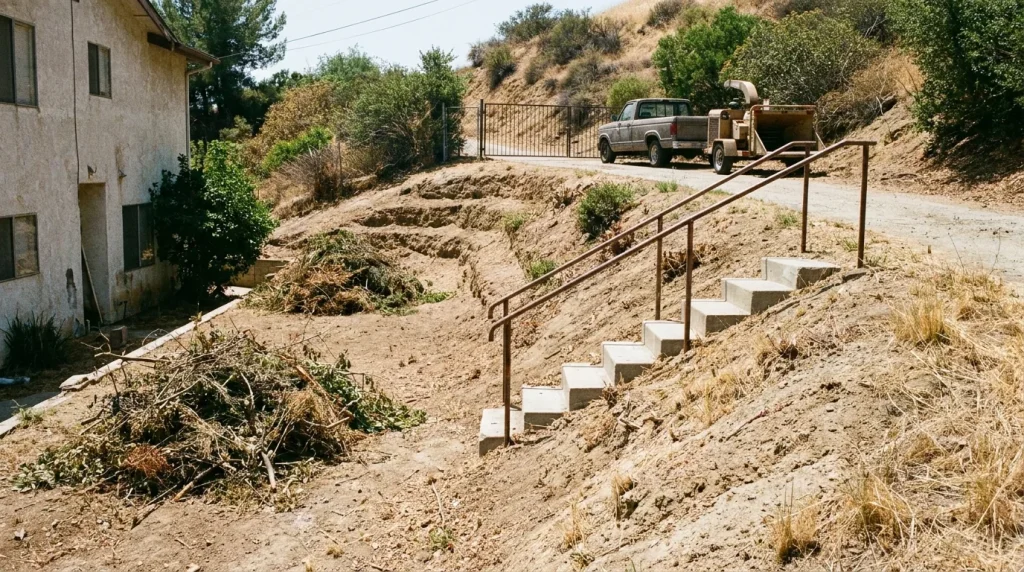
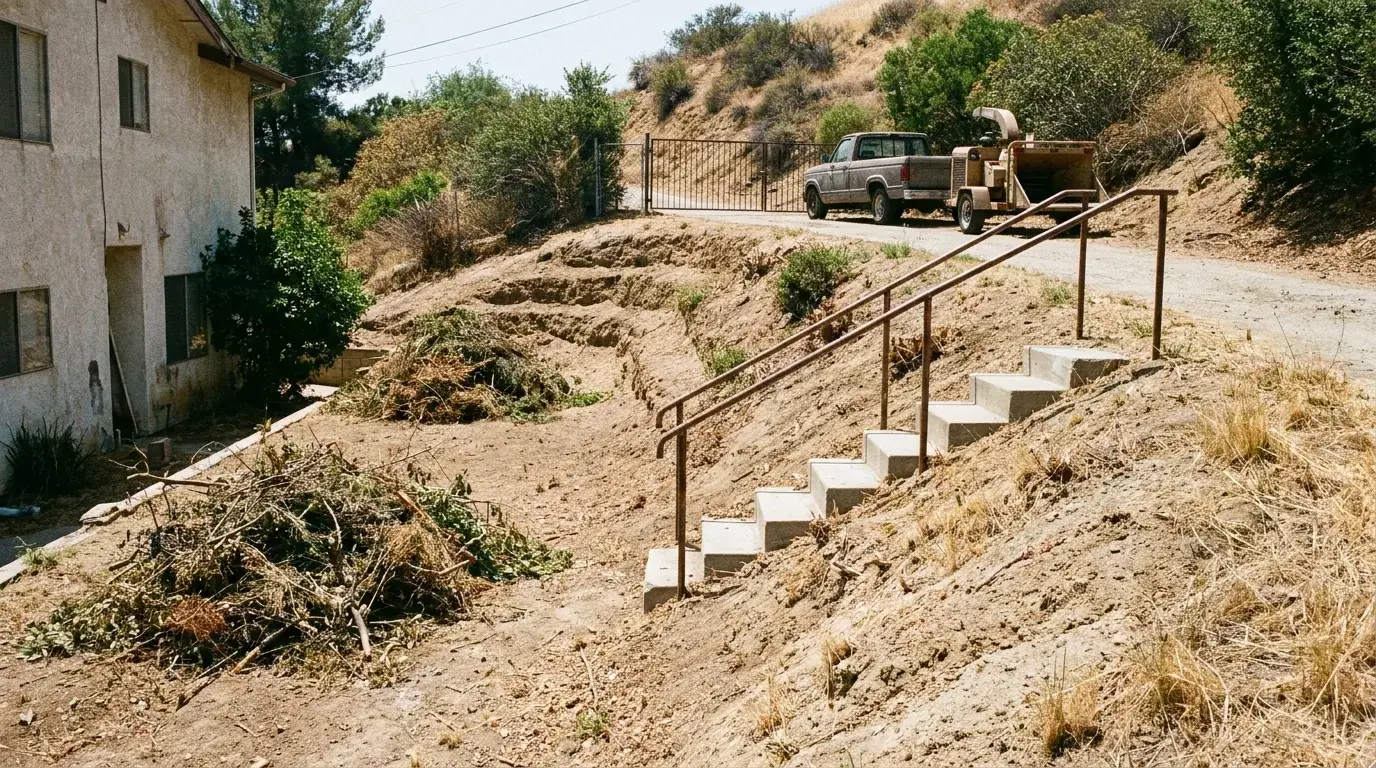
Your notice is the starting point. On a Los Angeles hillside or canyon lot, the hard part is usually getting a crew and a truck anywhere near the brush. Narrow drives, stairs, retaining walls and canyon slopes are the local access problems here. Where a chipper and truck can’t reach the vegetation, the work goes to a hand crew with chainsaws and pole saws. Brush clearance means cutting, thinning, limbing, and removing flammable vegetation around your house, your access road, and your fences so a fire has less to burn when it arrives. As CAL FIRE notes, the first five feet from a home is the most important area to keep clear in Zone 0.
On a flat lot, that can be a morning with a mower and a trailer. Around here it rarely is. Local conditions set the job:
- Slope. Cut material has to be dragged uphill or lowered by hand instead of fed straight into a machine.
- Access. Narrow drives, stairs, locked gates, retaining walls, and no staging area often mean a hand crew with chainsaws, brush cutters, and pole saws rather than a truck-mounted chipper.
- Vegetation. Acacia and eucalyptus are named in local hazardous vegetation guidance, along with cedar, cypress, juniper, pine, and pampas grass. Dense chaparral, sage, and sumac add volume fast.
- Inspection cycles. The County schedules defensible space inspections by region, starting April 1 in desert communities, May 1 inland, and June 1 along the coast. City inspections in the Very High Fire Hazard Severity Zone begin in May. Recent LAFD owner mailers have used a May 1, 2026 compliance date.
The deadline and the jurisdiction both come from the notice itself, so read it before you call anyone. LAFD runs a parcel brush clearance status lookup where you enter the assessor’s parcel number (or APN) together with the owner notification PIN printed on the mailer. The same system lets City owners register for brush clearance notifications and look at the photos the inspector took. For a County parcel, the annual defensible space notice from the Los Angeles County Fire Department carries the parcel details and the compliance date. Good crews are booked solid in April and May, so once the notice is in hand, start calling.
What it typically runs locally
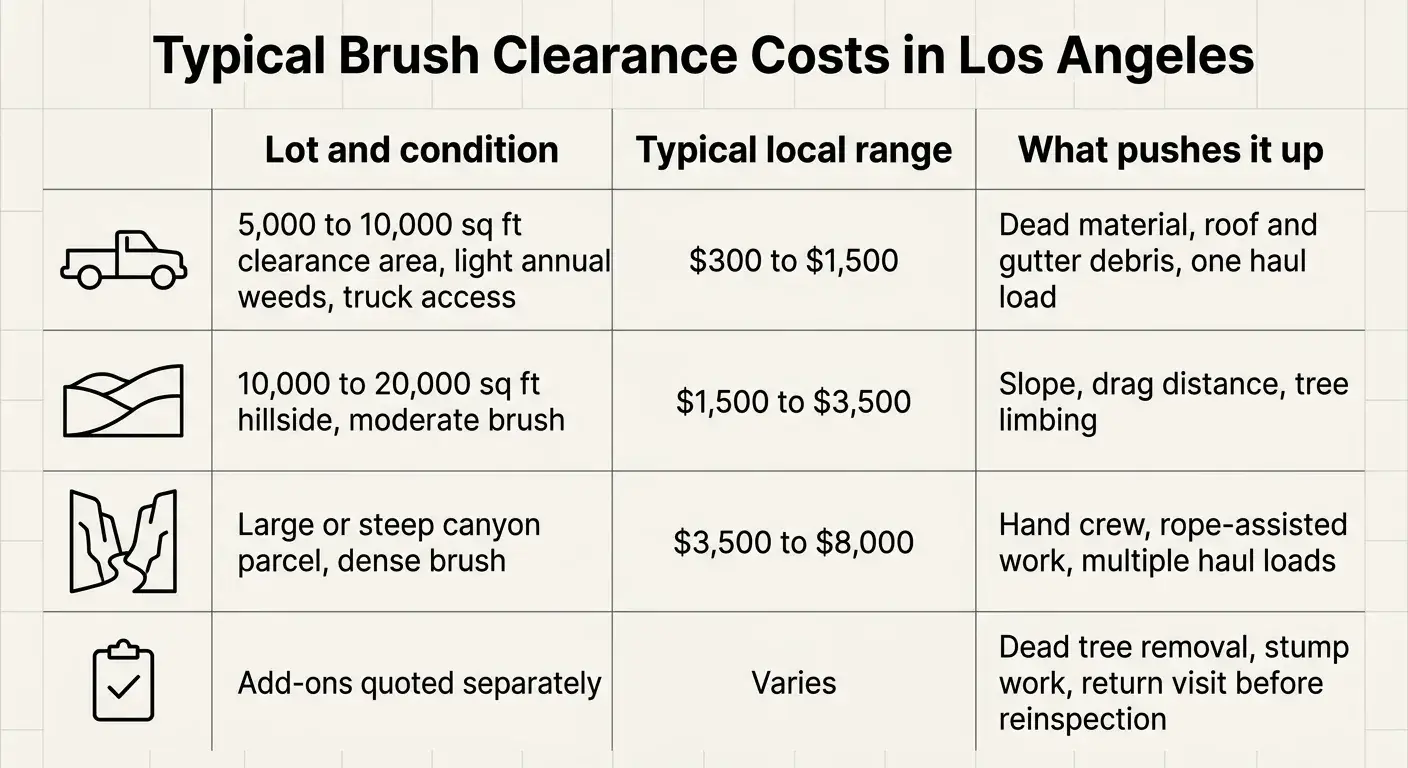
Expect a few hundred dollars for a small accessible lot and several thousand for a steep, dense canyon parcel with hauling. A published Los Angeles benchmark puts a standard 5,000 to 10,000 square foot hillside clearance area at roughly $300 to $1,500, while large or steep lots can reach about $5,000 to $8,000. No honest quote comes from an aerial photo alone.
| Lot and condition | Typical local range | What pushes it up |
|---|---|---|
| 5,000 to 10,000 sq ft clearance area, light annual weeds, truck access | $300 to $1,500 | Dead material, roof and gutter debris, one haul load |
| 10,000 to 20,000 sq ft hillside, moderate brush | $1,500 to $3,500 | Slope, drag distance, tree limbing |
| Large or steep canyon parcel, dense brush | $3,500 to $8,000 | Hand crew, rope-assisted work, multiple haul loads |
| Add-ons quoted separately | Varies | Dead tree removal, stump work, return visit before reinspection |
What moves those numbers is crew size and labor hours. A flat lot with truck access can be two people for part of a day, feeding a chipper parked at the curb. The same square footage on a canyon slope can take four or five people carrying material a hundred feet uphill, which turns one day into three and multiplies the labor on the invoice.
Cost detail for the separate first-five-feet work around the structure lives in “Zone 0 Regulations: The Complete Guide.”
What Los Angeles brush clearance rules mean in plain English
Two agencies, two frameworks, and the notice on your kitchen counter tells you which one applies. City of Los Angeles parcels fall under LAFD brush clearance requirements, carried in an ordinance revised February 9, 2017 and written into L.A.M.C. Section 57.4906.5.2. According to the Los Angeles Fire Department, grass and brush should be cut to a maximum height of 3 inches within required clearance areas. limb trees up and keep foliage off the roof and away from the chimney, clear leaves and needles off roofs, and maintain native brush, weeds, grass, trees and other hazardous vegetation within 200 feet of structures and within 10 feet of roadside surfaces and combustible fences. In a Very High Fire Hazard Severity Zone that maintenance is required year-round, not for one week in May.
Unincorporated areas and County program parcels go to the Los Angeles County Fire Department or the County weed abatement process. The County baseline is up to 100 feet of defensible space, which lines up with state law. The first 30 feet, or 50 feet in extra-hazard areas, targets combustible species like acacia and eucalyptus. The next 70 feet gets thinned and cleared of dead material, and fire access roads need 10 feet of clearance on each side. All cut vegetation and debris has to be removed in a legal manner. Chipped material may stay on site only at three inches or less within 30 feet of structures and six inches beyond, with no spreading within 10 feet of a roadside. Clearance doesn’t mean bare dirt, and County notices tell owners not to remove trees or ornamental shrubs before they get inspection guidance.
One operating rule catches people out. Brush clearance can’t be done on red flag days, a fire extinguisher or a pressurized hose has to stay within 10 feet of the work, and blades should be non-sparking. For the exact current requirements, your parcel status and the inspector’s photos, use the official LAFD Brush Clearance Requirements page or the Los Angeles County Fire Department’s annual defensible space notice. The notice itself controls. Anything a contractor hands you is a summary, including this one.
How the job goes from first visit to cleanup
A crew that does this work daily follows the same order. They pre-walk the parcel with your notice in hand and mark what gets cut, limbed, removed, or left alone. Grass and low growth come down to the required height, working outward from the house. Dense fuel gets thinned, dead trees and limbs come out, trees are limbed up, and foliage is pulled back from the roof and the chimney (City guidance calls for keeping branches at least 10 feet from roofs and chimneys). Material is chipped on site or loaded and hauled away. The job ends with raking, blowing, a clear access route, and completion photos.
Steep or inaccessible parcels change the equipment. Where a truck-mounted chipper can’t reach the work, the crew uses hand tools, smaller machines, rope-assisted movement, and manual loading.
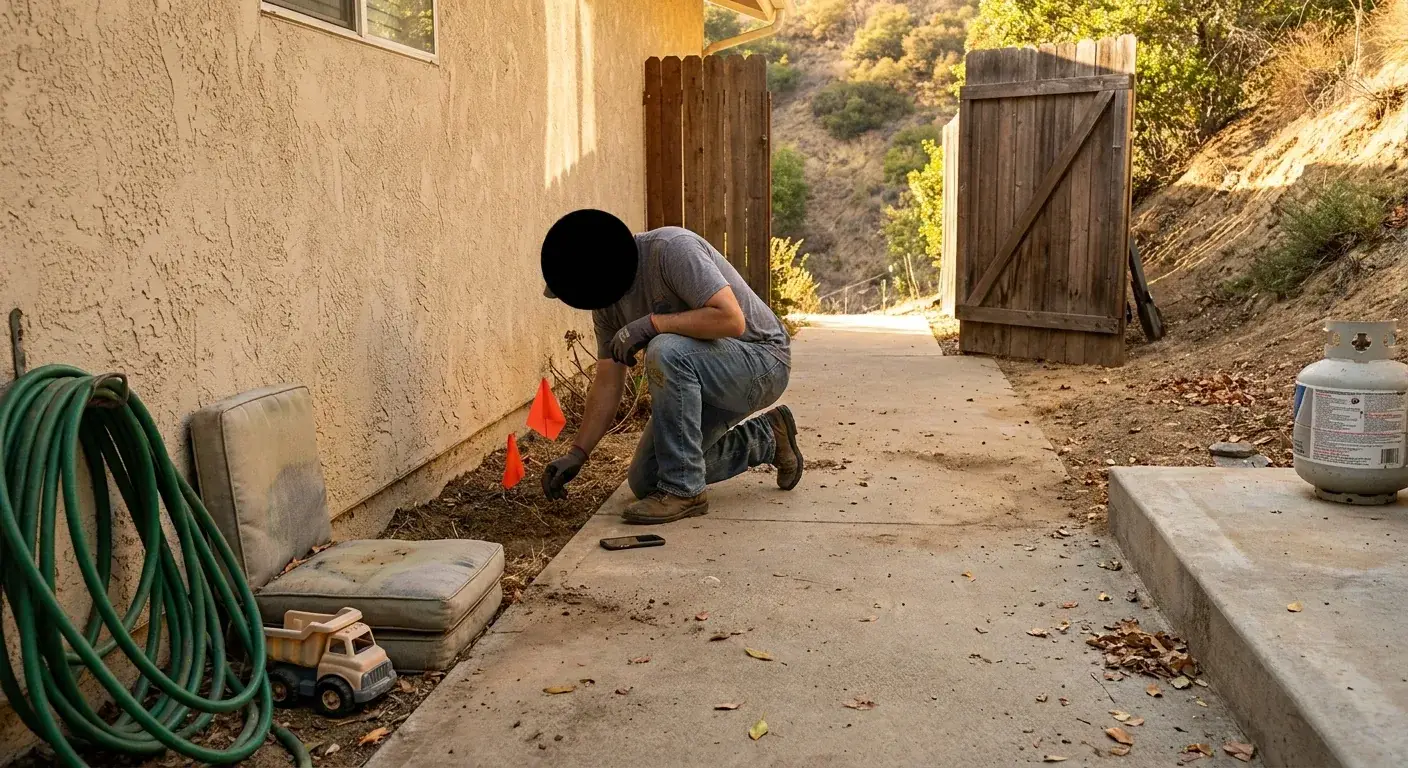
Before the crew arrives, handle these:
- Unlock every gate and side yard, and leave the access route open
- Move cars, hoses, patio furniture, toys, tools, and propane cylinders
- Secure pets indoors
- Flag irrigation lines, septic lids, retaining wall plantings, and utility runs
- Point out what must not be cut: fruit trees, privacy hedges, anything sentimental
- Hand over the notice itself, with the agency name, parcel number, and deadline
Structure work such as fire retardant coatings on wood siding, fences and decks is a separate job from vegetation clearance, and you can request a free estimate for that side of it.
How to hire a local brush-clearance crew
Hire on scope and terrain capability, not on the lowest number. Get written answers to these before you sign:
- Jurisdiction and deadline. Ask straight out: “Which agency sent the notice, what exact date is the deadline, and which areas will you measure?”
- Scope tied to the notice. The estimate should name the clearance zones, trimming heights, removal and pruning areas, dead tree removal, the access method, and the completion date.
- Three separate prices. Cutting, on-site chipping, and complete haul-away, with load count and dump fees stated. A cheap quote often covers mowing and leaves out dead tree removal, steep-slope hand work, hauling, and a return visit.
- Chip plan. Where will chips be spread, how deep, and does that stay inside the City depth limits?
- Access and terrain. Send photos of the slope, driveway, gates, stairs, retaining walls, and brush. Then ask whether they’ll bring a hand crew when a chipper can’t reach the work and how they protect retaining walls, irrigation, and erosion-sensitive slopes.
- License and insurance. Verify both. Settle tree permit responsibility before any mature tree comes down.
- Photos and return visit. Before and after shots of the structure perimeter, access road, roof edge, chimney area, and every steep section, plus whether a touch-up before reinspection is included or billed.
A good local estimate explains slope, access, crew size, equipment, cleanup, disposal, and completion timing in ordinary language instead of pricing your lot off an aerial image. LAFD also publishes a brush clearance contractor list and a parcel status tool worth a look before you schedule.
Foothill Painting is family-owned since 1929 and sends trained W-2 employee crews, and you can get a free estimate for the structure side of fire season.
What happens if you miss the notice deadline
LAFD notices generally give you 20 days to correct the listed violations before an inspector returns. Run it as a timed checklist.
- Day 1. Photograph every item on the notice. Confirm the agency, parcel number, and due date it lists.
- Days 1 to 3. Get written quotes tied to the notice, with photos of the slope, driveway, gates, stairs, and brush so the pricing is real.
- Days 3 to 12. Complete the work, starting with dead trees and anything close to the structure.
- Days 13 to 18. Walk the property with the notice in hand and fix the misses: roof debris, chimney clearance, roadside edges, and brush below the house.
- Day 20. The inspector can reinspect. Keep the after photos and the completion invoice where you can reach them.
- If the parcel fails. LAFD can issue a Notice of Noncompliance within about 7 to 10 days. A failed property is generally given 30 days to reach compliance. If it still fails, the City can send a second notice to abate the fire hazard, hire its own contractor, and bill the owner.
Three different charges come up here, and they’re easy to confuse. The routine inspection fee applies either way. City materials identify $31 tied to the initial inspection, and the County’s 2026 notice lists $151 billed on the following year’s property tax bill. The noncompliance and reinspection path costs more, with homeowners reporting a $352 third inspection fee and a $938 administrative charge. City-contracted abatement is the last step, and the clearance work is billed to the owner at full rate. Owners have reported charges in the tens of thousands after repeated noncompliance.
Frequently Asked Questions
What is the 5 foot rule in California?
It refers to the ember resistant zone in the first five feet around a structure, where combustible material is kept out entirely. That strip is treated differently from the rest of your defensible space. The full breakdown of what has to go, what can stay, and how the phase-in works is in “Zone 0 Regulations: The Complete Guide.”
What should I do if my required clearance reaches onto MRCA land or a neighbor’s property?
Brush clearance stays the property owner’s responsibility even where the parcel borders land managed by the Mountains Recreation and Conservation Authority. Call the agency printed on your notice and check the applicable local weed abatement district before any cutting happens off your own lot. Don’t send a crew onto a neighbor’s property or public open space without written permission. Keep the agency’s direction in writing so your file shows how the off-parcel area was handled.
What is the phone number for LAFD Brush Clearance?
Start with the phone number printed on your inspection notice because it routes to the unit handling your parcel. LAFD lists its Brush Clearance Unit contact and the parcel status lookup on the department’s brush clearance pages. County parcels are handled separately. The County’s 2025 defensible space notice gave the Defensible Space Unit number as (626) 969-2375 for pre-inspection questions. Have your parcel number ready before you call.
Can I remove my eucalyptus or acacia trees, or will I get in trouble?
Acacia and eucalyptus both appear in local hazardous vegetation guidance, but the remedy isn’t always removal. In a lot of cases the requirement is to keep them free of dead material and trimmed away from structures. County notices specifically tell owners not to remove trees or ornamental shrubs before receiving inspection guidance, so ask the inspector or an arborist before anything comes down.
Do I need a permit to clear brush or remove trees in a Very High Fire Hazard Severity Zone?
Cutting grass and brush to meet a clearance notice doesn’t normally require a permit. Separate approvals can apply to tree removal, protected trees, grading, work in the public right of way, access road work, and anything affecting utilities or adjoining public land. Settle that question before a chainsaw touches a mature tree.
How do I verify whether my parcel is inspected by LAFD or Los Angeles County Fire?
Start with the letterhead on the notice, the parcel number, and the phone number printed on it. LAFD publishes a parcel brush clearance status tool for City properties. The County Fire Department’s Defensible Space Unit answers pre-inspection questions for County parcels. Checking takes one call and saves you from clearing to the wrong standard.
Will a regular gardener satisfy an LAFD brush-clearance inspection?
Sometimes, on a flat lot with light weeds. A gardener with a mower usually won’t handle dead tree removal, limbing trees up six feet, roof and chimney clearance, slope hand work, or legal disposal. Those omissions are exactly what inspectors write up. If your notice lists more than grass height, hire a crew that does clearance work for a living.