Last updated: September 2026
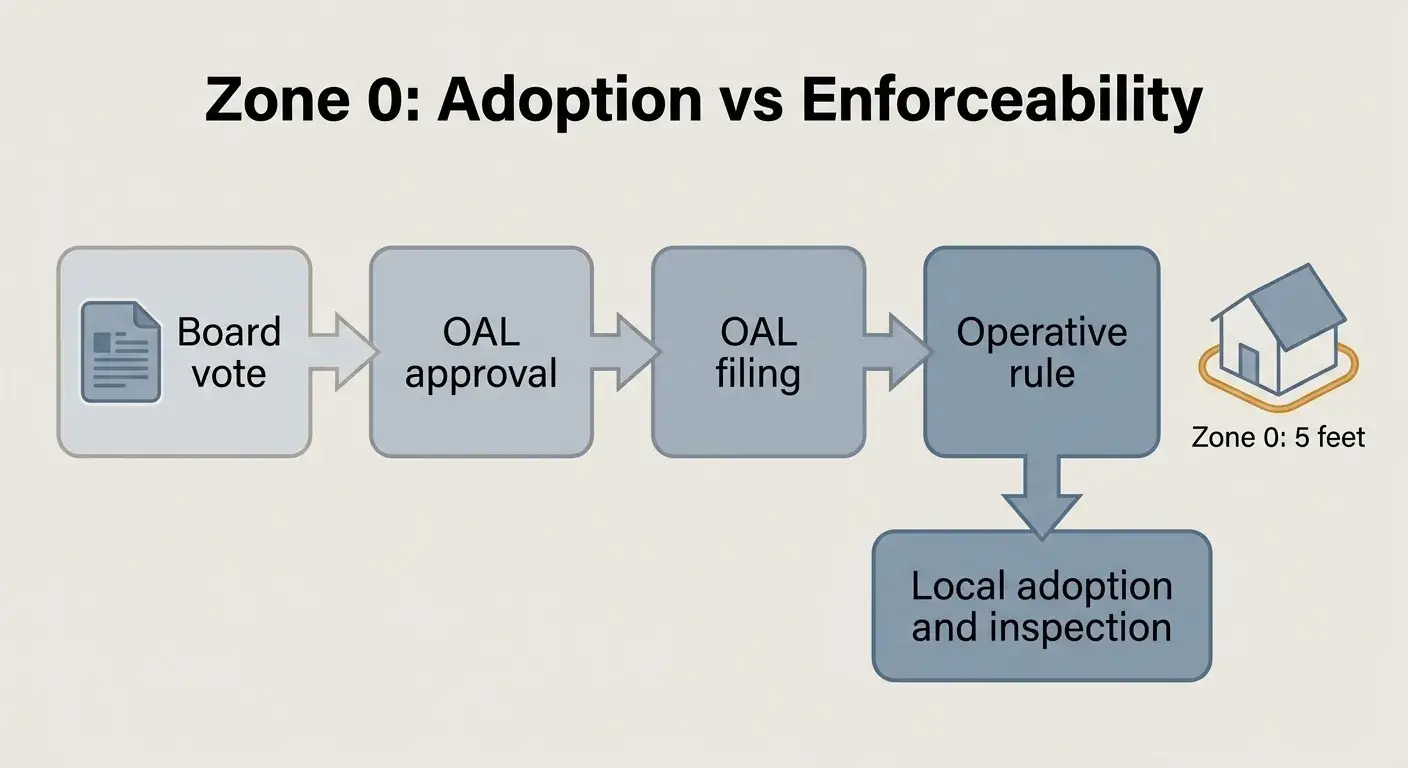
California added a five-foot ember-resistant zone, called Zone 0, to its defensible space law. The Board of Forestry and Fire Protection adopted emergency Zone 0 regulations on August 19, 2026, and submitted them to the Office of Administrative Law on August 28, 2026. Until OAL approves and files those regulations, the 100-foot requirement under Public Resources Code 4291 remains the rule inspectors actually enforce.
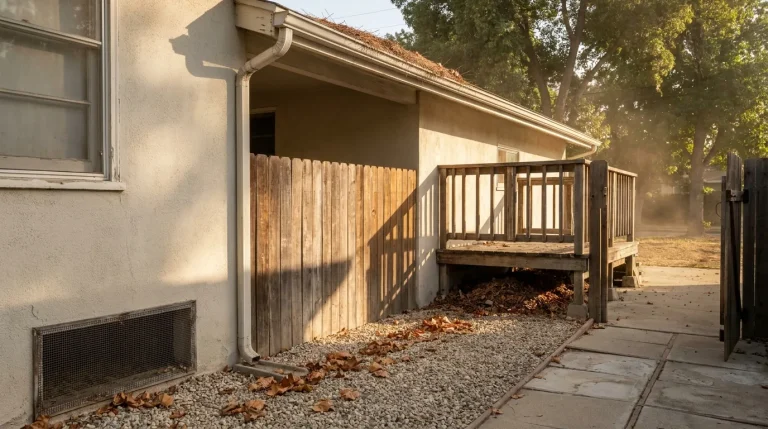
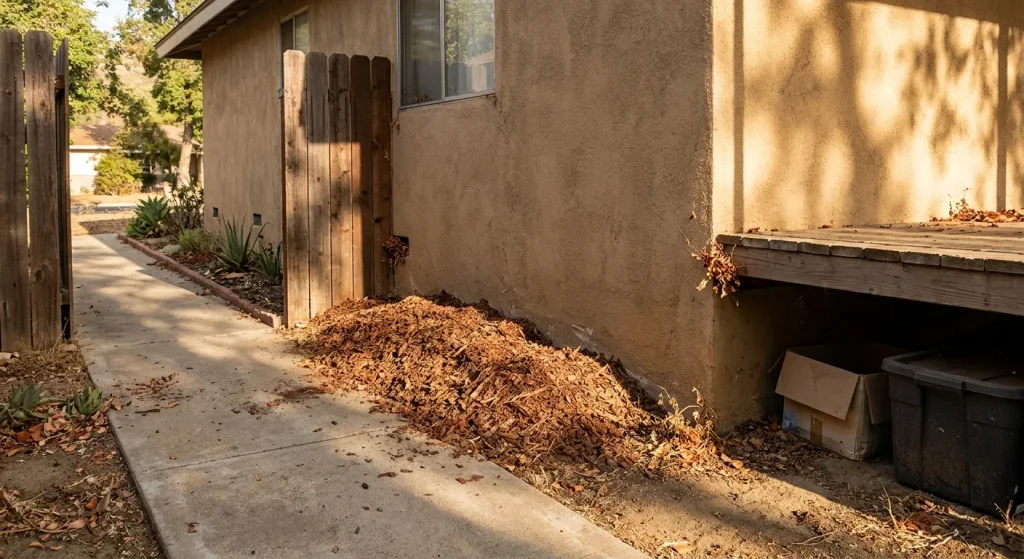
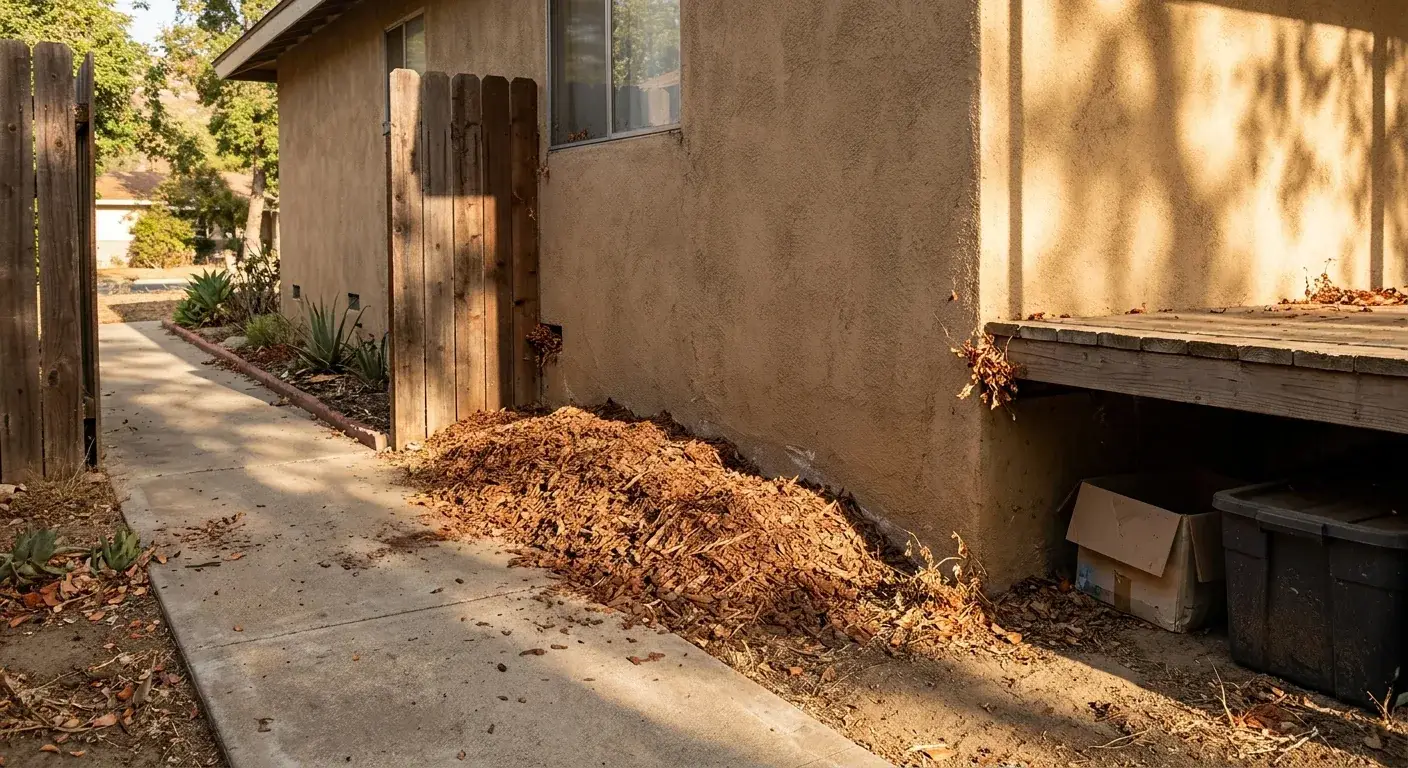
A Board vote and an enforceable rule are two separate events, and the dates below come from the Board’s adoption record and the statutes behind it. Zone 0 covers the first five feet around a structure. The job of that band is cutting the pathways that carry fire to the house: embers landing in bark mulch, a wood fence running straight to the siding, a deck with stored boxes underneath. Close enough to matter.
What changed in California defensible-space law
The public comment window on the emergency Zone 0 regulations closed on September 2, 2026. Adoption alone did not make Zone 0 operative. OAL approval and filing come first.
The announcement and the approved regulatory text are posted on the Board of Forestry and Fire Protection rulemaking page.
The California Legislature reports that AB 3074, approved by the Governor on September 29, 2020, requires more intense fuel reductions between 5 and 30 feet around a structure and an ember-resistant zone within 5 feet of the structure.
Key takeaway: The 100-foot defensible space obligation has been law for years and has not gone away. Zone 0 is an added five-foot band with stricter rules. Its enforceable start date depends on OAL filing and on whether your structure is new or existing.
Who the new Zone 0 rules affect
The new Local Responsibility Area provisions apply to occupied structures in locally designated Very High Fire Hazard Severity Zones. If the structure is unoccupied, or the parcel is not in a locally designated Very High Fire Hazard Severity Zone, those provisions do not reach it. That said, the 100-foot defensible space duty may still apply through your responsibility area or a local ordinance.
Run three tests, in order:
- Occupied structure in a locally designated VHFHSZ. This is the group the new provisions name. Check occupancy and the local designation before anything else.
- New or existing structure. For new structures, Zone 0 requirements do not take effect until the Board updates the relevant regulations and the accompanying guidance document. For existing structures, the requirement takes effect three years after the effective date for new structures. That split is the single most misreported part of this change.
- Exemption test. The State Fire Marshal may adopt regulations exempting a structure whose exterior is constructed entirely of nonflammable materials. It may vary requirements based on the structure’s contents and composition.
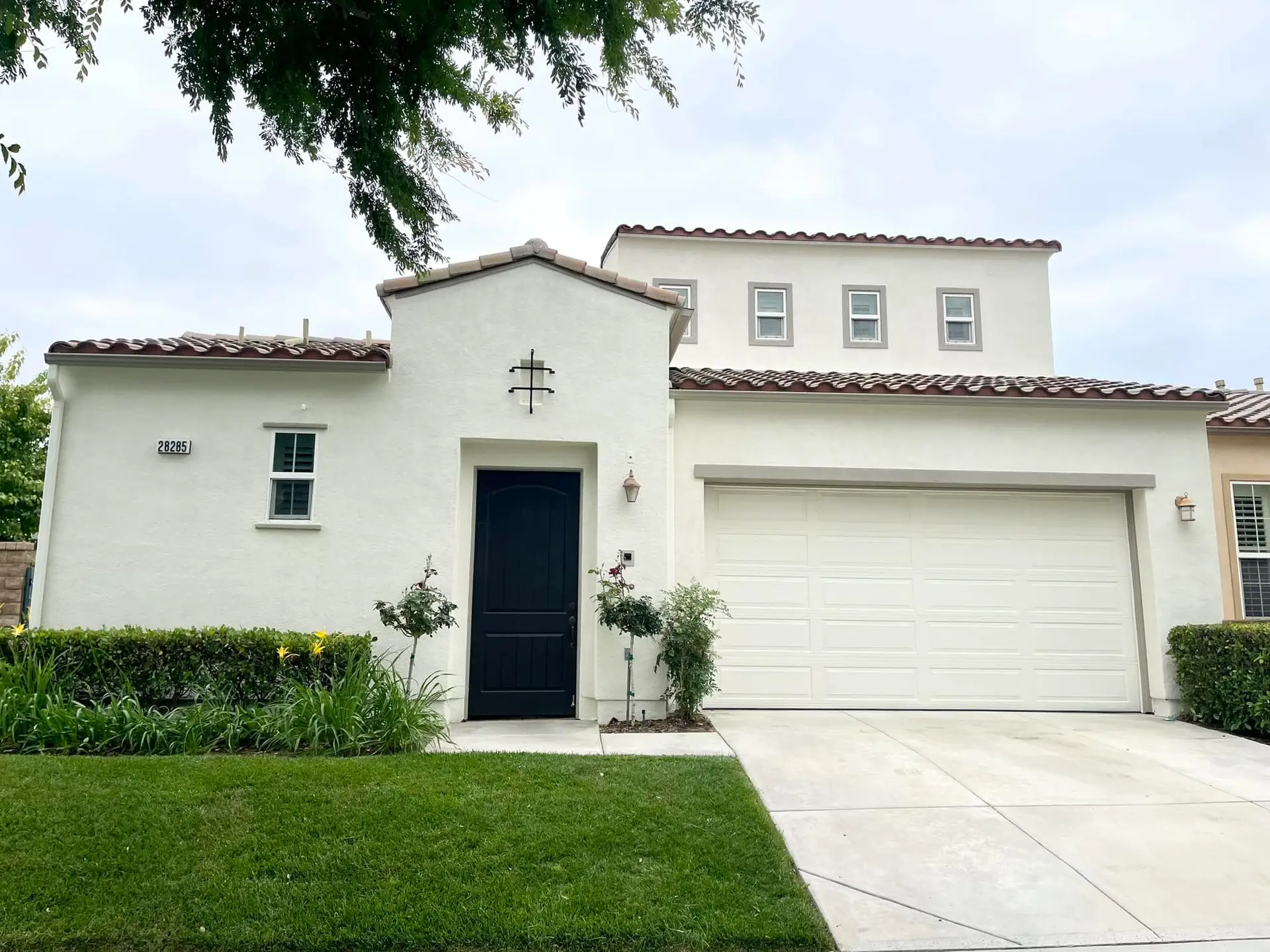
The exemption is not automatic, and it runs on paperwork. The occupant (or the owner if the structure is unoccupied) must file written consent to interior and contents inspection in the prescribed form. The provision is also subject to Health and Safety Code 18930, so it does not override applicable state building standards. A stucco ranch with a tile roof is not self-exempting just because the walls are masonry. The exterior has to be entirely nonflammable, and the consent form has to be on file.
Commercial, multifamily and HOA-managed buildings follow a different workflow than a detached single-family home, and “Zone 0 Regulations: The Complete Guide” covers the common-area side.
What changed between the old rule and the new one
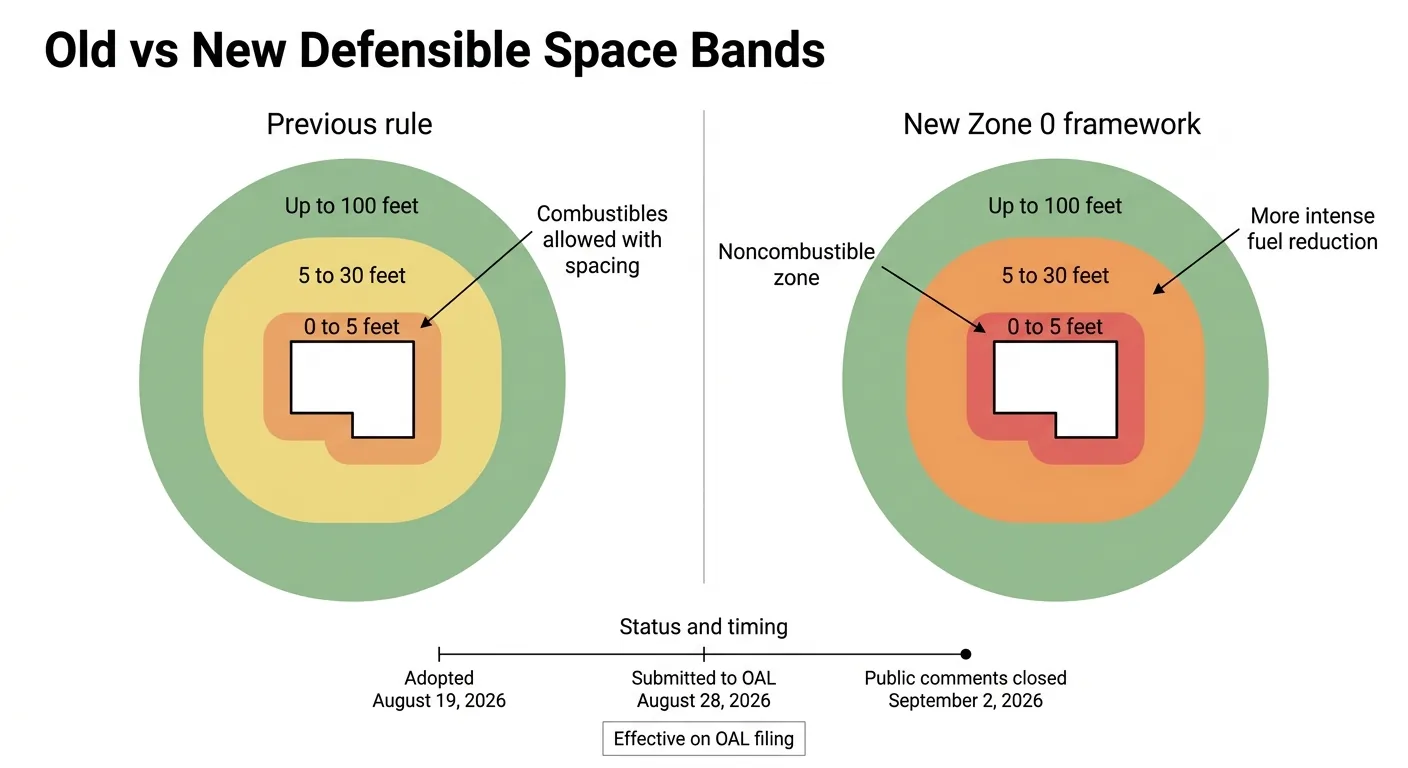
Here is the old rule next to the new one, band by band.
| Previous rule | New Zone 0 framework | |
|---|---|---|
| Inner 0 to 5 feet | Treated as part of the 30-foot lean, clean and green zone, combustibles allowed with spacing | Noncombustible zone, combustible materials kept off the walls and the ground beside them |
| 5 to 30 feet | Fuel reduction and spacing | More intense fuel reduction required under AB 3074 |
| Status and timing | In force and enforced today | Adopted August 19, 2026, submitted to OAL August 28, 2026, effective on OAL filing, with existing structures three years after the new-structure date |
| Who designates the zone | State for SRA, local agency for LRA | Same split, with LRA Zone 0 tied to locally designated VHFHSZ |
Material by material, this is what the first five feet looks like under each version.
| Feature in the first 5 feet | Previous practice | Under the Zone 0 framework |
|---|---|---|
| Attached wood deck | Allowed, kept clear of litter | Part of the band, with the surface and the space underneath kept free of combustibles. Enclosure or replacement depends on the final guidance. |
| Attached wood fence | Common and allowed | The run that meets the house is a direct path to the siding. A noncombustible first section is the expected fix. |
| Bark mulch and wood chips | Allowed with spacing | Not suited to a noncombustible band. Gravel, pavers or bare soil instead. |
| Shrubs, vines and ornamental plants | Allowed with spacing and irrigation | Plants come out of the band under the adopted text, with the details riding on the guidance document. |
| Wood planters, trellises and raised beds | Allowed | Combustible structures sit on the removal side. |
| Patio furniture, mats and stored items | Rarely cited | Movable combustibles kept out of the band. |
| Fire-rated coatings | Sold as an upgrade | A coating does not turn a combustible feature into a noncombustible one. Acceptance depends on the listing and on the authority having jurisdiction. |
The Board’s companion guidance will settle several of these calls, so treat the removal items as the direction the rule is heading rather than a filed requirement. Worth pausing on.
100 feet of defensible space is required by law under Public Resources Code 4291, according to CAL FIRE.
Shared boundaries are covered in “Brush Clearance in Los Angeles: Costs and Hiring.”
Adoption, filing and enforceability are three separate events. A Board vote creates text. OAL approval and filing make it operative. Local adoption determines who inspects. Treating an adopted-but-unfiled rule as enforceable can produce defective notices and demolition nobody required.
What to do now if your property may be covered
Work in order. The sequence below keeps you from paying for work your jurisdiction does not require yet, and it builds the paper trail you will want during an inspection, a sale or an insurance review.
First, classify the parcel.
- Find your responsibility area. Confirm whether the parcel sits in a State Responsibility Area or a Local Responsibility Area. As the Office of the State Fire Marshal notes, Title 14 of the California Code of Regulations section 1280.01 is entitled “Fire Hazard Severity Zones in the SRA.”.
- Check the hazard zone designation. Pull the parcel on the state Fire Hazard Severity Zone viewer and on your city or county map. Note whether it falls in a locally designated Very High Fire Hazard Severity Zone.
- Decide whether the structure is new or existing.
- Confirm whether Zone 0 is effective yet. Until OAL approves and files the regulations, the enforceable duty is the 100-foot requirement under Public Resources Code 4291 plus any local ordinance.
- Clear the first five feet of obvious fuel. Dead plants, bark mulch against the wall, firewood stacks, stored lumber, door mats and plastic furniture are already deficiencies under current inspection practice, whatever the Zone 0 clock says.
- Get written consent before working on land you do not own. The clearance duty ends at your property line. A neighbor’s parcel or an agency parcel needs permission first.
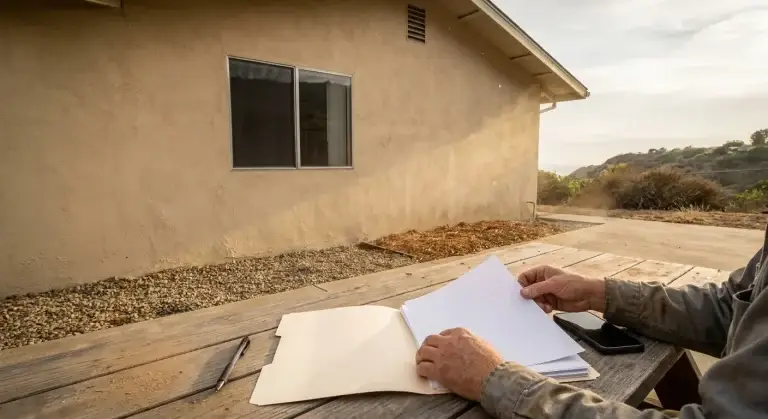
Then keep the records.
- A dated screenshot of the parcel on the state and local hazard zone maps
- Dated photos of all four elevations before and after each clearance
- Any inspection notice, the correction deadline printed on it, and the re-inspection result
- Invoices and contracts that name materials, treated areas and dates
- The written consent to interior and contents inspection if you claim an exemption, and any written consent from a neighbor
- A calendar entry for recurring maintenance. One cleanup does not end the obligation, and vegetation regrows.
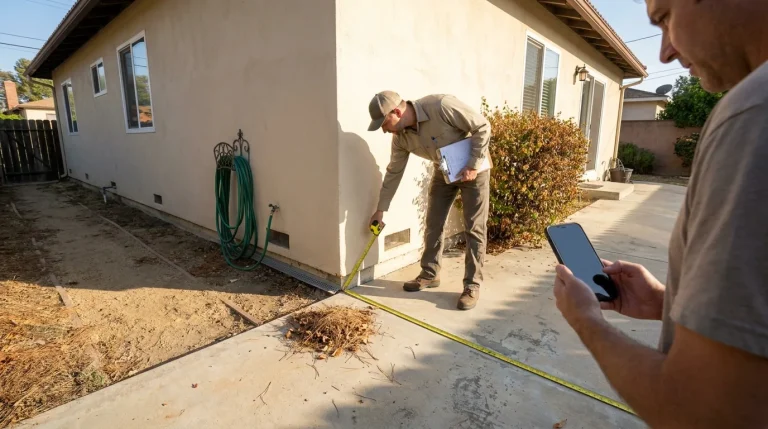
If you want that walkthrough documented for you, a free on-site assessment puts the scope in writing before spring notices go out.
What we still do not know yet
Several pieces of this are open as of this update. The honest answer on each is that the paperwork has not landed.
- OAL status and the operative date. Board adoption alone did not make Zone 0 operative. The filing date sets the clock for new structures. The three-year existing-structure date follows from it.
- Final guidance document content. The Board’s companion guidance will decide the material-by-material calls homeowners keep asking about: wood fences attached to the house, raised planters, decks, pavers and potted plants.
- Local ordinance variation. Cities and counties can adopt their own standards and their own notice and correction timelines. Which ones will do so for Zone 0 is not settled.
- Accepted products and alternatives. Whether a fire authority will accept a coating, an enclosure or screening in place of replacement is a local call. No statewide list has been published.
- Insurance treatment. Carriers set their own underwriting criteria. Documented hardening work helps a conversation. Nobody can promise you a policy or a price.
Re-check two pages before each inspection season: the Board of Forestry and Fire Protection rulemaking page for the OAL filing status, and your local fire department’s defensible space page for local rules and deadlines. For the full picture of what the five-foot band requires once it is operative, read “Zone 0 Regulations: The Complete Guide.”
Next step if you need help getting compliant
Start with a walkthrough that puts your property in writing. Foothill Painting Company has been painting Los Angeles area homes since 1929. The Foothill Fire Hardening division handles ember-resistant vents, Class A fire-rated roof coatings, fire retardant coatings and Zone 0 and defensible space work across Los Angeles and Ventura County. Every painter on your property is a trained, W-2 Foothill employee, so you end up with documented work you can show an inspector or a carrier. We are not an insurance company and cannot promise a policy outcome.
Request a free fire hardening assessment and we will respond within 24 hours, usually the same day.
Frequently Asked Questions
What is the difference between defensible space and home hardening?
Defensible space is parcel work: vegetation, mulch, stored materials and fuel spacing measured out from the walls. Home hardening is building work: the roof assembly, vents, eaves, windows and siding. The Office of the State Fire Marshal says home hardening with ignition-resistant or noncombustible materials can increase a home’s survivability during wildfire. Zone 0 sits where the two meet, in the first five feet.
Is Zone 0 already mandatory in California, or does it still require OAL approval and filing?
Not yet, in the enforceable sense. Board adoption alone did not make Zone 0 operative. OAL approval and filing come first, and new structures are covered before existing ones. Check the Board of Forestry rulemaking page for the current filing status before you remove anything.
Will a fire-retardant or intumescent coating make my house legally compliant?
Not on its own. A coating is tested and listed for a named substrate at a named dry film thickness. It only counts when it is applied that way and the authority having jurisdiction accepts it in place of a listed material. CAL FIRE, a city fire department and a building official can each answer that differently for the same product. Ask for the answer in writing before you coat something a notice told you to replace.
How to harden a house against fire?
Work from the top down and from the openings inward: roof and gutters first, then vents and eaves, then windows, then the first five feet of ground, then decks, fences and siding. Those are building components, so they answer to Chapter 7A and your building official rather than to the defensible space inspector. Coatings fit inside that sequence and supplement listed materials rather than replace them. The item-by-item version is in “Zone 0 Regulations: The Complete Guide.”
How long do property owners have to correct a defensible space violation?
Correction windows are set by the agency that issued the notice. A CAL FIRE notice in a State Responsibility Area and a city fire department notice in a Local Responsibility Area can give different deadlines. Read the notice for the exact date and the re-inspection terms. Keep the notice, your dated photos and your invoices together so the re-inspection goes quickly.
What is the difference between a CAL FIRE defensible space inspection and a local fire department inspection?
CAL FIRE inspects defensible space on parcels in State Responsibility Areas. A city or county fire department inspects in Local Responsibility Areas, including the locally designated Very High Fire Hazard Severity Zones the new Zone 0 provisions name. The checklists overlap, but the notice, the correction deadline and the re-inspection terms come from whichever agency issued the notice. Your insurer is a separate reviewer again and can ask for proof even when no agency has cited you.