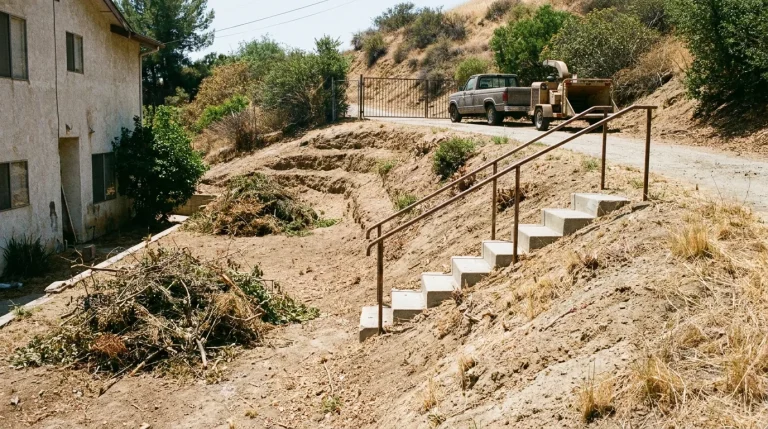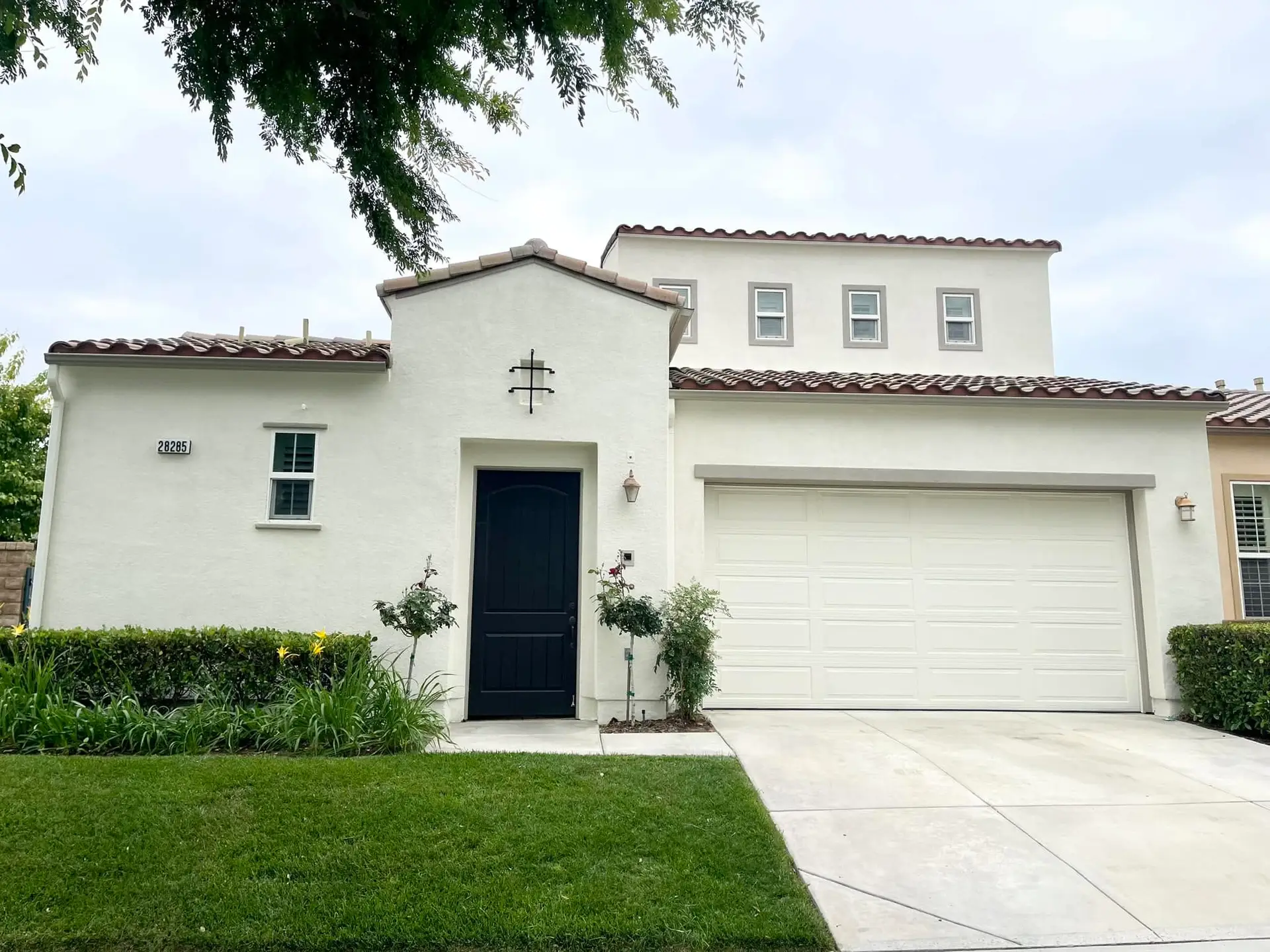
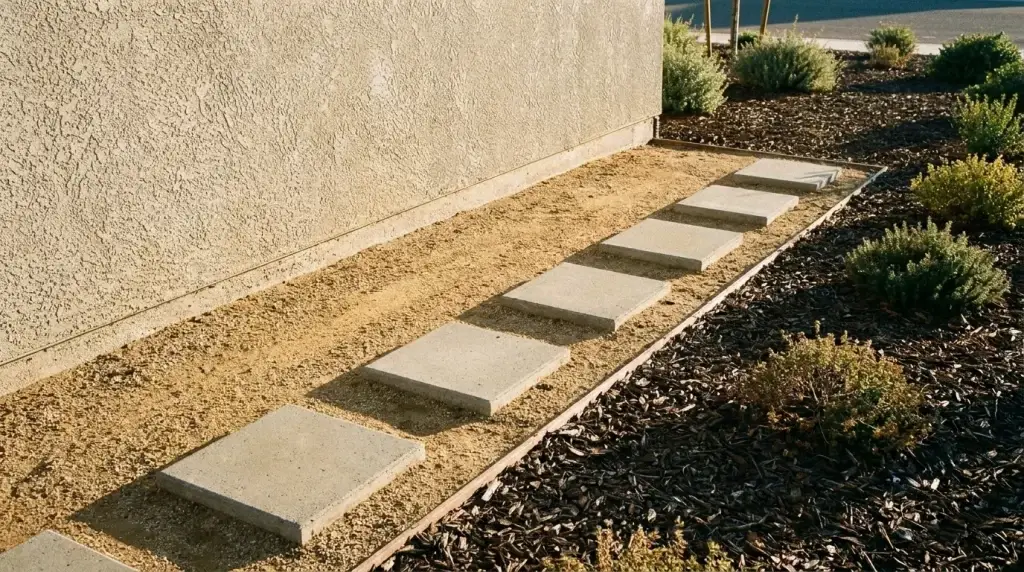
Zone 0 regulations cover the first 5 feet around a qualifying structure. That’s the ember-resistant band right against the walls.
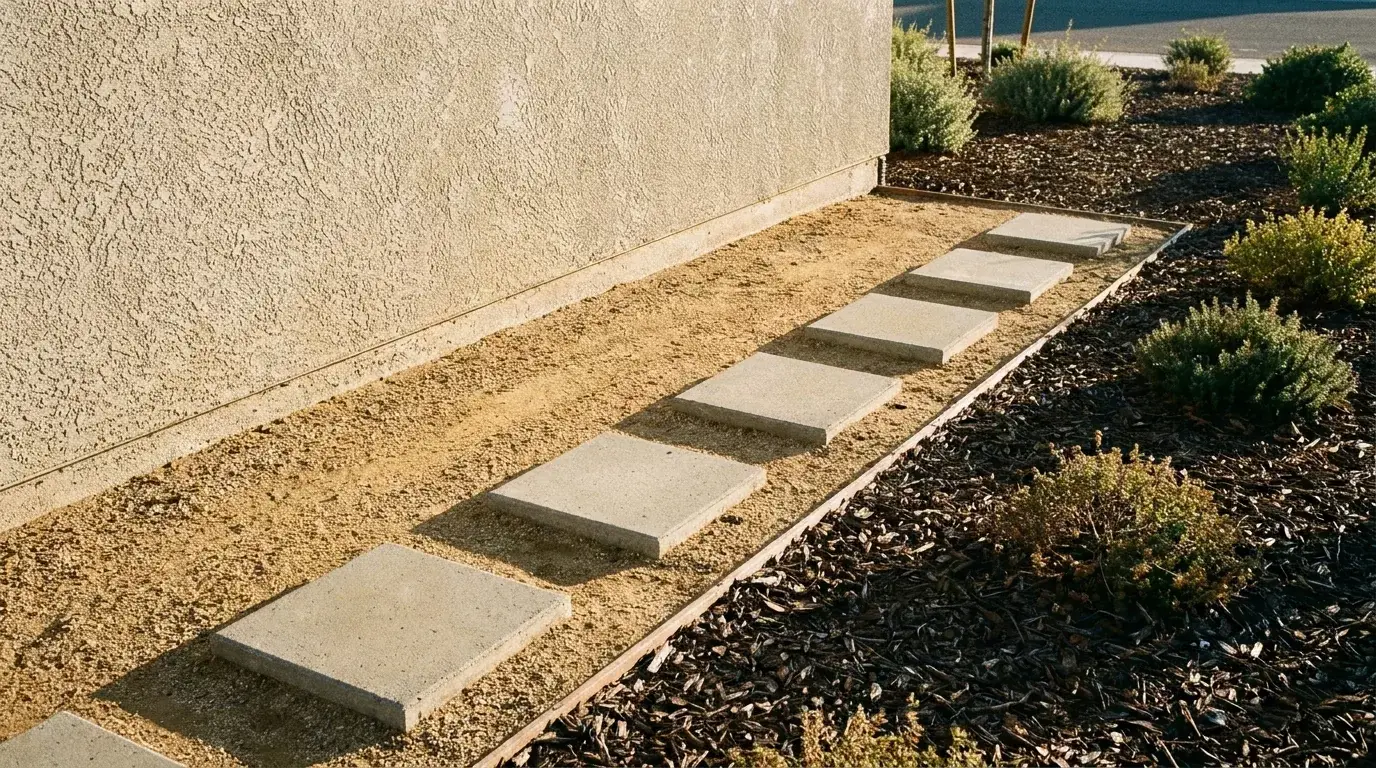
What Zone 0 regulations are and who they apply to
Zone 0 is the ember-resistant first 5 feet around a qualifying structure: the house, an attached deck, stairs or a pergola, a detached shed or an ADU. The rules reach parcels in State Responsibility Areas and in locally designated Very High Fire Hazard Severity Zones. Your path depends on whether you’re building new, own an existing home, are selling or buying, or are holding an inspection notice.
How to decide which Zone 0 rules apply to your property
Decision guide: find your path
- Building new in a designated hazard zone. New construction complies once the rule takes effect in that jurisdiction, so plan noncombustible surfacing, fencing and gate attachments in the first 5 feet before the plans go in for permit.
- Existing home. Existing structures are phased in. The first phase is combustible material in the first 5 feet, not a rebuild of the exterior.
- Inside a State Responsibility Area. CAL FIRE or its contract county enforces the state framework on your parcel.
- Outside the SRA but inside a locally designated Very High Fire Hazard Severity Zone. You’re still covered. The city or county fire agency in that local responsibility area enforces. “Not CAL FIRE” doesn’t mean “not regulated.”
- Selling or buying. Disclosure duties run on their own statute and their own dates, separate from the Zone 0 phase-in.
- Holding an inspection notice. The correction period and the reinspection date set your schedule.
- Holding an insurer’s letter. Private underwriting conditions aren’t public law, and the deadline is usually shorter than the public phase-in.
Status in one line: the statewide Zone 0 package has been through rulemaking, reporting doesn’t agree that a compliance deadline is running for existing homes, and the requirements can still change. The dates binding most homeowners today are local ones. Confirm your parcel’s hazard designation and responsibility area with the enforcing agency before you spend anything.
What counts as Zone 0, Zone 1, and Zone 2
Defensible space is measured out from the structure in three bands.
Zone 0 is 0 to 5 feet, the ember-resistant band, where the goal is nothing next to the wall that a wind-driven ember can light.
Zone 1 is 5 to 30 feet. Lean, clean and green. Dead material comes out, plants are spaced and shrubs are kept low.
Zone 2 is 30 to 100 feet, the fuel reduction band. Grass is cut low and ladder fuels are separated so fire stays on the ground.
Local authorities use different terminology and different distances, so check the governing agency’s version before measuring. The full breakdown of each band, with the spacing rules and the plant guidance, is in “defensible space zones.”
What homeowners get wrong in Zone 0
The most common mistake is clearing the yard and leaving the first 5 feet alone. Watch for these:
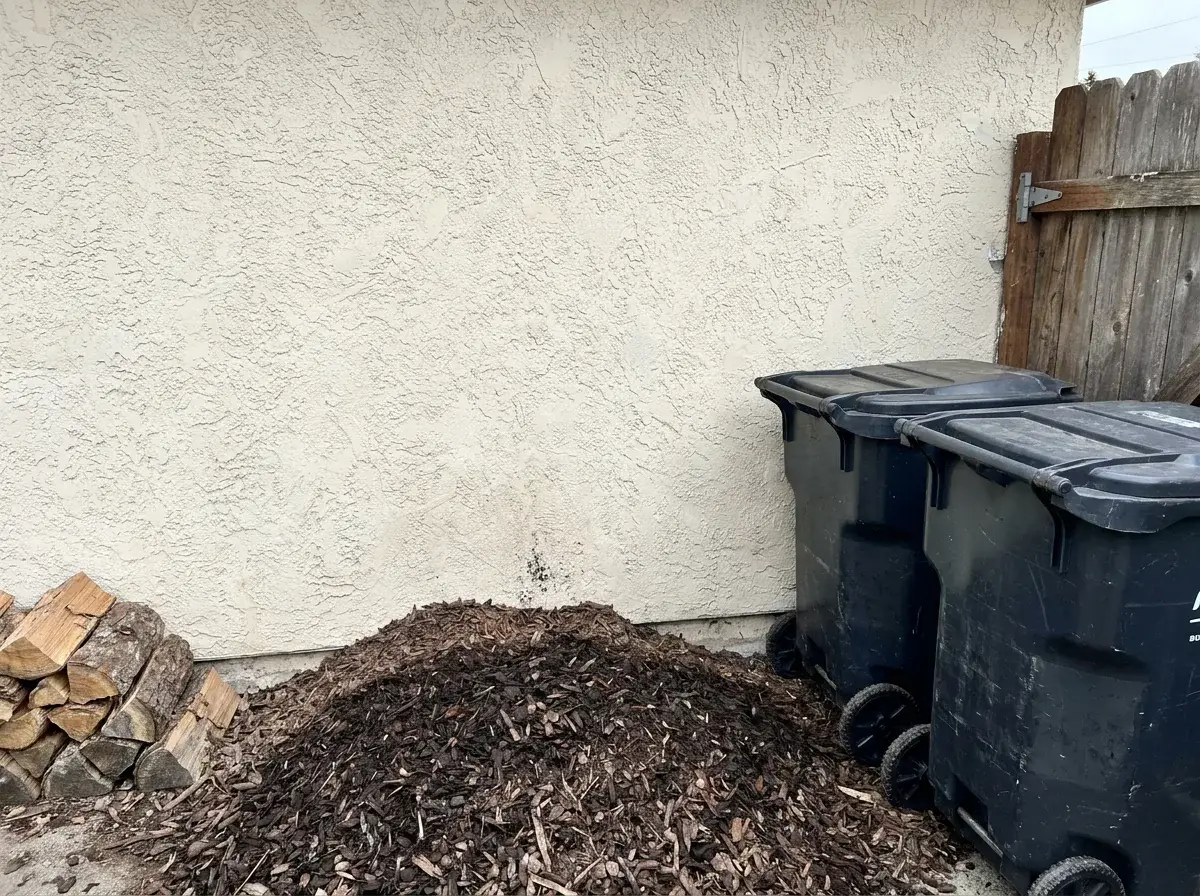
- Bark mulch and wood chips against the wall. Gravel or decomposed granite in that strip doesn’t carry embers to the siding.
- Firewood stacks, boats, RVs, trailers and vehicles parked inside the band, plus garbage and recycling containers against the house.
- Dead leaves and needles on the roof, in the gutters, on an attached deck and in the storage space underneath it.
- Furniture, cushions, doormats, potted plants and wood planters left at the wall.
- Wood steps, combustible fences, gates and arbors attached to the structure.
- Gas meters and AC units crowded by plants or stored items. They need the same clear space as the wall behind them.
- Fire-rated paint treated as a substitute for removal. A coating slows ignition and flame spread. It doesn’t turn a wood fence into noncombustible material.
The complete list of pitfalls, with the fix for each one, is in “zone 0 defensible space.” For the item-by-item clearance list the state uses, see “cal fire defensible space requirements.”
How LA County requirements compare with the statewide baseline
The statewide framework is the floor. A local ordinance can be stricter or start sooner. According to Los Angeles County Agricultural Commissioner / Weights and Measures, property must be maintained free of hazardous vegetation for a minimum of 100 feet from any home or other structure adjacent to the property.
Check your parcel’s actual jurisdiction and hazard designation rather than assuming a local example from somewhere else applies to you. The full county rule set, with the clearance distances and the enforcement calendar, is in “la county defensible space requirements.”
What an inspection involves and what happens after the notice
Inspections usually start with a notice or a posted inspection window for the area. Then an inspector visits and surveys the property from outside without entering the home. The inspector works outward from the walls, checks the first 5 feet for combustible material, looks at roofs, gutters, decks, stairs and the area beneath the house, then measures vegetation clearance out to the local required distance. Dead and dying material, continuous fuel beds and ladder fuels get flagged.
A failed item comes back as a notice with a correction period and a reinspection date. Correction windows are short. Foothill jurisdictions commonly give 30 days for a hazardous condition. If the work isn’t done by that date, the reinspection fails, local enforcement takes over, and the owner can face fees, an abatement order or county-contracted clearing billed back to the parcel.
For the step-by-step inspection process, see “defensible space inspection california,” and for the sale-triggered version with its own timeline, see “ab 38 defensible space inspection.”
What matters when you’re selling or buying a property
A sale triggers paperwork duties, not an automatic Zone 0 inspection. the City of Santee Fire Department reports that on or after January 1, 2021, a seller of real property in a high or very high fire severity zone must give the buyer a standardized disclosure notice. That notice covers items such as whether eave, soffit and roof ventilation have vents with openings more than one-eighth of an inch or vents that aren’t flame- and ember-resistant. Separately, defensible space documentation became operative for certain sales in those zones around July 1, 2021.
Disclosing a condition doesn’t oblige the seller to correct it. Where documentation is required and the property isn’t compliant, state law contemplates a written agreement letting the buyer take on the obligation and obtain the documentation after closing, generally within one year after escrow closes. Who pays for any work that follows is settled in that written agreement between buyer and seller.
The disclosure forms, the addendum language and the documentation age limits are in “fire hardening and defensible space disclosure and addendum.”
What changed in the law and what is still pending
Adopted: Executive Order N-18-25 directed the Board of Forestry and Fire Protection to complete Zone 0 rulemaking by the end of 2025. Regulatory reporting places the Board’s adoption of emergency Zone 0 regulations on August 19, 2026, while other 2026 accounts describe the package as still in administrative review with no running compliance deadline.
Phased in for existing homes: combustible material in the first 5 feet comes first, a second group of items falls at about three years, and a last group roughly three to five years out includes a 1-foot vegetation-free strip against the structure and replacement of combustible gates.
Local dates: City of San Diego materials apply Zone 0 to new structures built in Very High Fire Severity Zones after February 28, 2026, and describe existing-structure steps beginning February 28, 2027, with the fire code official able to change requirements. The current status, with the dates as they stand, is tracked in “what is the new defensible space law in california.”
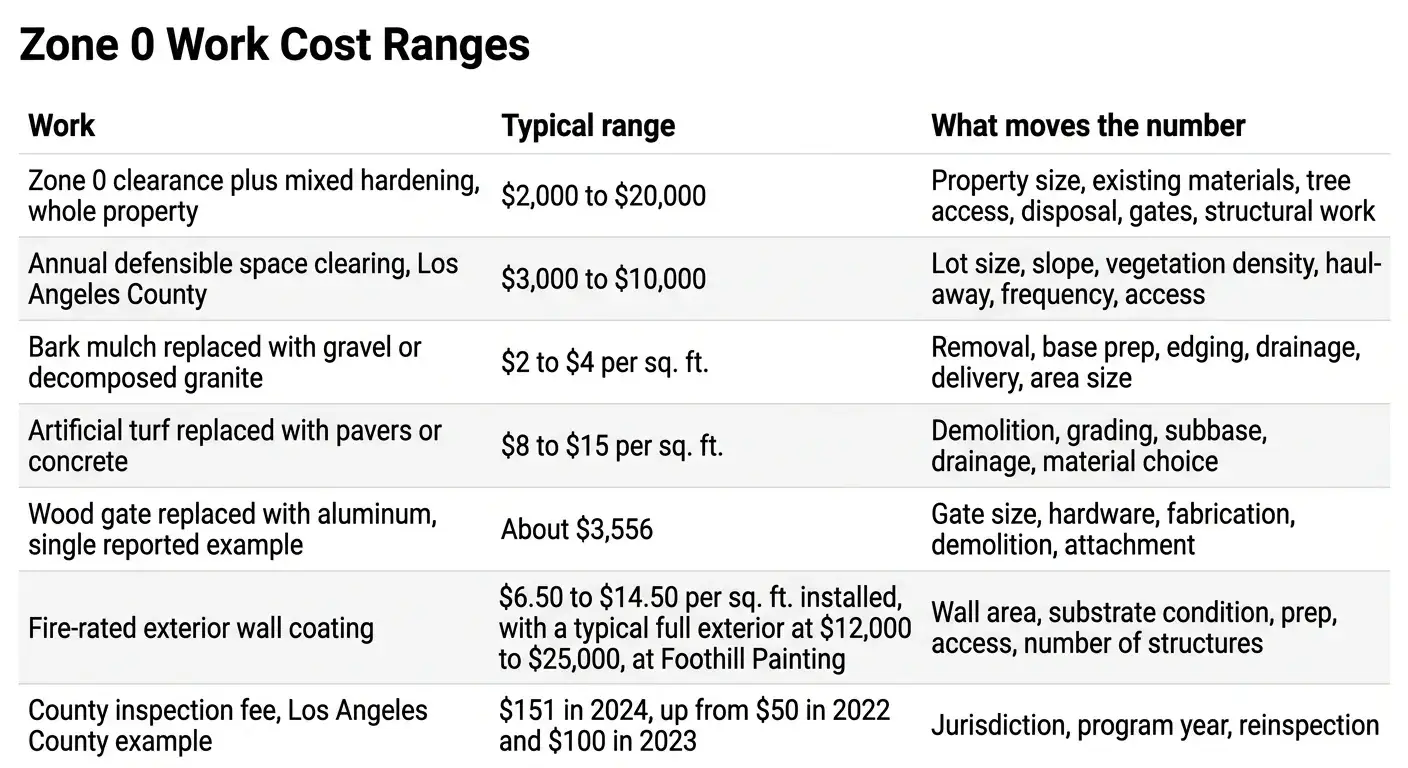
What Zone 0 work costs
Zone 0 work runs from a few hundred dollars for debris and firewood removal to tens of thousands when trees, gates, decking and exterior coatings are involved. The number is driven by lot size, slope, access for equipment and haul-away trucks, vegetation density, tree size and whether the scope includes structural or surface changes rather than clearing alone.
| Work | Typical range | What moves the number |
|---|---|---|
| Zone 0 clearance plus mixed hardening, whole property | $2,000 to $20,000 | Property size, existing materials, tree density, access, disposal, gates, structural work |
| Annual defensible space clearing, Los Angeles County | $3,000 to $10,000 | Lot size, slope, vegetation density, haul-away, frequency, access |
| Bark mulch replaced with gravel or decomposed granite | $2 to $4 per sq. ft. | Removal, base prep, edging, drainage, delivery, area size |
| Artificial turf replaced with pavers or concrete | $8 to $15 per sq. ft. | Demolition, grading, subbase, drainage, material choice |
| Wood gate replaced with aluminum, single reported example | About $3,556 | Gate size, hardware, fabrication, demolition, attachment |
| Fire-rated exterior wall coating | $6.50 to $14.50 per sq. ft. installed, with a typical full exterior at $12,000 to $25,000, at Foothill Painting | Wall area, substrate condition, prep, access, number of structures |
| County inspection fee, Los Angeles County example | $151 in 2024, up from $50 in 2022 and $100 in 2023 | Jurisdiction, program year, reinspection |
The detailed pricing, including how crews bid hillside work, is in “Brush Clearance in Los Angeles: Costs, Rules and How to Hire.” If the exterior coating line is the part you need priced for your house, you can request a free estimate.
How to handle an insurer’s wildfire-hardening letter
Read the insurer’s list next to the rule that governs your parcel, then sort every line into three buckets: homeowner maintenance you can finish yourself, licensed trade work, and underwriting preference that no public code requires. An insurer’s deadline is often sooner and stricter than the public-law phase-in, so work that schedule first and document each finished item with dated photos and an invoice.
Foothill Painting’s fire hardening division reads an insurer’s letter and says which listed items are ours and which belong to another trade. That scope covers intumescent coatings, clear and pigmented, on rafter tails, corbels, fascia, eaves and wood trim. Fire retardant coatings on wood siding, fences and decks. Class A roof coatings. Items outside that scope go out to the right trade for its own bid. Foothill Painting is not an insurance company, and nobody can promise you a policy or a price, so we won’t call a coating fireproofing or promise an underwriting result.
When to hire rather than do it yourself. Plenty of Zone 0 work is a homeowner job: moving firewood and stored combustibles, raking leaves and needles, pulling weeds and dead annuals, clearing accessible gutters from safe footing, swapping bark beds for gravel, and photographing the finished work. Call a licensed professional when the work involves:
- Tree removal, large limb pruning, climbing or any work near power lines. Arborist territory.
- Roofs, ladders, elevated decks or steep slopes, where a fall is the real hazard.
- Structural changes to decks, fences, gates, siding, vents, windows or under-eave assemblies.
- Fire-rated coatings and components, where surface prep and application rate decide whether the product performs as tested.
- Anything that needs a permit, an inspection sign-off, or documentation an insurer or escrow will accept.
Ask any contractor for a written scope, a fixed price, the license number and proof that the crew on your property works for the company.
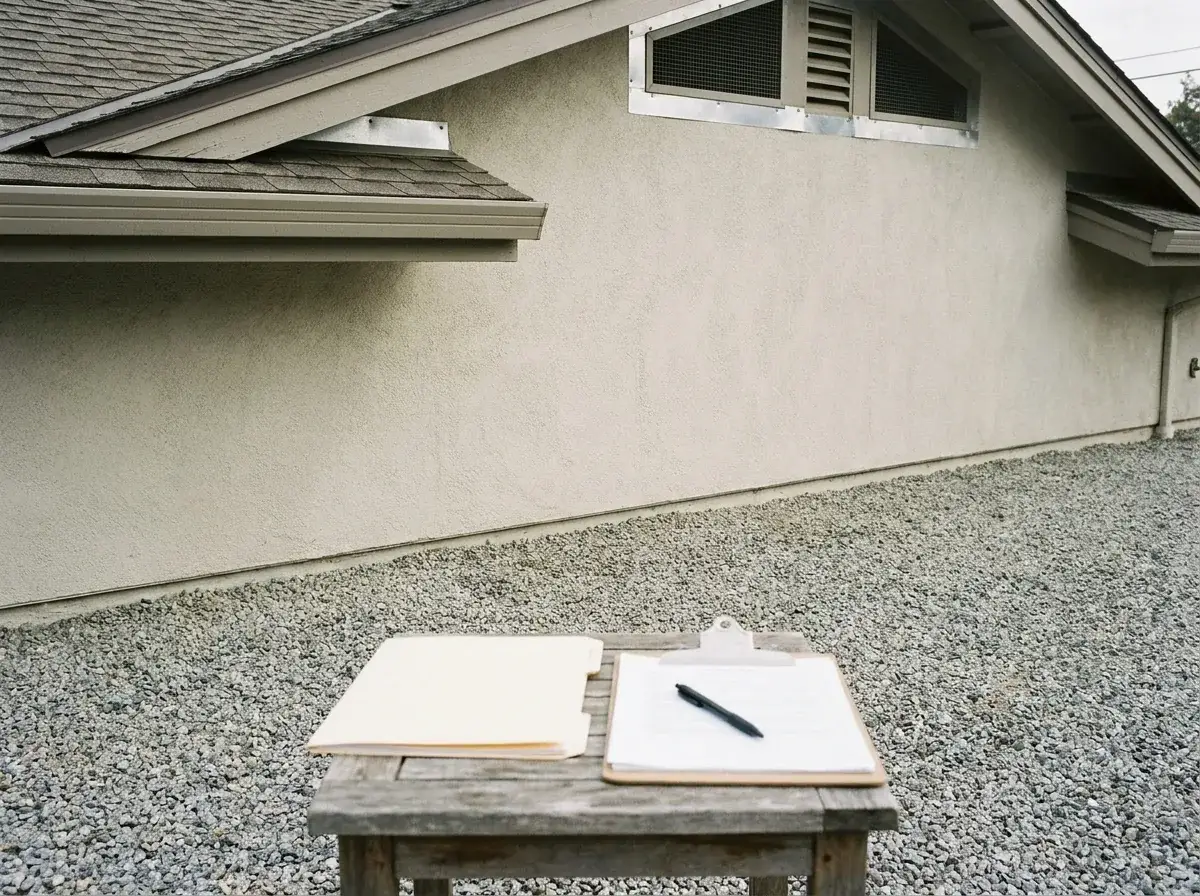
If your letter or notice touches the exterior of the house, get the scope in writing before the deadline runs. Get a free estimate from Foothill Painting, family-owned since 1929, with trained W-2 crews, a written contract with fixed pricing and a written warranty on every job. We respond within 24 hours, usually the same day.
Frequently Asked Questions
What is zone 0 in San Diego?
San Diego applies the same 5-foot ember-resistant zone, with local dates set by the fire code official. City materials cover new structures built in Very High Fire Severity Zones after February 28, 2026, and existing structures beginning February 28, 2027. Local guidance also keeps mature tree canopies at least 10 feet from roofs, chimneys and stovepipes.
Is there a map that shows whether my property is in a Zone 0 area?
There’s no separate Zone 0 map. You check two things: whether your parcel is in a State Responsibility Area, and whether it falls in a locally designated Very High Fire Hazard Severity Zone on the state hazard maps your city or county adopted. Your local fire department or county assessor can confirm the designation for a specific address. That confirmation decides which agency enforces.
Does Zone 0 require replacing my roof, vents, windows, deck, or siding?
Not as a first step for an existing home. The early phase targets combustible material in the first 5 feet: firewood, mulch, debris, dead plants and stored items. Component replacement comes in through new construction rules, permitted remodels or an insurer’s own conditions.
Can you paint wood to make it fireproof?
No. Fire retardant and intumescent coatings slow ignition and reduce surface flame spread. That’s ignition resistance rather than fireproofing. How the product performs depends on surface prep, the specified film thickness and upkeep on schedule.
What type of paint is fire rated for 2 hours?
Hourly ratings belong to tested assemblies, not to a can of paint. A two-hour rating comes from framing, substrate, insulation and finish tested together under a standard fire test. Coatings carry flame-spread classifications such as Class A, which measure surface behavior rather than an hourly barrier.
What is the 100 foot defensible space law?
It’s the vegetation clearance standard that runs 100 feet out from a structure, or to the property line where that’s closer. Los Angeles County enforces its own version with added roadway and native brush standards. The county specifics are in “la county defensible space requirements.”
What are the requirements for defensible space in California?
Clear dead plants, weeds and debris from roofs, gutters, decks, porches, stairways and the area under the house. Keep the first 5 feet free of combustibles, then thin and space vegetation out to 100 feet. The item-by-item version inspectors use is in “cal fire defensible space requirements.”
Do Zone 0 rules apply to detached sheds, ADUs and fences?
Zone 0 measures from qualifying structures, so a detached shed or an ADU generally carries its own 5-foot perimeter in addition to the main house. Fencing matters in two ways: a combustible fence attached to the structure acts as a wick into the building, and later phases of the rule address replacing combustible gates and adjusting attached fencing. Check your local fire code for how it defines a qualifying structure before assuming a small shed is exempt.
Does an HOA or property manager have Zone 0 obligations for common areas?
Yes, where the association owns or controls the land. Common slopes, perimeter landscaping, private roads, trash enclosures and shared gates sit within somebody’s defensible space. Enforcement notices go to the owner of record for that parcel. Boards managing multiple buildings usually do better with a scheduled annual clearing program tied to the local inspection calendar than with reacting to notices one at a time.