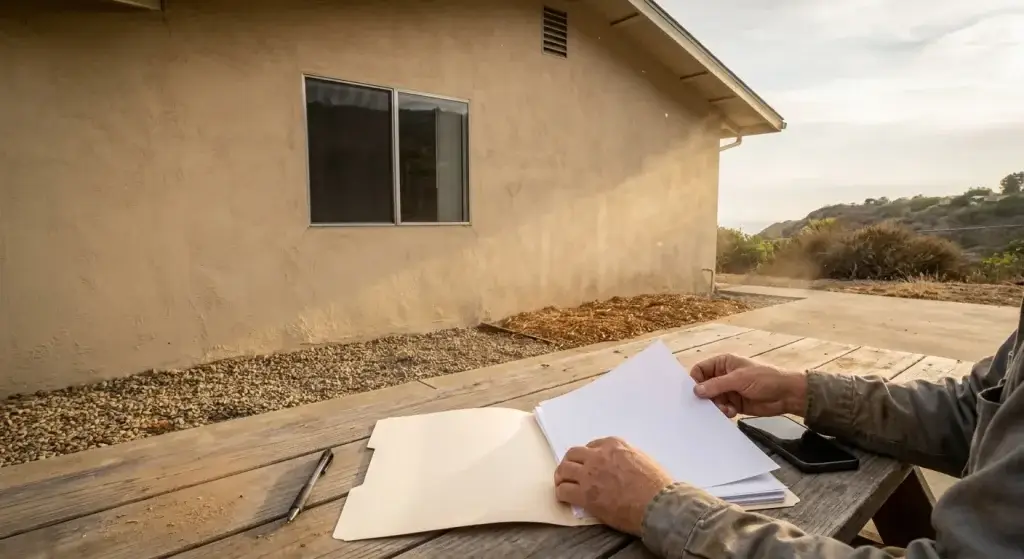
Selling an older house in a mapped fire zone, anywhere from the San Gabriel foothills to the Conejo Valley, adds a wildfire page to your disclosure packet. That page asks what you know about your vents, the first five feet around the house and the retrofits you’ve finished. It isn’t an inspection, and it certifies nothing. It does put your answers in writing, and buyers, agents and insurers read them closely.
Does the Fire Hardening Addendum Apply to Your Sale?
Yes, if three things are true:
- The home was built before January 1, 2010.
- It sits in a high or very high fire hazard severity zone.
- The sale requires a Transfer Disclosure Statement.
That covers most resales of one-to-four-unit homes in the hillside and canyon neighborhoods of LA and Ventura County. Newer homes, homes outside a mapped zone and exempt transfers skip the addendum. The zone itself may still have to be disclosed on other forms.
Sourced fact: California Civil Code 1102.6f requires the fire hardening disclosure for qualifying pre-2010 homes. Since July 1, 2025, it must also include the state’s list of low-cost retrofits and identify which ones the seller completed while owning the home.
When the Addendum Applies and When It Does Not
The trigger is the official map line, not how close the hills feel. A house “near” a zone but outside the designated boundary doesn’t need the addendum. A house with any part of its lot inside the line does.
The zone question isn’t new. the State Bar of California reports that California has required sellers to disclose high fire severity and wildland fire areas since June 1, 1998. What’s newer is the hardening content for older homes.
How to verify your parcel:
- Enter the address in the State Fire Marshal’s Fire Hazard Severity Zone map viewer.
- Confirm with your city or county fire agency. Local agencies adopt the maps by ordinance, so the local version controls.
- Order a natural hazard disclosure report. Most listing agents do this at listing.
Split parcels. If the zone line crosses any part of the lot, treat the property as inside the zone. Hazard reports typically flag the whole parcel.
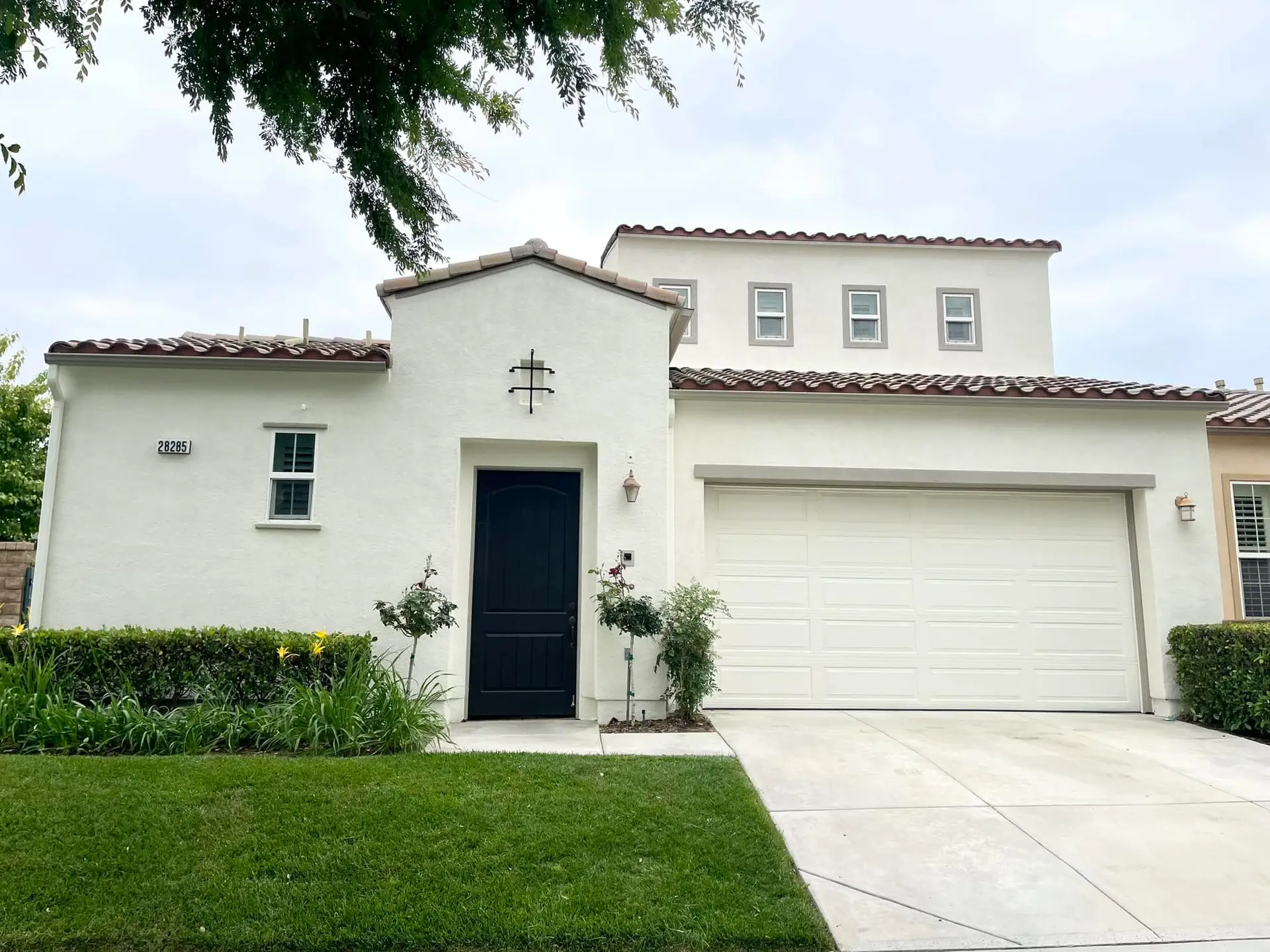
Example. Picture a 1962 ranch house two streets below a very high zone, with the map clearly showing the lot outside the line. No addendum. Now take a 1928 Spanish Colonial Revival whose back slope crosses the line. That one needs it.
Exemptions generally include:
- Commercial and industrial property, and vacant land
- Ordinary leases. A lease-option or a ground lease with improvements may not qualify.
- Probate, foreclosure, trustee and other court-ordered transfers
- Transfers to or from government entities, and certain transfers between co-owners or family members
- Mobile homes sold as personal property apart from the land
An exemption removes the form. It doesn’t remove your duty to disclose material facts you actually know, such as past fire damage or a failed inspection.
Warning: the map-unclear trap. Sometimes the official map is too coarse or inaccurate for a reasonable person to tell whether your parcel is included. In that case the law requires a “Yes” on the Natural Hazard Disclosure Statement. You may mark “No” only when you attach a qualifying report that verifies the property is outside the zone. Guessing “No” invites a dispute later.
High Zone Versus Very High Zone, and SRA Versus Local Areas
A “high” designation alone triggers the addendum. That matters more now. The State Fire Marshal’s 2025 map updates added high and moderate zones inside local responsibility areas, where earlier maps showed only very high zones.
SRA status answers a separate question: who enforces defensible space.
- Inside the State Responsibility Area: CAL FIRE or a contract county fire department enforces it.
- In local areas: your city or county fire department enforces it.
The same parcel lookup answers both questions.
What the Addendum Requires You to State
The addendum asks for four things:
- A fixed warning about the home’s age and zone
- The ember-vulnerable features you know exist
- The state retrofit list
- Which of those retrofits you completed
It goes out with the rest of your disclosure package.
| Item | What the statute says | Source | Document or timing |
|---|---|---|---|
| Pre-WUI warning | Home is in a high or very high zone and was built before wildland-urban interface codes meant to fire-harden homes | Civil Code 1102.6f | Addendum, every qualifying sale |
| Vents | Eave, soffit and roof vents with openings over one-eighth inch, or vents that aren’t flame- and ember-resistant | Civil Code 1102.6f | Addendum, if the seller is aware |
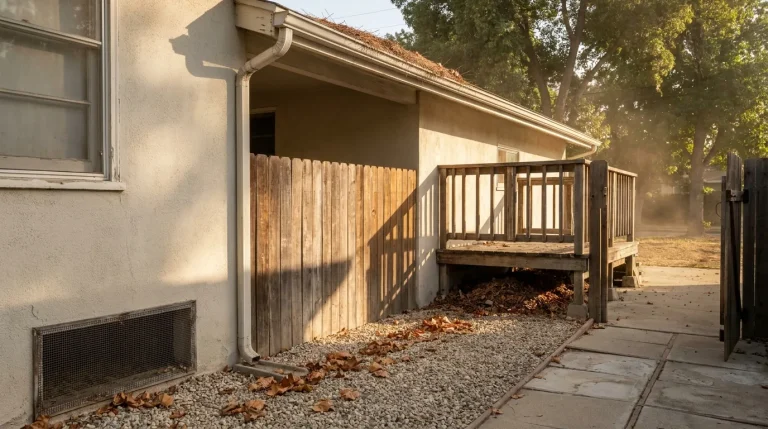
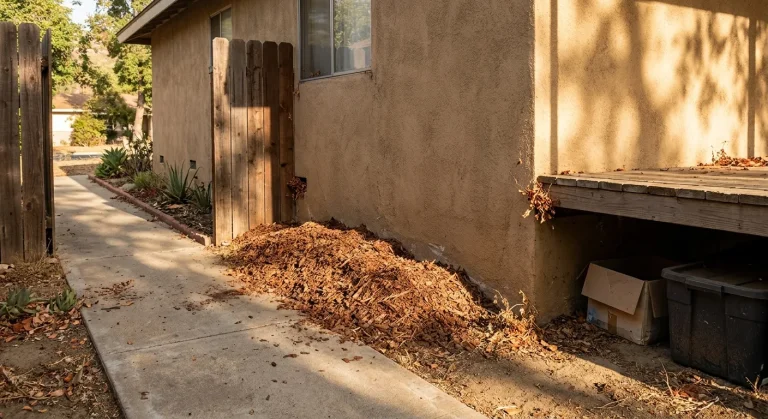
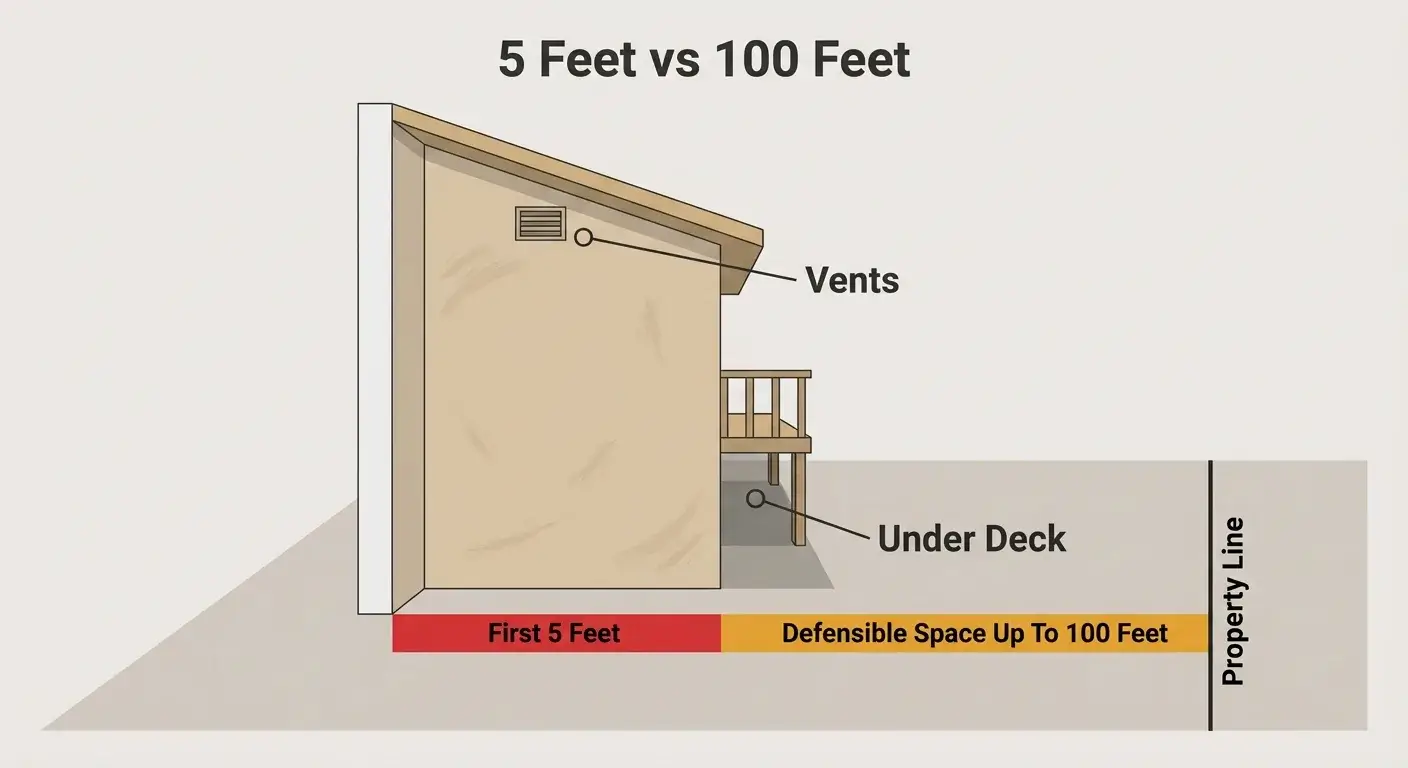
| 5-foot area and decks | Combustible plants or materials within 5 feet of the home and under the footprint of an attached deck | Civil Code 1102.6f | Addendum, if the seller is aware |
| Retrofit list | State list of low-cost retrofits under Government Code 51189, plus which ones the seller completed | Civil Code 1102.6f | Required since July 1, 2025 |
| Form route | Zone disclosure through the TDS, Natural Hazard Disclosure Statement or Local Option statement | Civil Code 1103 | Delivered with the disclosure package |
Vents and the 5-foot zone get named because that’s where houses usually catch. As the California Office of the State Fire Marshal notes, between 60 and 90 percent of home ignitions during a wildfire happen because of embers. The Natural Hazard Disclosure Statement is required whenever a sale needs a TDS and the property lies in one of six designated natural hazard areas.
Two limits are worth knowing:
- Awareness, not inspection. You disclose features you know about. The addendum isn’t an inspection report or a compliance certificate. A checked retrofit box doesn’t prove the work was permitted.
- 5 feet versus 100 feet. The addendum asks about the first 5 feet. Your separate defensible-space duty under Public Resources Code 4291 runs up to 100 feet from the structure, stopping at your property line. According to the California Department of Insurance, trees and shrubs should sit 8 to 10 feet from the home and 8 to 10 feet from each other, with more distance on slopes. The full measured list is in “CAL FIRE Defensible Space Requirements: 22-Point Checklist.”
Do Fire-Rated Coatings and Other Upgrades Count, and Which Need a Permit?
A fire-rated coating can be recorded on the addendum as an improvement. It doesn’t change your answers about vents, the 5-foot zone or decks, and it doesn’t make wood fireproof.
A coating slows flame spread on the surface it was tested on. That’s all. It won’t shrink a vent opening, turn a roof into a Class A assembly or clear brush.
What separates a credible coating from marketing:
- Listing and test standard. Look for an ASTM E84 Class A flame-spread rating on your substrate. For exterior wood, look for the extended ASTM E2768 test. Products tested for wildfire use may appear in the State Fire Marshal’s Building Materials Listing.
- Approved substrate. Many products are rated for bare wood only. Over old paint, stucco or composite, the rating may not carry over.
- Spread rate. The rating holds only at the manufacturer’s coverage rate. A thinned or stretched coat no longer matches what was tested.
- Recoat interval. Sun, rain and pressure washing wear the film down. The product data sheet sets the recoat schedule, and your job file should record it.
New work in fire-prone areas must meet the 2025 California Wildland-Urban-Interface Code, Title 24, Part 7, Chapter 5. Your building department judges compliance by that code, not by a coating label.
Permits these upgrades typically need. Confirm locally:
- Roof replacement: building permit, with a Class A assembly in mapped zones
- Windows: often a building permit, especially when size or framing changes
- Vents: usually no permit for a like-for-like swap
- Decks: building permit
- Siding or re-cladding: building permit
- Grading: grading permit above local thresholds
- Tree removal: protected trees such as native oaks often need a tree permit
License class matters too. At Foothill Painting, the owner also holds a general contractor license, which covers cladding and other exterior hardening work beyond coatings. A C-33 painting license covers paint and coatings only.
Checklist: confirm before work starts
- [ ] Product listing and test standard match your substrate
- [ ] Manufacturer spread rate and recoat interval are written into the contract
- [ ] Permit need checked with the city or county building department
- [ ] Contractor’s license class covers the work
- [ ] Protected trees identified before any removal
- [ ] Dated “before” photos taken
Who Files What: Seller, Agent, Inspector and Contractor
Everyone at the table has a separate job:
- Seller: answers from personal knowledge, signs the addendum and keeps the records.
- Listing agent: orders the hazard report, delivers the forms and tracks deadlines.
- Contractor: does the work, pulls permits and supplies invoices and product data sheets.
- Fire agency: inspects defensible space. That’s CAL FIRE or a contract county in the SRA, and the city or county fire department in local areas.
No single statewide defensible-space certificate exists that every agency, buyer and insurer accepts.
Sales in the SRA or a very high zone carry one more requirement. Civil Code 1102.19 requires the seller to provide documentation of a defensible-space inspection where a local inspection program exists. If that documentation isn’t available, the buyer and seller can agree in writing that the buyer will obtain it within one year after closing.
Who pays is negotiable. It’s often handled as a closing credit. Once the deed records, any enforcement lands on the new owner.
Where an inspection fee applies, the local agency sets it, commonly per parcel. Clearance pricing is covered in “Brush Clearance in Los Angeles: Costs and Hiring.”
Pro tip: build the file before you list. Keep these in one folder:
- Dated before-and-after photos
- Invoices and product data sheets
- Permit numbers and final sign-offs
- Contractor license numbers
- Any fire agency inspection notices
That folder answers the buyer’s questions and the insurer’s.
If the hardening work is still ahead of you, Foothill Painting runs it under a written contract that sets out scope, materials, timeline and price before work begins, with no hidden fees and no mid-job upsells. The office is at 2134 Floyd St. in Burbank. You can request a fire hardening walk-through and written price before your listing date.

What Happens If You Skip or Misstate the Addendum
The sale usually still closes, but the liability stays with you. California doesn’t void a transfer over a missing disclosure form. A seller who willfully or negligently fails to disclose is liable for the buyer’s actual damages.
Late delivery has its own cost. If the disclosure arrives after the offer, the buyer can cancel within three days of personal delivery, or five days if it was mailed.
Leaving out a known feature is the bigger risk. Think vent screens wider than one-eighth inch, or a juniper hedge against the wall (the kind everyone forgets is there). A buyer who finds one after closing can claim repair costs, and in serious cases can seek rescission.
Defensible-space penalties are separate, and they follow the property:
- State fines: a violation of Public Resources Code 4291.1 is an infraction with a fine of $100 to $500. A second violation within five years typically carries a higher fine, so check your local ordinance for the current penalty.
- Local fines: ordinances can set their own amounts. The State Fire Marshal’s model ordinance allows up to $130, $700 and $1,300 for repeat violations within a year.
- Escalation: under that model, a parcel still noncompliant after a third inspection can receive a noncompliance citation.
- Abatement and liens: agencies can clear the property, recover actual costs and record a lien that surfaces in escrow.
Insurers run their own underwriting. They may ask for proof of clearance or hardening work. No form, coating or certificate guarantees a policy or a price.
A complete file does two things. It answers underwriting questions faster, and it gives buyers less to discount at the negotiating table.
Warning: An “as-is” sale doesn’t excuse silence. It still requires the addendum and truthful answers about what you know.

If you want the vents, coatings and 5-foot work done and documented before buyers walk through, get a written estimate from Foothill Painting. The company responds to every request within 24 hours, usually the same day, and backs every project with a written warranty.
Frequently Asked Questions
What is an AB 38 inspection?
AB 38 created Civil Code 1102.19. It requires sellers in the SRA or a very high zone to provide documentation of a defensible-space inspection where an inspection program exists. A fire agency does the inspection, not a private contractor. It checks vegetation and combustible materials around the home, not the condition of vents or siding.
What is an inspection addendum?
It’s a contract form that records inspection results or agreements tied to them. In a wildfire sale, it might attach a defensible-space report or the buyer’s written promise to obtain one within one year after closing. Because it’s a contract term, it should state who pays and the deadline.
Are there home hardening grants available in California?
Some programs exist, but they’re limited. The California Wildfire Mitigation Program has funded retrofits such as vent replacement in selected communities. Local Fire Safe Councils often offer free chipping or brush pickup. Funding shifts by year and area, so check with your county fire department before scheduling work.
Can a seller fill out the addendum without hiring an inspector?
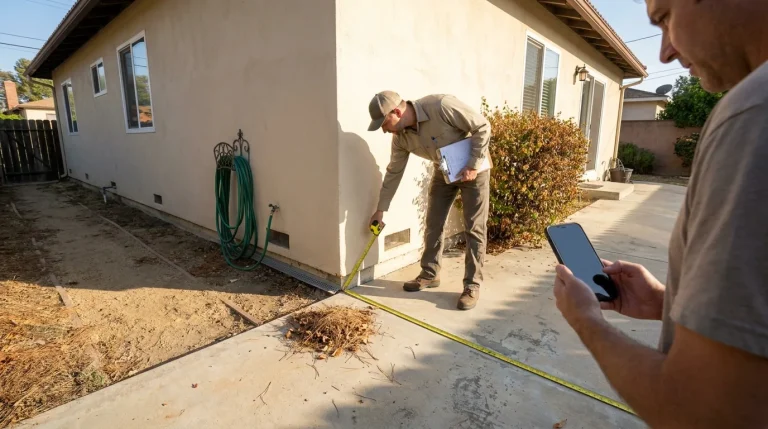
Yes, because the answers rest on what you know. Grab a flashlight and walk the house. Check vent mesh against the one-eighth-inch limit, look under any attached deck and scan the first 5 feet for mulch, wood piles or dense shrubs. A professional walk-through is optional, but it reduces disputes later.
Can I send photos instead of waiting for a reinspection?
Some local fire agencies accept dated photos of corrected violations in place of a second site visit. That can save a reinspection fee. Take wide shots from the same angles as the original notice, plus close-ups of each fix, and keep copies for your disclosure file.
What happens if I ignore a defensible-space abatement bill?
Unpaid abatement charges typically pick up late fees and interest, and they can be referred to collections. Agencies can record a lien, and some counties add the charge to the property tax bill. Either way, it shows up in escrow when you sell, and it has to be paid before closing.